
Severe Bleeding on Medications: What to Watch For and How to Respond in an Emergency
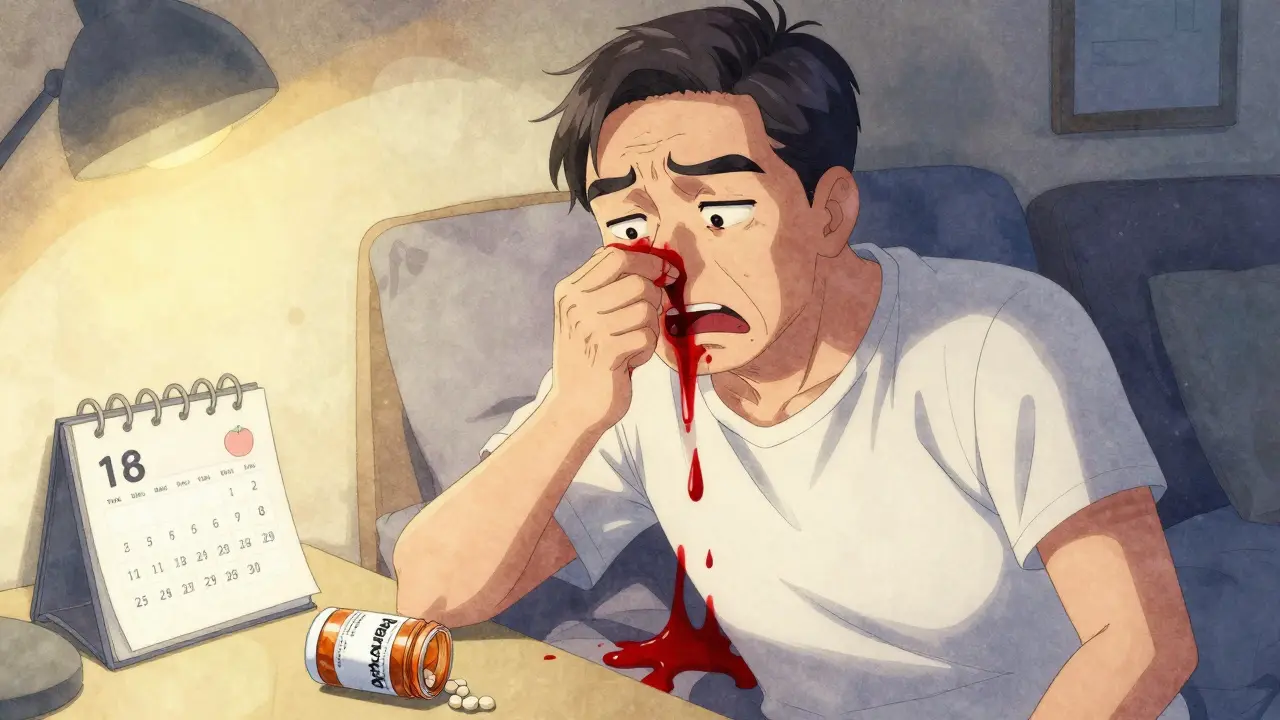
When you’re prescribed a blood thinner-whether it’s warfarin, apixaban, rivaroxaban, or another anticoagulant-you’re told it’s to prevent strokes or clots. But few patients are fully prepared for the flip side: severe bleeding. It doesn’t always come with a siren. Sometimes it starts as a nosebleed that won’t stop. Or dark stools. Or unexplained bruising. And if you don’t recognize it fast enough, it can turn life-threatening in hours.
Why Blood Thinners Cause Severe Bleeding
Blood thinners don’t actually thin your blood. They slow down the clotting process. That’s how they stop dangerous clots from forming in your heart or legs. But the same mechanism means even small injuries-like a bump on the head or a minor cut-can lead to serious bleeding. The risk isn’t random. It’s tied to specific factors: age, kidney function, other medications, and how much of the drug is in your system. For example, people over 80 have more than three times the bleeding risk of those under 60. If you have kidney problems, your body can’t clear drugs like rivaroxaban or apixaban as quickly, so levels build up. And if you’re taking aspirin or ibuprofen along with your blood thinner, your bleeding risk doubles. The first three months on these medications are the most dangerous. In fact, over 60% of major bleeding events happen within that window.Recognizing the Warning Signs
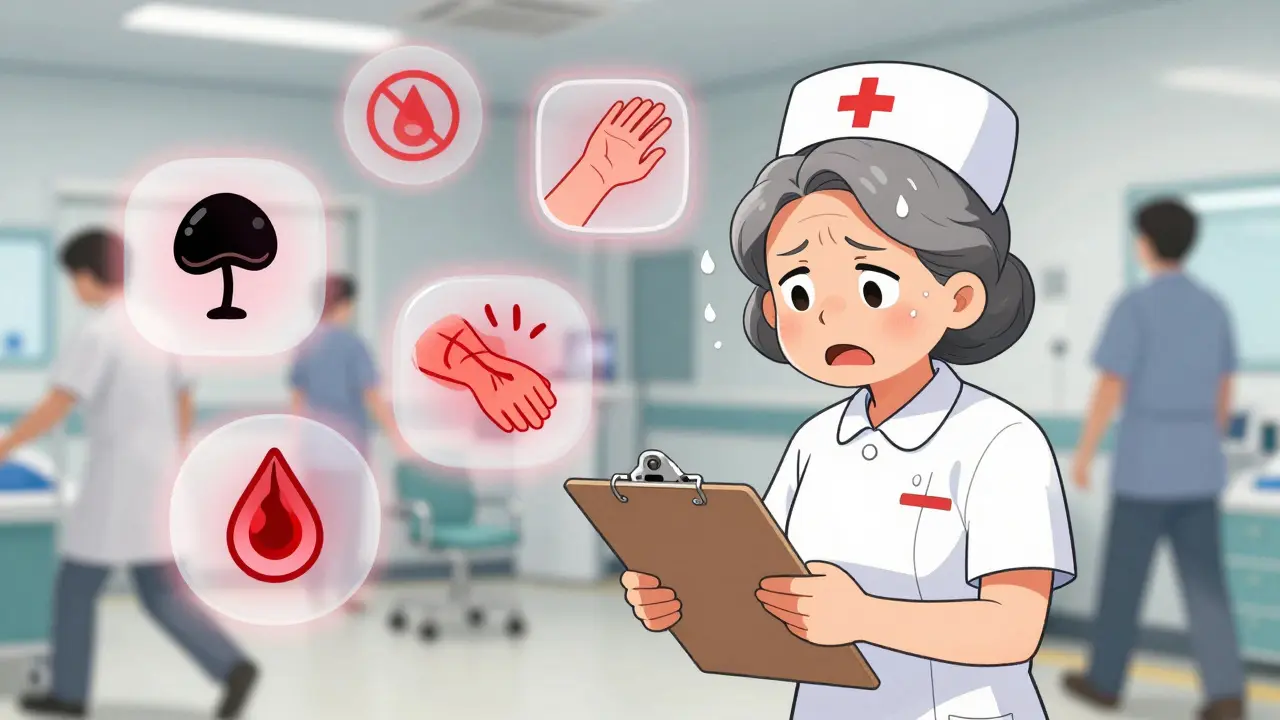
You can’t wait for a gushing wound to realize something’s wrong. Severe bleeding often creeps in quietly. Here are the 12 red flags that demand immediate medical attention:- Nosebleeds lasting longer than 10 minutes
- Red or brown urine
- Black, tarry, or bloody stools
- Unexplained large bruises
- Coughing or vomiting blood
- Severe, sudden headaches
- Dizziness or fainting
- Weakness on one side of the body
- Blurred or double vision
- Abnormally heavy menstrual bleeding
- Joint swelling or pain after minor trauma
- Bleeding from a minor cut that won’t stop after 10 minutes of pressure
Who’s at Highest Risk?
Not everyone on blood thinners bleeds. But some groups are far more vulnerable. The HAS-BLED score is used by doctors to predict risk. It looks at:- Hypertension
- Abnormal kidney or liver function
- Stroke history
- Bleeding history
- Lab results (INR instability for warfarin users)
- Age over 65
- Drugs or alcohol use
Different Drugs, Different Risks
Not all blood thinners are the same when it comes to bleeding. Here’s how they compare based on real-world data:| Medication | Annual Major Bleeding Rate | Key Risk Factor |
|---|---|---|
| Warfarin | 3.09% | Requires frequent INR monitoring |
| Rivaroxaban | 3.6% | Higher GI bleeding risk |
| Dabigatran | 3.11% | Higher GI bleeding risk |
| Apixaban | 2.13% | Lowest bleeding risk among DOACs |
What to Do in an Emergency
If you or someone you know shows signs of severe bleeding, don’t wait. Don’t call your doctor’s office. Don’t check the internet. Go to the ER immediately. Time is everything. While you’re en route, do this:- Bring your medication bottle-doctors need to know exactly what you’re taking and how much
- Have a list of all other drugs, including OTC and supplements
- If you’re on warfarin, know your last INR result
- If you’re on a DOAC, know when you last took it
Prevention Starts With Education
The best way to avoid a bleeding emergency is to understand your risk before you even start the medication. Ask your doctor:- What’s my HAS-BLED score?
- Is my kidney function normal for this dose?
- Am I taking any other meds that increase bleeding risk?
- What should I do if I miss a dose?
- When should I get my first follow-up test?
- What bleeding looks like
- When to go to the ER
- How to carry your medication info
- Who to call after hours
The Bigger Picture
More than 4.7 million Americans are on DOACs today. That number keeps rising as the population ages. In 2022, there were over 128,000 emergency visits related to anticoagulant bleeding-up 27% since 2018. These events cost the U.S. healthcare system nearly $20,000 per case on average. Brain bleeds cost over $50,000. But the problem isn’t the drugs. It’s how we use them. Many patients are started on the wrong dose. Many aren’t told what to watch for. Many don’t know their own kidney function. And too many wait too long to act. New drugs are coming. Two candidates-milvexian and asundexian-are showing promise in trials, with 20-25% less bleeding than current options. A universal reversal agent called Ciraparantag could be available by 2027. But none of that matters if we don’t fix the basics: better patient education, smarter dosing, and faster emergency responses.What You Can Do Today
If you’re on a blood thinner:- Keep your medication bottle with you at all times
- Know your last INR or DOAC level
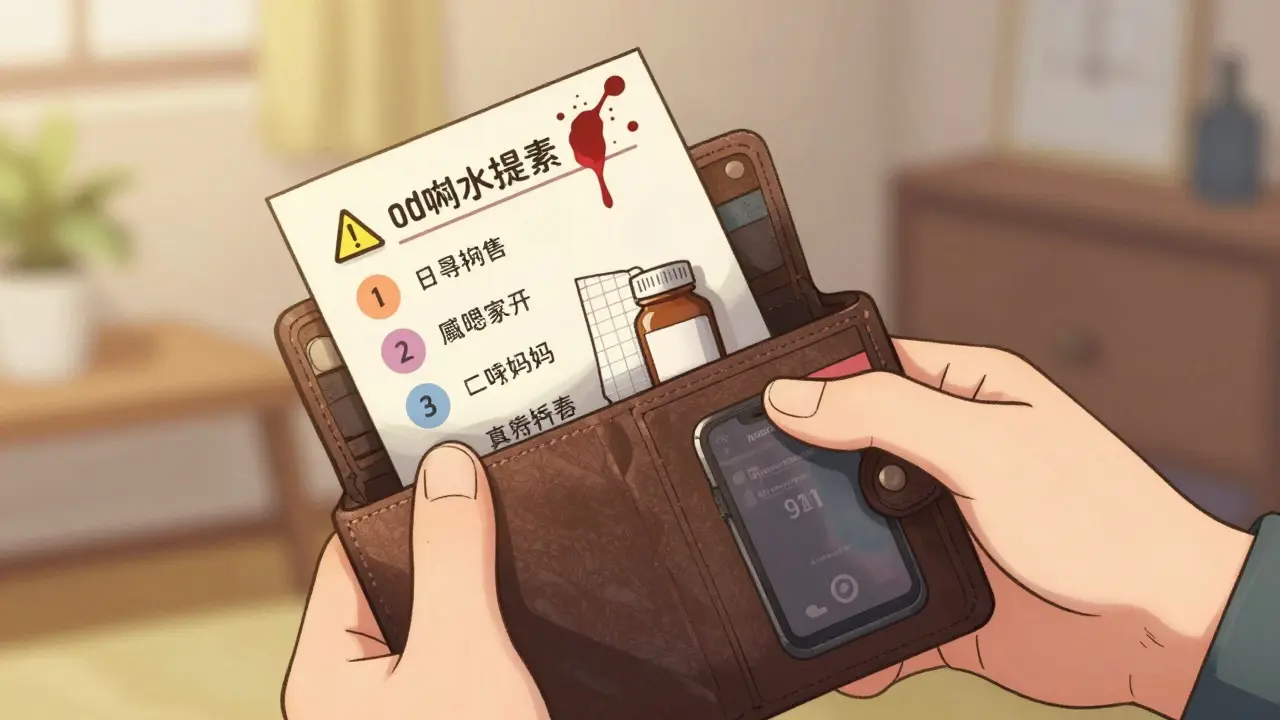
- Write down the 12 warning signs and keep them in your wallet
- Don’t take NSAIDs like ibuprofen or naproxen without talking to your doctor
- Get your kidney function checked at least once a year
- Call 911 or go to the ER if you see any bleeding symptom that lasts more than 10 minutes
Can I still take aspirin while on a blood thinner?
Taking aspirin with a blood thinner significantly increases your bleeding risk-often doubling it. Unless your doctor specifically recommends it for heart protection, avoid aspirin and other NSAIDs like ibuprofen or naproxen. Acetaminophen (Tylenol) is usually safer for pain relief, but always check with your provider first.
What if I accidentally take two doses of my blood thinner?
Don’t panic, but don’t wait. Call your doctor or poison control immediately. If you’re on a DOAC, they may advise you to skip your next dose. If you’re on warfarin, they’ll likely want to check your INR right away. Watch closely for signs of bleeding over the next 24-48 hours. Even one extra dose can push your drug level into a dangerous range.
Are natural supplements safe with blood thinners?
Many supplements can interfere with blood thinners. Garlic, ginkgo biloba, fish oil, ginger, and vitamin E all increase bleeding risk. Even green tea and St. John’s wort can affect how your body processes drugs like warfarin. Always tell your doctor about every supplement you take-even if you think it’s harmless.
How often should I get my blood tested if I’m on a DOAC?
Unlike warfarin, DOACs don’t require routine blood tests for most people. But if you’re over 75, have kidney disease, or have had a prior bleed, your doctor may recommend checking your drug level-especially in the first few months. A new point-of-care test approved in early 2024 makes this easier and faster than ever.
Can I drink alcohol while on blood thinners?
Moderate alcohol (one drink per day for women, two for men) is usually okay, but heavy drinking increases bleeding risk and can interfere with how your liver processes the medication. If you drink regularly, tell your doctor. They may adjust your dose or monitor you more closely.
Peter Ronai
December 17, 2025 AT 04:53Let me tell you something nobody else will: this whole 'blood thinner' thing is a pharmaceutical scam. They don't want you to know that 80% of these bleeds happen because doctors prescribe them like candy. I've seen it firsthand - grandmas on apixaban because they had a 'mild' AFib episode in 2019. No stroke history. No clots. Just a $12,000/year drug and a lifetime of fear. Wake up.
Sachin Bhorde
December 17, 2025 AT 19:31Bro, this is gold. As a med student in Mumbai, I’ve seen so many patients on DOACs with zero education. One guy took ibuprofen for back pain, bled into his gut, and thought it was ‘just indigestion.’ The 12 red flags? I print them out and hand them to every patient. Also, kidney function checks? Most don’t even know what creatinine is. We need community health workers to explain this in local languages. #PatientSafety
Kent Peterson
December 18, 2025 AT 20:52Evelyn Vélez Mejía
December 19, 2025 AT 23:30There is a profound metaphysical irony in the modern medical condition: we are pharmacologically tethered to life-sustaining substances that, by their very design, threaten to unmake us. The blood thinner - a paradox in molecular form - demands not merely vigilance, but existential humility. To be both protected and imperiled by the same molecule... is this not the human condition distilled? We are all, in some way, walking on a razor’s edge of chemical equilibrium - and yet, we are rarely granted the language to hold that truth without fear.
Nishant Desae
December 21, 2025 AT 10:38Hey everyone, I just want to say thank you for this post - I’m 72 and on apixaban after a stroke last year. I didn’t know about the HAS-BLED score until now. My doc never explained it. I’ve been taking fish oil and garlic pills ‘for heart health’ - didn’t realize they were risky. I’m canceling those today. Also, I’m printing out the 12 warning signs and taping them to my fridge. If this helps even one person avoid the ER, it’s worth it. You’re all doing amazing work.
Jody Patrick
December 21, 2025 AT 20:39Pawan Chaudhary
December 23, 2025 AT 07:24Man, this really hit home. My uncle passed away last year after a GI bleed from rivaroxaban - he didn’t even know it was dangerous. I’m sharing this with my whole family. Also, if you’re on these meds, don’t be shy to ask your doctor: ‘Is this dose right for ME?’ Not just ‘what’s the standard.’ We’re not numbers. We’re people.
Jonathan Morris
December 24, 2025 AT 21:55Did you know the FDA approved DOACs based on trials funded by the manufacturers? And that the reversal agents - andexanet, idarucizumab - were developed by the same companies that sell the drugs? There’s a $4.7 billion market here. The ‘12 warning signs’? Conveniently timed with the patent cliff on warfarin. Wake up. This isn’t medicine. It’s profit-driven fear engineering.
Linda Caldwell
December 26, 2025 AT 19:38Knowledge is power. Seriously. I used to ignore nosebleeds. Now I carry my med bottle everywhere. I told my mom. My sister. My neighbor. If we all just learn one thing - when to run - we save lives. No fancy meds needed. Just awareness. And maybe a pen and paper.
Anna Giakoumakatou
December 27, 2025 AT 13:01How delightful. Another 2,000-word pamphlet on how to not die from the very drugs that were supposed to save you. Truly, modern medicine is the art of turning healthy people into anxious patients with a pharmacy membership. Bravo. Now go get your quarterly kidney panel. And maybe a therapist.
CAROL MUTISO
December 28, 2025 AT 02:00There’s something quietly revolutionary about this post - not because it’s new information, but because it’s presented without shame. We’ve been conditioned to feel guilty for bleeding. As if our bodies betrayed us. But it’s not your fault. It’s the system. The rushed prescriptions. The lack of follow-up. The dismissal of elderly patients as ‘just old.’ I’ve been on warfarin for 11 years. I’ve had two major bleeds. I’m still here. And I’m not broken. I’m surviving. And so are you.
Erik J
December 29, 2025 AT 13:28Interesting data on low-dose DOACs. But I’m curious - were those patients on low-dose because they were frail, or because their doctors were being cautious? And if they were frail, did their baseline bleeding risk get factored in? The study doesn’t say. Just wondering if it’s the dose or the patient profile driving the outcome.
BETH VON KAUFFMANN
December 31, 2025 AT 02:49Let’s be real - if you’re over 70 and on a DOAC, you’re basically a walking clinical trial. The ‘lowest bleeding risk’ label on apixaban? That’s based on middle-aged, healthy, compliant patients. Real-world data? It’s a mess. And don’t get me started on ‘point-of-care testing’ - it’s a luxury for patients with good insurance. Most of us get a lab slip and a prayer.
Martin Spedding
December 31, 2025 AT 03:57Raven C
January 1, 2026 AT 19:44One must ask: if the body is a temple, then what is a blood thinner - a sacrilegious offering? Or merely a flawed instrument in the hands of mortals who mistake chemistry for wisdom? The bleeding, you see, is not an accident - it is the body’s quiet, divine protest against the hubris of pharmacological dominion.