
Understanding Liver Function Tests: How to Interpret ALT, AST, and Bilirubin
You get your blood work back and see a few red numbers next to "ALT" or "AST." Your first instinct might be to panic and assume your liver is failing. But here is the truth: Liver Function Tests is a group of blood tests used to measure enzymes, proteins, and substances processed by the liver to assess its health. Despite the name, these tests aren't actually measuring how well your liver is "functioning" in real-time; instead, they are mostly detecting markers of damage.
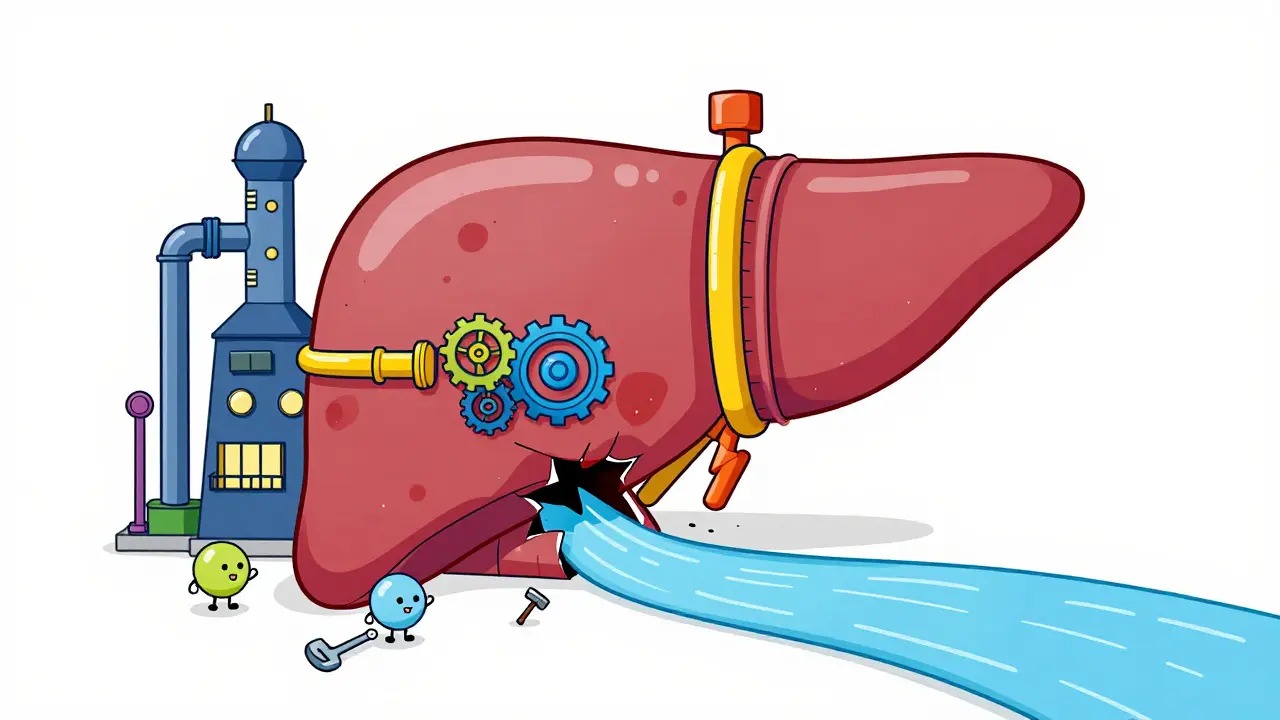
Think of your liver like a factory. When the factory walls are damaged, the tools inside (enzymes) leak out into the bloodstream. LFTs measure those leaking tools. Understanding the difference between a "leak" and a "functional failure" is the key to not overreacting to a slightly high number. Let's break down what these markers actually mean for your health.
The "Leakage" Markers: ALT and AST
When doctors look at your labs, they usually start with the transaminases. These are enzymes that live inside liver cells. When those cells are injured or die, the enzymes spill out into your blood.
ALT (Alanine Aminotransferase) is the more specific marker. It is found primarily in the liver, meaning if it's high, the problem is likely happening in your liver. If you have acute viral hepatitis, ALT can skyrocket to 10 times the upper limit of normal. Because it has a half-life of about 47 hours, it stays elevated longer than AST, making it a great marker for tracking recovery.
AST (Aspartate Aminotransferase) is a bit of a multitasker. It's in the liver, but also in your heart and skeletal muscles. This means if you've had a massive workout or a heart attack, your AST might go up even if your liver is perfectly healthy. However, when paired with ALT, it tells a much bigger story.
| Marker | Common Range (U/L) | Primary Significance |
|---|---|---|
| ALT | 7 – 55 | Liver-specific damage |
| AST | 8 – 48 | Liver, muscle, or heart damage |
| ALP | 40 – 129 | Bile duct or bone issues |
The Secret Code: The AST/ALT Ratio
One of the most useful tricks clinicians use isn't looking at the numbers individually, but looking at the ratio between them. This "secret code" helps differentiate the cause of the injury.
- Ratio greater than 2:1 — If your AST is more than double your ALT, it's a classic sign of alcohol-induced liver injury. In about 90% of alcoholic hepatitis cases, this ratio is elevated.
- Ratio less than 1:1 — When ALT is higher than AST, it often points toward MASLD (Metabolic dysfunction-Associated Steatotic Liver Disease), formerly known as NAFLD. This is common in people with obesity or diabetes.
- Equal elevation — When both are high but the ratio is balanced, it often suggests viral hepatitis.
A word of caution: if AST exceeds 500 U/L, alcohol alone usually isn't the culprit. Doctors will then look for things like acetaminophen (paracetamol) toxicity or an "ischemic" event where the liver didn't get enough oxygen.

Bilirubin and the Biliary System
Bilirubin is a yellowish pigment created when old red blood cells break down. The liver's job is to process this pigment and dump it into the bile, which then exits the body. When this process breaks, bilirubin builds up in the blood, leading to jaundice (yellowing of the eyes and skin).
There are two main patterns here: hepatocellular and cholestatic. In a hepatocellular pattern, the liver cells themselves are damaged, so ALT and AST are the stars of the show. In a cholestatic pattern, the "pipes" (bile ducts) are blocked. This is where ALP (Alkaline Phosphatase) comes in. If your ALP is more than 3 times the normal limit but your ALT is only mildly elevated, you likely have a blockage in your bile flow, not necessarily a "sick" liver cell.
Wait, can ALP be a fluke? Yes. ALP is also found in your bones. If your GGT (another liver enzyme) is normal but your ALP is high, the problem is probably in your skeleton, not your liver.
True Functional Markers: Albumin and PT
As we mentioned, ALT and AST are just signs of damage. They don't tell you if the liver is still doing its job. To see if the liver is actually failing, we look at the "synthetic function"-the things the liver actually builds.
Albumin is the main protein made by the liver. Because it has a long half-life (about 20 days), a low albumin level tells us about chronic, long-term dysfunction. It doesn't change overnight, so it's not helpful for acute injuries.
Prothrombin Time (PT) measures how long it takes your blood to clot. The liver produces the proteins necessary for clotting. Since these proteins have very short half-lives (some only 6 hours), PT is the "canary in the coal mine" for acute liver failure. If PT slows down rapidly, it's a medical emergency.

Common Pitfalls and False Alarms
It is incredibly common for healthy people to have slightly abnormal LFTs. In fact, about 10-15% of healthy adults have AST or ALT levels up to 1.5 times the upper limit of normal without having any liver disease at all. This is why many doctors are now moving away from ordering expensive MRIs or biopsies for mild elevations (between 41-80 U/L) unless other symptoms are present.
You also have to consider your body type. Research shows that people with a BMI over 30 kg/m² often have baseline ALT and AST levels that are 10-15% higher than leaner individuals. What looks like a "high" number for a thin person might be perfectly normal for someone with a higher BMI.
If you're tracking your health, remember that the most accurate diagnosis comes from combining these blood tests with non-invasive scores like FIB-4. Using LFTs alone is like looking at a single frame of a movie; you need the whole sequence to understand the plot.
Do high ALT and AST levels always mean liver failure?
No. High levels indicate liver injury or inflammation, not necessarily failure. Failure is when the liver stops performing its essential tasks, which is measured by markers like Albumin and Prothrombin Time (PT). Many people have temporarily high enzymes due to a new medication, a viral infection, or intense exercise, but their liver continues to function perfectly.
What is the difference between hepatocellular and cholestatic patterns?
Hepatocellular damage happens to the liver cells themselves, characterized by a disproportionate rise in ALT and AST (often >10x increase) while ALP remains relatively low. Cholestatic damage refers to an interruption in bile flow (blockage), characterized by a significant rise in ALP and Bilirubin (usually >3x increase) with only mild elevations in ALT and AST.
Why is the AST/ALT ratio important for diagnosing alcohol use?
In alcoholic liver disease, AST is typically elevated much more than ALT. A ratio of 2:1 or higher is highly suggestive of alcohol-induced injury. This happens because alcohol depletes a specific cofactor (pyridoxal phosphate) that ALT needs to function, while AST is less dependent on it, creating that specific gap in the numbers.
Can other things cause my AST to be high?
Yes. Because AST is present in cardiac and skeletal muscles, a heart attack (myocardial infarction) or severe muscle trauma (like rhabdomyolysis from an extreme workout) can cause AST to spike even if the liver is healthy. This is why doctors compare AST to ALT, which is much more liver-specific.
What should I do if my ALT is mildly elevated?
Next Steps for Your Results
If you're looking at your own labs, don't focus on a single number. Look for the pattern. Are the enzymes high? Is the bilirubin also high? If you have high ALT/AST but normal Albumin and PT, your liver is likely struggling but still doing its job. If you see low Albumin and a slow PT, that's when you need to seek immediate medical attention.
For those with persistent mild elevations, the best move is usually to address metabolic health-reducing processed sugars and managing weight-which can often bring those numbers back into the green zone. Always discuss these results with a healthcare provider who can correlate the numbers with your physical symptoms.
Jarrett Jensen
April 30, 2026 AT 16:50The analogy of the "factory walls" is lamentably simplistic and borders on the pedestrian. One would expect a more rigorous examination of the cytochrome P450 system if one truly wished to understand hepatic metabolism. It is quite tiresome how modern health communication prioritizes accessibility over academic precision.
Betty Kawira
May 1, 2026 AT 04:18Totally agree with the point about the AST/ALT ratio. I see people panic over a slightly high AST all the time without realizing they just hit the gym hard the day before. Just a heads up for everyone: if you're doing heavy lifting or HIIT, definitely tell your doc before the blood draw so they don't freak out over your muscle markers. Also, keep in mind that some supplements can mess with these numbers too, so be honest about your vitamins and herbs during the intake!
Dale Kensok
May 3, 2026 AT 00:18The discourse here lacks a nuanced appreciation for the epigenetic modulations of hepatic enzyme expression. We are merely skimming the surface of the proteomic landscape. To suggest a linear correlation between BMI and baseline ALT without addressing the systemic inflammatory markers is an analytical oversight of the highest order. It's basically superficial data dredging.
Raymond Lipanog
May 3, 2026 AT 03:06While I appreciate the technical critique, perhaps we should maintain a spirit of cooperation. The goal of this information is to reduce unnecessary anxiety for the layperson. It is a virtuous endeavor to simplify complex medical data for the benefit of the collective well-being, provided the core truths remain intact.
Sharon Mathew
May 4, 2026 AT 16:41Oh please! As if a ratio is some magical crystal ball that tells you everything! I’ve known people with "perfect" ratios who were absolutely crashing. These benchmarks are just arbitrary numbers created by corporations to keep us in a loop of perpetual medical surveillance! It's absolutely absurd to trust a blood draw over how a person actually feels!
lalit adesara
May 4, 2026 AT 16:49Western medicine is just a business. Real health comes from ancient roots. Stop obsessing over ratios.
Jenna Riordan
May 5, 2026 AT 04:06I wonder if you've ever had liver issues yourself or if you're just writing this based on books. It would be interesting to know your personal medical history and if you've ever actually dealt with jaundice in your own family.