
SSRIs with NSAIDs: Increased GI Bleeding Risk and How to Prevent It
SSRI-NSAID Risk Calculator
This tool calculates your risk of gastrointestinal bleeding when taking SSRIs and NSAIDs together. Enter your details to see your personalized risk level and recommendations.
Combining SSRIs and NSAIDs might seem like a harmless choice if you're managing depression and chronic pain, but the real danger is often overlooked. SSRIs - the most common type of antidepressant - and NSAIDs - the go-to for headaches, arthritis, and muscle pain - together can trigger life-threatening gastrointestinal (GI) bleeding. This isn't a rare side effect. It's a well-documented, predictable, and preventable risk that affects hundreds of thousands of Americans every year.
Why This Combination Is So Dangerous
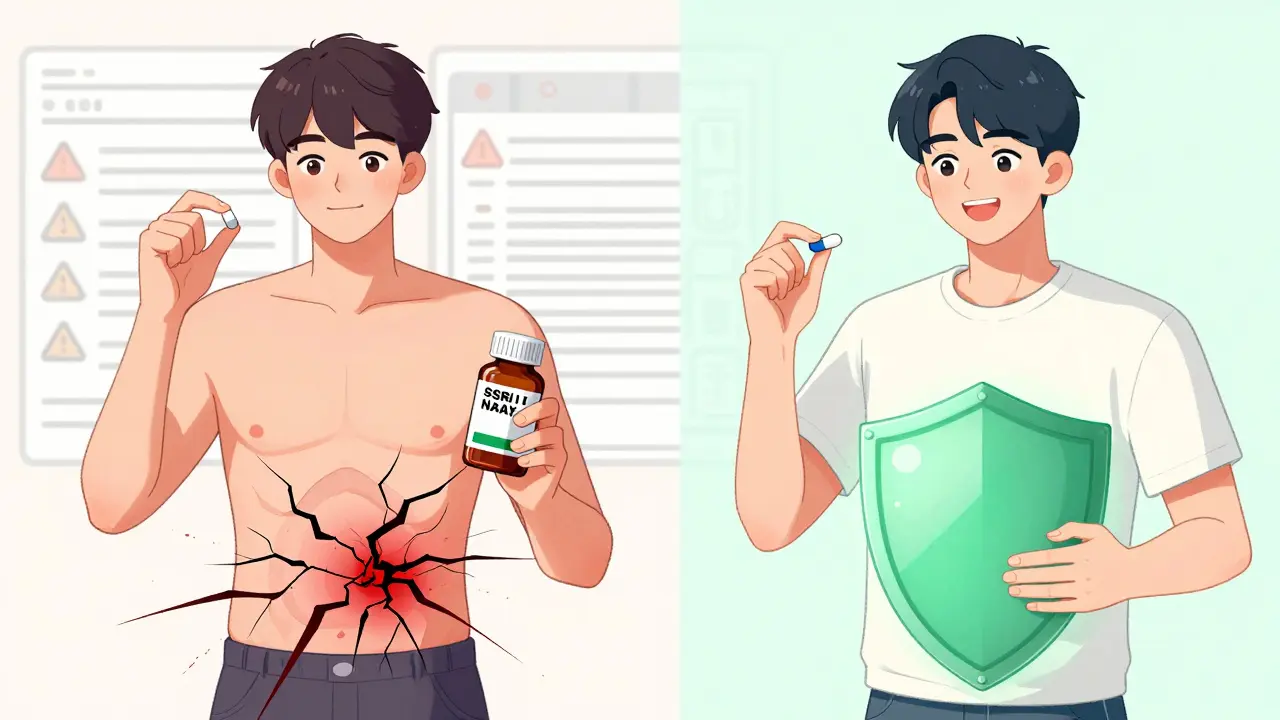
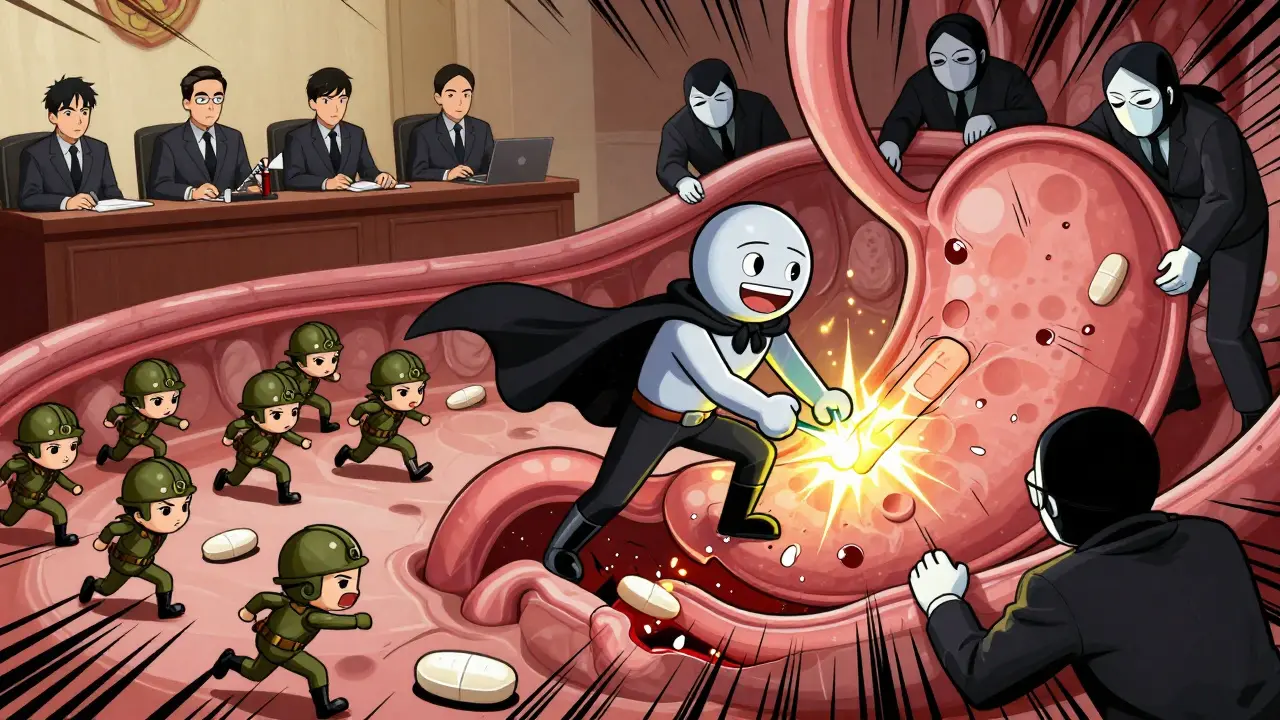
SSRIs work by increasing serotonin in the brain to improve mood. But serotonin isn't just a brain chemical. It's also critical for blood clotting. Platelets, the cells that stop bleeding, rely on serotonin to stick together and seal damaged blood vessels. SSRIs block the serotonin transporter on platelets, which means they can't take up enough serotonin to function properly. The result? Sluggish platelets that don't clot well. NSAIDs like ibuprofen, naproxen, or diclofenac do something else: they damage the stomach lining. They block enzymes that make protective mucus and reduce blood flow to the gut. This leaves the stomach and upper intestines vulnerable to acid and irritation. When you take both drugs together, you're not just adding two risks - you're multiplying them. One weakens your body's ability to stop bleeding; the other creates the perfect conditions for it to start. Studies show this combo increases GI bleeding risk by 75% compared to using NSAIDs alone. That’s not a small increase. It’s the difference between a 1% annual risk and nearly a 2% risk. For someone on long-term NSAIDs, that means a 1 in 50 chance of bleeding each year - and that’s without other risk factors.Who’s at the Highest Risk?
Not everyone on this combo will bleed. But certain people are far more vulnerable:- People over 65 - aging stomachs produce less protective mucus and heal slower.
- Those with a history of ulcers or GI bleeding - once you’ve had it, you’re much more likely to have it again.
- Patients on blood thinners - adding aspirin, warfarin, or clopidogrel to SSRIs and NSAIDs can push bleeding risk into the 10- to 12-fold range.
- People taking high-dose NSAIDs - doses above 1,200 mg of ibuprofen daily or long-term use of naproxen dramatically raise the danger.
- Those on SSRIs for more than 90 days - the longer you’re on them, the more platelet function is impaired.
One 2022 study of over 1.2 million patients confirmed that the combination of SSRIs and NSAIDs was just as risky as being on warfarin - a drug specifically prescribed to thin blood. Yet, most doctors don’t treat this interaction with the same caution.
Not All NSAIDs Are Created Equal
If you must use an NSAID, the choice matters. Some are far safer than others:- Lowest risk: Celecoxib - this COX-2 selective NSAID causes far less stomach damage. Studies show it has about half the bleeding risk of naproxen or diclofenac.
- Lower risk: Ibuprofen - compared to other non-selective NSAIDs, it’s slightly safer, especially at lower doses (under 800 mg/day).
- Highest risk: Naproxen and diclofenac - these carry the strongest bleeding signals, especially when paired with SSRIs.
And here’s the kicker: acetaminophen (Tylenol) doesn’t interact with SSRIs at all. It doesn’t affect platelets or the stomach lining. For pain relief, it’s the safest alternative. Many patients don’t know this - and end up on risky NSAIDs when they could be using acetaminophen instead.
The Gold Standard: Proton Pump Inhibitors (PPIs)
If you absolutely need both an SSRI and an NSAID, the single most effective way to prevent bleeding is to add a proton pump inhibitor (PPI). Drugs like omeprazole, esomeprazole, or pantoprazole reduce stomach acid and help heal the gut lining. Research shows they cut bleeding risk by about 70%. The American Gastroenterological Association recommends PPIs for everyone on this combo - no exceptions. That means if you’re on sertraline and ibuprofen, you should also be on a daily PPI. It’s not optional. It’s standard care.Cost? Around $15-$30 a month for generics. Compare that to an ER visit, blood transfusion, or hospital stay - which can cost $10,000 or more. The math is clear.
What About Other Antidepressants?
Not all antidepressants carry this risk. SSRIs are the worst offenders because they strongly affect platelet serotonin. Other classes don’t.- SNRIs (like venlafaxine or duloxetine) - also carry a bleeding risk, though slightly lower than SSRIs.
- Vortioxetine - a newer antidepressant that shows 40% less bleeding risk than SSRIs in clinical trials. It’s a strong alternative for patients needing both mood and GI safety.
- Buspirone, bupropion, mirtazapine - these have little to no effect on platelets. If you’re at high risk for GI bleeding, these are safer options than SSRIs.
Switching antidepressants isn’t always easy - but if you’re on an SSRI and need long-term pain relief, it’s worth discussing with your doctor.
Real Patient Stories
On patient forums, the pattern is heartbreaking. One woman on Reddit wrote: “I was on sertraline and ibuprofen for six months. One morning, I threw up blood. My ER doctor said, ‘This is why you don’t mix these.’ I had no idea.” Another patient, 71, needed three units of blood after a GI bleed. His primary care doctor had prescribed fluoxetine and naproxen together for years - no warning, no PPI. He’s now on bupropion and acetaminophen. No more bleeding. These aren’t outliers. A 2021 study found that 68% of patients on this combo were unaware of the risk. That’s a failure of communication - not patient ignorance.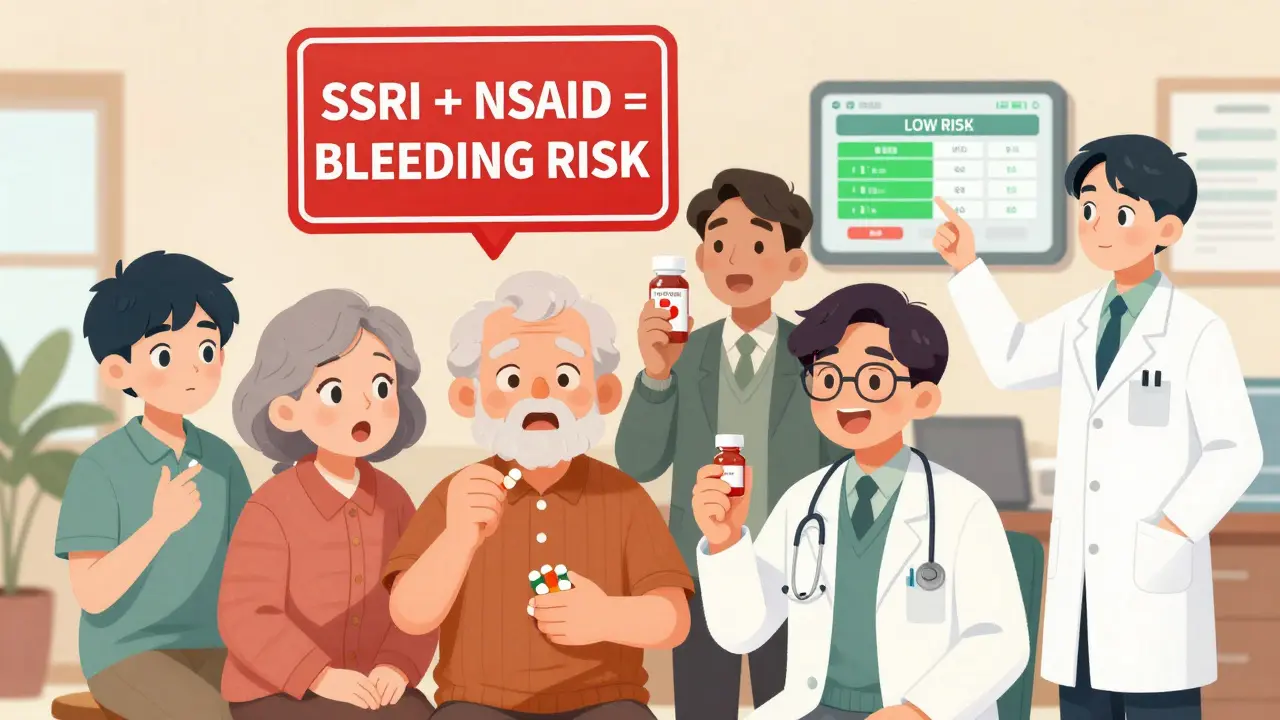
What You Can Do Right Now
If you’re taking an SSRI and an NSAID:- Stop the NSAID if possible. Try acetaminophen for pain. It works for most types of pain - headaches, back pain, arthritis - without the bleeding risk.
- If you must use an NSAID, pick the safest one. Celecoxib or low-dose ibuprofen (under 800 mg/day) are better than naproxen or diclofenac.
- Ask for a PPI. Omeprazole 20 mg daily is enough for most people. Don’t wait for symptoms.
- Get tested if you’re over 65 or have a history of ulcers. Ask your doctor about the AIMS65 score - a simple tool to measure your bleeding risk.
- Check your meds. Many OTC painkillers contain NSAIDs. Read labels. Don’t assume “natural” or “herbal” means safe.
The Bigger Picture
This isn’t just about one drug interaction. It’s about how medicine often treats conditions in isolation. A psychiatrist prescribes an SSRI. A rheumatologist prescribes an NSAID. Neither talks to the other. The patient gets caught in the middle. In 2022, over 264 million SSRI prescriptions and 70 million NSAID prescriptions were filled in the U.S. Even if only 10% of those are combined, that’s over 30 million people at risk. The FDA added warnings to SSRI labels in 2019 - but warnings on a pill bottle don’t help if your doctor doesn’t know. New tools are emerging. EHR systems now include alerts for this combo. Risk calculators like GI-BLEED can predict your personal risk based on age, meds, and genetics. By 2030, experts predict a 60% drop in inappropriate co-prescribing - thanks to better tech and better education. Until then, you need to be your own advocate. Ask your doctor: “Could this combo cause bleeding? Should I be on a PPI?” If they hesitate, ask for a referral to a pharmacist or GI specialist.Bottom Line
SSRIs and NSAIDs together are a dangerous pair - but they don’t have to be. You don’t need to choose between pain relief and mental health. You just need to make smarter choices. Swap the NSAID for acetaminophen. Add a PPI if you can’t. Switch to a safer antidepressant if needed. These steps aren’t radical - they’re routine. And they can save your life.Can SSRIs and NSAIDs really cause GI bleeding?
Yes. Multiple large studies show that combining SSRIs and NSAIDs increases the risk of upper GI bleeding by 75% compared to using NSAIDs alone. This is because SSRIs impair platelet function, and NSAIDs damage the stomach lining. Together, they create a perfect storm for bleeding.
Is it safe to take ibuprofen with sertraline?
It’s not recommended without protection. While ibuprofen carries slightly lower bleeding risk than other NSAIDs, combining it with sertraline still raises your risk significantly. If you must use them together, take a daily proton pump inhibitor (like omeprazole) and keep the ibuprofen dose under 800 mg per day.
What’s a safer alternative to NSAIDs for pain if I’m on an SSRI?
Acetaminophen (Tylenol) is the safest option. It doesn’t affect platelets or the stomach lining, so it doesn’t interact with SSRIs. It’s effective for most types of pain - including headaches, back pain, and osteoarthritis - at standard doses (up to 3,000 mg per day). Always check with your doctor first, especially if you have liver issues.
Do all SSRIs carry the same bleeding risk?
No. SSRIs with stronger serotonin transporter inhibition - like paroxetine and fluoxetine - may pose a higher risk than others like sertraline or citalopram. But the difference isn’t large enough to rely on. All SSRIs carry some risk, so prevention (like using a PPI) is more important than choosing one SSRI over another.
Should I stop my SSRI if I need to take NSAIDs?
Don’t stop your SSRI without talking to your doctor. Abruptly stopping antidepressants can cause withdrawal symptoms and worsen depression. Instead, ask about switching to a safer pain reliever like acetaminophen, or adding a PPI. If you’re at high risk (over 65, history of ulcers), your doctor might consider switching your antidepressant to a non-SSRI like bupropion or mirtazapine.
How long does it take for the bleeding risk to increase?
Risk increases as soon as you start both medications together. However, the longer you take them - especially beyond 90 days - the greater the risk becomes. Platelet function declines over time with SSRI use, and NSAID damage to the gut accumulates. That’s why prevention should start on day one, not after symptoms appear.
Are there any new treatments to reduce this risk?
Yes. Newer antidepressants like vortioxetine show significantly lower bleeding risk than traditional SSRIs. Also, EHR systems now include automated alerts for this interaction, and risk calculators like GI-BLEED can estimate your personal risk using age, meds, and genetics. By 2026, the FDA plans to release results from a 500,000-patient study that will further clarify real-world risks and guide future guidelines.
phyllis bourassa
March 6, 2026 AT 13:39Ugh, I can't believe people still mix SSRIs and NSAIDs like it's a smoothie. My aunt did this for years-sertraline and ibuprofen every day-and ended up in the ER with a perforated ulcer. She didn't even know it was dangerous. Doctors just shrug and say 'take it with food.' Like that helps when your stomach lining is basically tissue paper. PPIs aren't optional. They're a lifeline. Stop being lazy and protect yourself.
Also, acetaminophen works fine for most pain. If you're still reaching for Advil, you're not being smart-you're being reckless.
Amina Aminkhuslen
March 7, 2026 AT 01:25SSRIs + NSAIDs = GI bleeding roulette. And we wonder why people die in their 60s from 'unexplained internal bleeding.'
It’s not a side effect. It’s a crime against pharmacology. Someone’s pocketbook got prioritized over your gut. PPIs cost less than your monthly coffee habit. Use ‘em. Or don’t. But don’t come crying to me when your stomach turns into a blood balloon. 🤡
amber carrillo
March 7, 2026 AT 15:01This is such an important post. Many people don’t realize how common and preventable this risk is. The data is clear, and the solutions are simple. Adding a PPI, choosing acetaminophen, or switching antidepressants can make a huge difference. It’s not about fear-it’s about informed choices. Thank you for sharing this.
Joey Pearson
March 8, 2026 AT 01:13Acetaminophen is your new best friend. Seriously. No drama, no bleeding, no hospital visits. Just pain relief that doesn’t try to kill you.
And if you're on an SSRI? PPIs are non-negotiable. Don’t wait for a symptom. Be proactive. Your gut will thank you.
Roland Silber
March 9, 2026 AT 18:16One thing I’d add-many patients don’t realize that OTC 'natural' pain relievers like willow bark or devil’s claw can also have NSAID-like effects. They’re not safer. They’re just unregulated.
And while celecoxib is better, it’s not zero-risk. Especially if you have heart issues. Always talk to your pharmacist. They’re the unsung heroes of medication safety.
Patrick Jackson
March 10, 2026 AT 20:03I just want to say… this post made me cry. Not because I’m sad-but because I finally understood why I almost died at 52.
I was on fluoxetine and naproxen for 3 years. No PPI. No warning. Just a 'take with food' sticker. One morning, I woke up vomiting blood. I thought I was dying. I was. And no one told me.
Now I’m on bupropion and Tylenol. And I take omeprazole like it’s my daily vitamin. 🙏
If you’re reading this and still mixing these-please, please, please talk to someone. You’re not alone. And you don’t have to suffer.
Ian Kiplagat
March 10, 2026 AT 23:16Interesting read. I’m from the UK and we’re taught early about GI risks with NSAIDs. PPIs are standard here if you’re on long-term pain meds. Still, patient awareness is shockingly low everywhere. 🇬🇧
Tim Hnatko
March 12, 2026 AT 03:36Thanks for the detailed breakdown. I’ve been on sertraline for 5 years and took ibuprofen for migraines. Never realized the combo was dangerous. I switched to acetaminophen last month and haven’t had a headache I couldn’t handle. Also started omeprazole-no side effects. Simple changes, huge peace of mind.
Aaron Pace
March 13, 2026 AT 07:33Wait-so if I’m on Zoloft and take Advil for my knee, I’m basically playing Russian roulette with my stomach? 😳
Then why do pharmacies sell them side by side? That’s not an accident. That’s a trap. 🤬
Adebayo Muhammad
March 13, 2026 AT 11:19Let us not forget: the pharmaceutical-industrial complex thrives on chronicity. PPIs? Profitable. SSRIs? Profitable. NSAIDs? Profitable. The system doesn’t want you to know that Tylenol and a 15-dollar generic PPI can solve this entire crisis. No, we must keep prescribing, keep selling, keep bleeding. It’s capitalism. And you? You’re the commodity.
Wake up. The pills are not your friends. The system is your enemy. 🧠💀
Bridget Verwey
March 13, 2026 AT 23:59So let me get this straight: doctors prescribe two drugs that destroy your stomach… and then give you a third drug to fix the damage they created?
Brilliant. Just brilliant. 🙃
Next time, maybe just… don’t prescribe the first two? Just a thought.