
Recognizing Signs of Drug Allergies and When to Seek Care

You take a pill for a sore throat or a headache, and within hours, your skin starts itching. Or maybe you finish a course of antibiotics and develop a strange rash days later. It’s easy to assume you’re allergic to the medication. But here is the catch: most people who think they have a drug allergy are actually experiencing a side effect, not an immune system attack.
This confusion isn’t just annoying; it’s dangerous. Being mislabeled as allergic to common drugs like penicillin forces doctors to prescribe weaker, more expensive, or riskier alternatives. In fact, about 10% of the U.S. population carries a label for a drug allergy that they don’t actually have. Knowing the difference between a harmless side effect and a true allergic reaction can save your health, your wallet, and potentially your life.
The Difference Between Side Effects and True Allergies
To understand what’s happening in your body, you need to know how your immune system works. A true drug allergy is an overreaction by your immune system. Your body mistakes the medication for a harmful invader, like a virus or bacteria, and launches an attack using antibodies. This is different from a pharmacological side effect, which is just the drug doing too much of its intended job or affecting other systems unintentionally.
For example, if you take an antibiotic and get nausea or diarrhea, that is likely a side effect. The drug is irritating your gut lining. But if you take that same antibiotic and develop hives, swelling, or trouble breathing, your immune system is involved. That is an allergic reaction.
The American Academy of Allergy, Asthma & Immunology (AAAAI) points out that one person might break out in a rash from a certain drug while another takes it with zero issues. This individualized response is why family history matters less than your own personal reaction history. You cannot predict who will react based on genetics alone; you have to watch how your specific body responds.
Immediate Reactions: The Emergency Window
Some drug allergies strike fast. These are called immediate hypersensitivity reactions, and they are mediated by IgE antibodies. If you are dealing with this type, symptoms usually appear within one hour of taking the medication. Sometimes, it can happen even faster-within minutes.
Watch for these specific signs:
- Hives (Urticaria): Raised, itchy welts on the skin that come and go.
- Angioedema: Deep swelling under the skin, often around the eyes, lips, or tongue.
- Respiratory Distress: Wheezing, coughing, or a feeling of tightness in the chest.
- Gastrointestinal Issues: Sudden vomiting or diarrhea.
- Cardiovascular Symptoms: Dizziness, fainting (syncope), or low blood pressure (hypotension).
If you experience two or more of these symptoms simultaneously-such as a rash combined with difficulty breathing-you might be facing anaphylaxis, a severe, life-threatening allergic reaction that affects multiple organ systems. Anaphylaxis requires immediate emergency care. Call 911 or your local emergency number right away. Do not wait to see if it gets better. Use an epinephrine auto-injector if you have one prescribed.
Delayed Reactions: The Silent Creepers
Not all drug allergies are instant. Some sneak up on you days, weeks, or even months after you start a new medication. These delayed reactions can be tricky because you might not connect the dots back to the pill you took three days ago.
Here are the main types of delayed reactions:
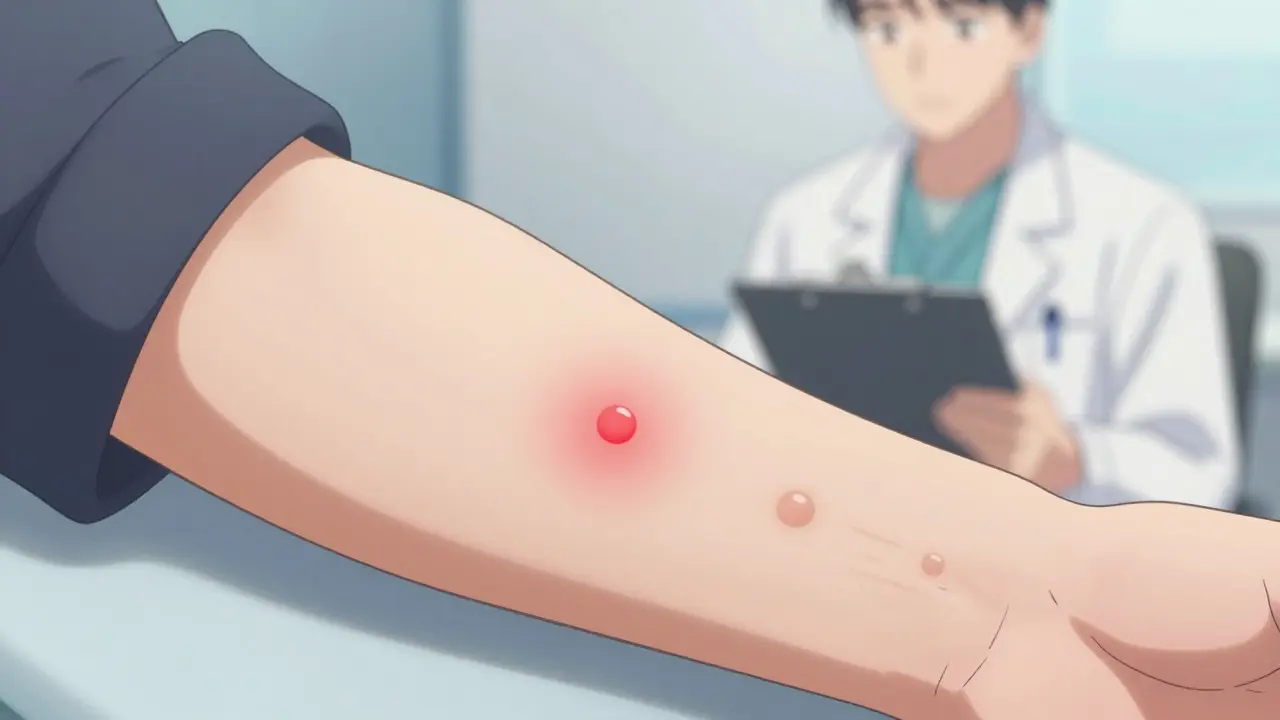
Drug Exanthem: This is the most common form of drug allergy. It presents as a fine, red rash made of small spots (macules) and bumps (papules). It typically appears several days after starting the drug and resolves a few days after stopping it. Crucially, it lacks other systemic symptoms like fever or breathing issues. If you have just the rash and feel otherwise okay, it’s likely an exanthem.
Serum Sickness-Like Reaction: This occurs one to three weeks after starting a medication. Symptoms include a rash (often hives), fever, joint pain (arthralgias), and swollen lymph nodes. It feels like a flu mixed with a bad allergic reaction.
DRESS Syndrome: Short for Drug Rash with Eosinophilia and Systemic Symptoms, this is a rare but serious condition. It involves a rash, high white blood cell count, general swelling, swollen lymph nodes, and liver inflammation (hepatitis). Because it affects internal organs, it requires hospitalization and careful monitoring.
Stevens-Johnson Syndrome (SJS) and Toxic Epidermal Necrolysis (TEN): These are medical emergencies. They involve mucosal involvement (sores in the mouth, eyes, or genitals), fever, and severe blistering skin lesions. The severity is defined by how much skin detaches: less than 10% for SJS, 10-30% for overlap, and more than 30% for TEN. If you notice your skin peeling or blistering severely, seek emergency care immediately.
Penicillin: The Most Common Mislabel
When we talk about drug allergies, penicillin is the most frequently reported drug allergy in medical records. It dominates the conversation, but it also leads to the biggest misunderstanding. Studies show that more than 90% of people who report being allergic to penicillin can actually tolerate it safely when properly tested.
Why does this matter? Penicillin is often the best, safest, and cheapest antibiotic for many infections. If you are labeled as allergic, doctors may prescribe broader-spectrum antibiotics. These alternatives are more expensive, have more side effects, and contribute to antibiotic resistance. Worse, they increase the risk of Clostridium difficile (C. diff) infection, a serious gut condition caused by imbalance in intestinal bacteria.
If you have a "penicillin allergy" listed in your chart, ask your doctor about getting tested. De-labeling yourself could open up safer treatment options for future infections.
How Doctors Diagnose Drug Allergies
Diagnosing a drug allergy is largely detective work. There are very few standardized tests available, with the notable exception of penicillin. Here is how the process usually works:
- Medical History: Your doctor will ask detailed questions. When did the symptom start? What did it look like? Did you stop the drug and did it go away? This history is the most critical tool.
- Physical Exam: A doctor will examine any rashes, swelling, or other physical signs. If you can’t see them immediately, take clear photos of the rash when it first appears.
- Skin Testing: For penicillin, doctors can perform skin prick tests. They introduce tiny amounts of penicillin derivatives into your skin. If a raised wheal (like a mosquito bite) forms, it indicates an allergy. No reaction suggests you might be safe.
- Oral Challenge: If skin tests are negative, the next step is an oral challenge. Under strict medical supervision, you drink a tiny dose of liquid penicillin. If no reaction occurs, the dose is gradually increased. This confirms whether you are truly allergic or not.
- Blood Tests: For severe delayed reactions like DRESS syndrome, blood tests can check for eosinophilia (high white blood cells) and liver function to assess organ involvement.
Remember, testing should only be done by an allergist or immunologist trained to handle potential reactions. Do not try to test yourself at home.
When to Seek Medical Care
Knowing when to act is just as important as knowing what to look for. Here is a simple guide:
| Symptom Severity | Action Required | Who to Contact |
|---|---|---|
| Mild itch or small localized rash | Stop the non-essential medication. Monitor closely. | Primary Care Doctor (within 24-48 hours) |
| Rash spreading, mild swelling, or fever | Stop the medication immediately. Take photos of the rash. | Primary Care Doctor or Urgent Care (same day) |
| Difficulty breathing, throat tightening, dizziness, widespread hives | Emergency! Use epinephrine if available. | Call 911 / Emergency Services Immediately |
| Blistering, peeling skin, sores in mouth/eyes | Emergency! Possible SJS/TEN. | Call 911 / Go to ER Immediately |
If you suspect a reaction, do not restart the medication without talking to your doctor. Keep a record of every drug you take and any reaction you experience. Include the date, the drug name, the dosage, and a description of the symptoms. This information is gold for your allergist.
Living with a Confirmed Drug Allergy
If you are diagnosed with a true drug allergy, management is straightforward but requires vigilance.
- Avoidance: The primary treatment is avoiding the offending drug and related compounds. For example, if you are allergic to amoxicillin, you may also react to other penicillins.
- Medical Alert Identification: Consider wearing a medical alert bracelet or necklace that lists your drug allergies. This can be lifesaving if you are unable to communicate during an emergency.
- Informed Healthcare Providers: Always tell every healthcare provider-including dentists, specialists, and pharmacists-about your allergies before receiving any prescription. Check your electronic health records to ensure the allergy is correctly listed.
- Carry Rescue Medication: If you have a history of anaphylaxis, your doctor may prescribe an epinephrine auto-injector. Carry it with you at all times and know how to use it.
Don’t let fear of allergies prevent you from seeking necessary treatment. Modern medicine has many alternatives. With proper diagnosis and communication, you can stay safe and healthy.
Can I become allergic to a drug I’ve taken before without problems?
Yes. Sensitization can occur over time. Your immune system may build up antibodies after repeated exposures, meaning a drug you tolerated for years could suddenly trigger an allergic reaction. This is why you should always monitor for new symptoms even with familiar medications.
Is there a cure for drug allergies?
Currently, there is no cure for drug allergies. However, some allergies may fade over time, especially penicillin allergies. Regular re-evaluation by an allergist can determine if you still carry the allergy, allowing you to regain access to safer medications.
What should I do if I miss a dose and then remember?
If you suspect an allergic reaction, do not take the missed dose. Contact your doctor for guidance. Taking a double dose to make up for a missed one can increase the risk of side effects and potential allergic responses.
Are natural supplements safe if I have drug allergies?
Not necessarily. Supplements can contain fillers, binders, or active ingredients that trigger allergic reactions. Always disclose your drug allergies to your pharmacist and doctor before starting any new supplement, and read labels carefully for potential cross-reactivity.
How long does a drug rash last?
A typical drug exanthem (rash) usually resolves within a few days to a week after stopping the medication. If the rash persists, spreads, or is accompanied by fever or pain, seek medical attention as it may indicate a more serious reaction like DRESS or SJS.