
Proton Pump Inhibitors: Long-Term Risks and When to Stop Taking Them
Heartburn feels like fire in your chest. It’s miserable, disruptive, and makes you desperate for relief. That is why Proton Pump Inhibitors are so popular. They work fast enough to heal damage and strong enough to silence the pain. But here is the uncomfortable truth: many of us take them far longer than necessary, often without realizing the silent toll they might be taking on our bones, kidneys, and gut health.
You are not alone if you have been popping a pill for acid reflux every morning for years. Millions do it. But medical guidelines have shifted. The goal isn't just to stop the burn; it's to do so with the least amount of medication possible. If you’ve been on these drugs long-term, you need to know what’s at stake and how to get off them safely without suffering through a painful rebound.
How Proton Pump Inhibitors Actually Work
To understand the risks, you first need to understand the mechanism. PPIs reduce gastric acid production by irreversibly blocking the H+/K+ ATPase enzyme system (the proton pump) in the parietal cells of the stomach lining. Think of the proton pump as the final gatekeeper of acid production. Antacids neutralize acid that’s already there. H2 blockers slow down the signal to make acid. PPIs shut down the factory entirely.
This powerful action is why they are the gold standard for healing erosive esophagitis and severe GERD. However, because they block acid so effectively, they change the environment of your entire digestive tract. Stomach acid isn’t just there to cause heartburn; it helps kill bacteria, breaks down food for nutrient absorption, and signals the rest of your gut to function properly. When you remove that acid barrier for months or years, side effects can creep in.
| Generic Name | Common Brand Names | Typical Dose Range |
|---|---|---|
| Omeprazole | Prilosec | 10mg - 40mg daily |
| Esomeprazole | Nexium | 20mg - 40mg daily |
| Lansoprazole | Prevacid | 15mg - 30mg daily |
| Pantoprazole | Protonix | 20mg - 40mg daily |
| Rabeprazole | Aciphex | 20mg daily |
The Real Long-Term Risks You Should Know
The FDA has issued multiple safety communications regarding PPI use since 2010. While short-term use (4-8 weeks) is generally considered safe for most people, long-term continuous use carries specific, documented risks. Let’s look at the evidence, separating the hype from the hard data.
Bone Health and Fracture Risk
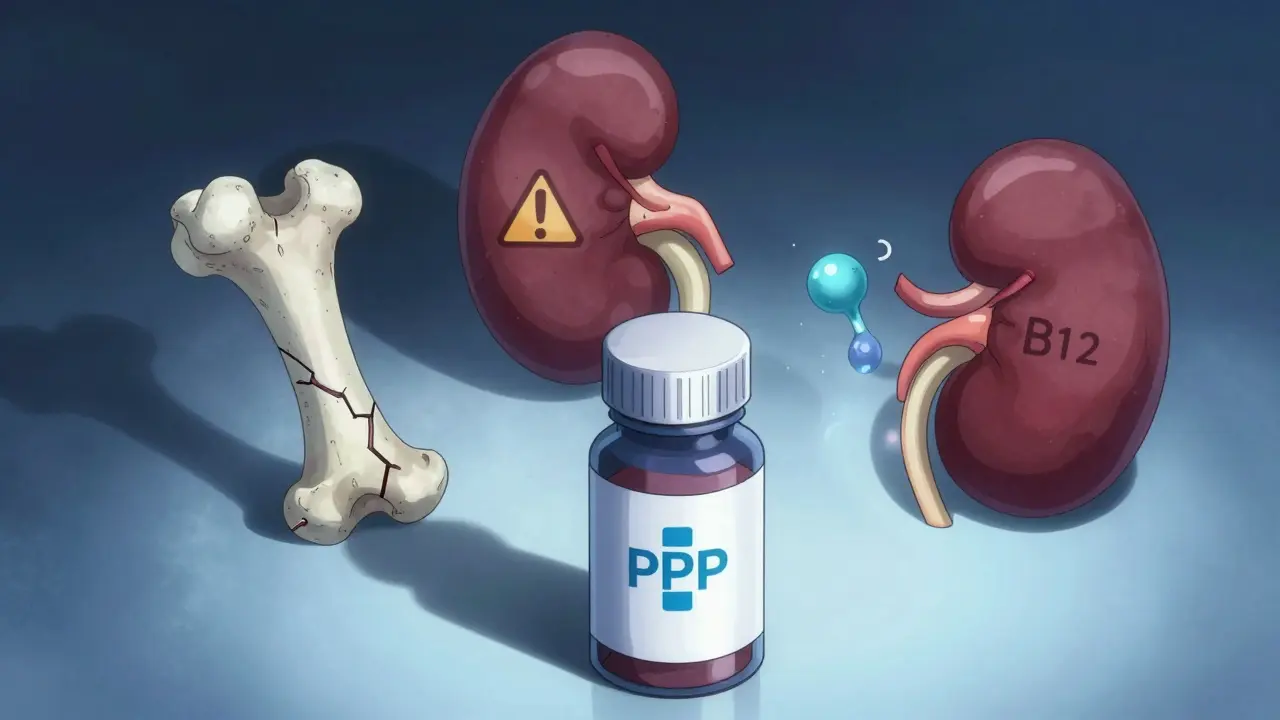
Your body needs stomach acid to absorb calcium effectively. Long-term suppression of acid can interfere with this process. A study published in PMC showed an adjusted hazard ratio of 1.42 for hip fractures after 4 years of PPI use, rising to 1.55 after 6-8 years. This risk is particularly concerning for older adults or those already prone to osteoporosis. The good news? The risk appears reversible. Women who stopped PPIs more than two years prior saw their fracture risk drop back to levels comparable to non-users.
Kidney Function
There is a confirmed link between PPIs and acute interstitial nephritis, a type of kidney inflammation. The FDA noted a 20-50% increased risk in some studies. While most cases resolve when the drug is stopped, chronic inflammation can lead to permanent kidney damage over time. If you have existing kidney issues, this is a critical conversation to have with your doctor.
Nutrient Deficiencies
Stomach acid is essential for unlocking certain nutrients from food. Without it:
- Vitamin B12: An estimated 10-15% of long-term PPI users develop deficiency. B12 is vital for nerve health and energy. Symptoms include fatigue, tingling in hands/feet, and memory issues.
- Magnesium: Hypomagnesemia occurs in about 0.5-1% of long-term users. Low magnesium can cause muscle cramps, weakness, and dangerous heart arrhythmias. The FDA requires monitoring of magnesium levels for patients on PPIs for more than one year.
Gut Infections
Acid kills bad bacteria. Less acid means more pathogens survive passage into the intestines. This leads to a 1.7-2.0 fold increased risk of Clostridioides difficile (C. diff) infection, a severe and sometimes life-threatening diarrheal illness. This risk is highest in hospitalized patients but applies to everyone on long-term therapy.
What About Dementia and Heart Disease?
You may have read scary headlines linking PPIs to dementia or heart attacks. Here is the nuance: early observational studies suggested links, but higher-quality research has largely debunked them. Dr. William Ravich from Yale Medicine pointed out that many of these studies were confounded-patients taking PPIs often had other underlying health issues that caused both the PPI prescription and the disease outcome. Current consensus suggests no direct causal link, but it’s always worth discussing your personal history with your provider.
Why Is It So Hard to Stop?
If the risks are real, why don’t we just quit cold turkey? Because your body fights back. This is called rebound acid hypersecretion.
When you take a PPI, your stomach responds by producing more gastrin, a hormone that stimulates acid production. Over time, your stomach builds up more proton pumps to compensate for the blockade. When you suddenly stop the drug, all those extra pumps are unleashed without inhibition. The result? Your acid levels spike way above your baseline. Studies show this happens in 40-80% of patients who stop abruptly.
This rebound effect makes you feel like your condition has worsened, leading you to restart the PPI immediately. It’s a trap. The solution isn’t to push through the pain, but to taper strategically.
How to Safely Taper Off PPIs
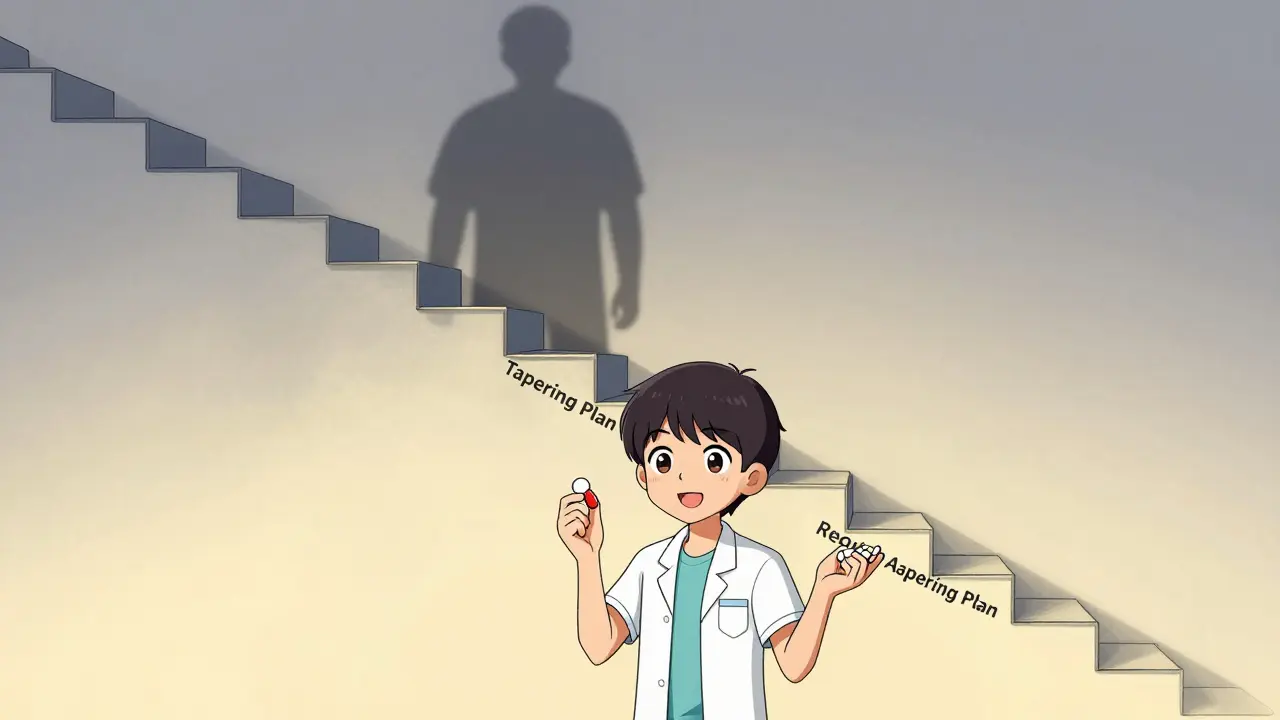
The American College of Gastroenterology (ACG) recommends a structured approach. Do not stop overnight. Follow this step-by-step plan under medical supervision:
- Assess Necessity: Ask your doctor if you still need the PPI. Have you lost weight? Quit smoking? Managed stress? These lifestyle changes might mean you need less medication.
- Reduce the Dose: Cut your dose by 50%. For example, if you take 40mg, switch to 20mg. Stay at this dose for 1-2 weeks.
- Switch Frequency: Instead of daily, take the reduced dose every other day. Then, every third day. This allows your stomach to adjust gradually.
- Add an H2 Blocker: During the taper, use an H2 blocker like famotidine (Pepcid) for breakthrough symptoms. H2 blockers are weaker but sufficient for mild rebound and don’t cause the same level of dependency.
- Use Antacids for Rescue: Keep liquid antacids or chewable tablets on hand for immediate, short-term relief during flare-ups.
- Go On-Demand: Once you’re off the daily schedule, take the lowest dose only when symptoms appear, not preemptively.
For severe esophagitis, antacids alone won’t cut it, which is why medical guidance is crucial. But for uncomplicated GERD, this tapering method has helped 30-50% of long-term users successfully discontinue without symptom recurrence.
When You Might Need to Stay On Them
Not everyone should stop. Some conditions require lifelong acid suppression to prevent serious complications. You likely need to continue PPI therapy if you have:
- Barrett’s Esophagus (a precancerous change in the esophageal lining)
- Severe erosive esophagitis that doesn’t heal with lower doses
- A history of bleeding ulcers related to NSAID use
- Zollinger-Ellison syndrome (a rare tumor causing excessive acid)
In these cases, the benefit of preventing cancer or life-threatening bleeding outweighs the long-term risks. The key is using the lowest effective dose. If 20mg works, don’t take 40mg. If every-other-day dosing controls symptoms, don’t take it daily.
Alternatives and Lifestyle Adjustments
Medication is just one tool. To maintain remission after stopping PPIs, you must address the root causes of reflux:
- Dietary Triggers: Identify foods that relax your lower esophageal sphincter. Common culprits include caffeine, alcohol, chocolate, mint, and fatty foods.
- Meal Timing: Avoid eating within 3 hours of bedtime. Gravity helps keep acid down; lying flat right after a meal invites reflux.
- Weight Management: Excess abdominal pressure pushes stomach contents upward. Even modest weight loss can significantly reduce symptoms.
- Elevate Your Head: Raise the head of your bed by 6-8 inches. Extra pillows don’t work as well because they bend your waist, increasing abdominal pressure.
Newer medications like potassium-competitive acid blockers (P-CABs), such as vonoprazan, are emerging. They offer similar efficacy but may have different long-term safety profiles. However, long-term data is still limited as of 2026. Stick to established protocols unless your gastroenterologist recommends otherwise.
Key Takeaways for Action
If you’ve been on PPIs for more than a year, schedule a review with your doctor. Ask for blood tests to check your magnesium and vitamin B12 levels. Discuss a tapering plan rather than quitting cold turkey. Remember, the goal is freedom from medication, not just freedom from pain. With patience and the right strategy, you can protect your long-term health while keeping heartburn at bay.
How long does it take to taper off PPIs?
Tapering typically takes 4 to 8 weeks, depending on how long you've been on the medication and your individual response. Some people may need several months. The key is reducing the dose slowly, usually by 50% every 1-2 weeks, before switching to intermittent use.
Can I stop taking my PPI suddenly?
It is strongly advised against stopping PPIs suddenly after long-term use. Doing so triggers rebound acid hypersecretion in 40-80% of patients, causing severe heartburn that often leads to restarting the medication. Always taper under medical supervision.
Do PPIs cause dementia?
Current high-quality evidence does not support a direct causal link between PPI use and dementia. Earlier observational studies suggested a connection, but these were likely confounded by other factors. Reputable organizations like the American College of Gastroenterology state that higher-quality data have not demonstrated an increased risk.
What are the signs of low magnesium from PPIs?
Symptoms of hypomagnesemia include muscle weakness, cramps, tremors, tetany (involuntary muscle contractions), and irregular heartbeats (arrhythmias). If you've been on PPIs for over a year, ask your doctor to check your magnesium levels annually.
Is it safe to take PPIs forever?
For most people, long-term daily use is not recommended unless medically necessary. Guidelines suggest using the lowest effective dose for the shortest duration. However, for conditions like Barrett's Esophagus or severe erosive esophagitis, lifelong therapy may be required to prevent serious complications. Regular reassessment is crucial.
What can I take instead of PPIs for occasional heartburn?
For occasional symptoms, H2 blockers like famotidine (Pepcid) are a good alternative as they are less potent and carry fewer long-term risks. Antacids like Tums or Maalox provide immediate, short-term relief. Lifestyle changes, such as avoiding late meals and trigger foods, are also effective for maintenance.
Ganesh Honikol
June 9, 2026 AT 15:57I truly appreciate how detailed this guide is because it really helps people understand the science behind why they feel so bad when they stop abruptly :). It is wonderful to see such comprehensive information about tapering strategies because many patients suffer unnecessarily due to lack of knowledge about rebound acid hypersecretion and the importance of gradual reduction under medical supervision :).
Callie Skipper
June 10, 2026 AT 10:19i stopped taking mine like two years ago after reading something similar and honestly just started eating less spicy food and not lying down right after dinner works pretty well for me now no pills needed
AnneKatherine Stiekes
June 11, 2026 AT 05:29it is interesting to consider both sides here since some people really do need the medication for severe conditions while others might be able to taper off with lifestyle changes so finding that balance is key for everyone involved
Emily Barnhill
June 11, 2026 AT 20:25You need to listen to your body and stop ignoring the warning signs that come with long term use because your health is paramount and you deserve to feel better without being dependent on a pill that could be harming your kidneys or bones over time so please take action today.
Christina S.
June 12, 2026 AT 13:04I found the section on switching to H2 blockers really helpful because I was scared to quit cold turkey but knowing there is a bridge option makes the whole process seem much more manageable and less scary for someone who has been on omeprazole for five years.
Hailey Dunston
June 12, 2026 AT 22:16Oh please, let us not pretend that these 'natural' lifestyle adjustments are anything other than a placebo effect for the masses who refuse to accept that modern medicine is the only true path to relief, yet here we are discussing tapering as if it were some grand revelation rather than basic pharmacological common sense :).
Glenn Davis
June 14, 2026 AT 15:20Big pharma wants you sick. This article is correct about the risks but the real solution is getting off all foreign chemicals and trusting traditional methods that worked for our ancestors before these drugs were invented to keep us dependent.
Cici arya Arya
June 15, 2026 AT 21:48I am currently struggling with this exact issue and my doctor refuses to help me taper even though I am experiencing muscle cramps and fatigue which I suspect are related to magnesium deficiency so I feel completely abandoned by the healthcare system right now.
rebecca torres
June 15, 2026 AT 23:31the dementia link is totally debunked according to recent studies so dont worry about that part but the kidney stuff is real so get your blood work done if youve been on them for more than a year