
Hyperglycemia: Recognizing High Blood Sugar Symptoms and What to Do in an Emergency
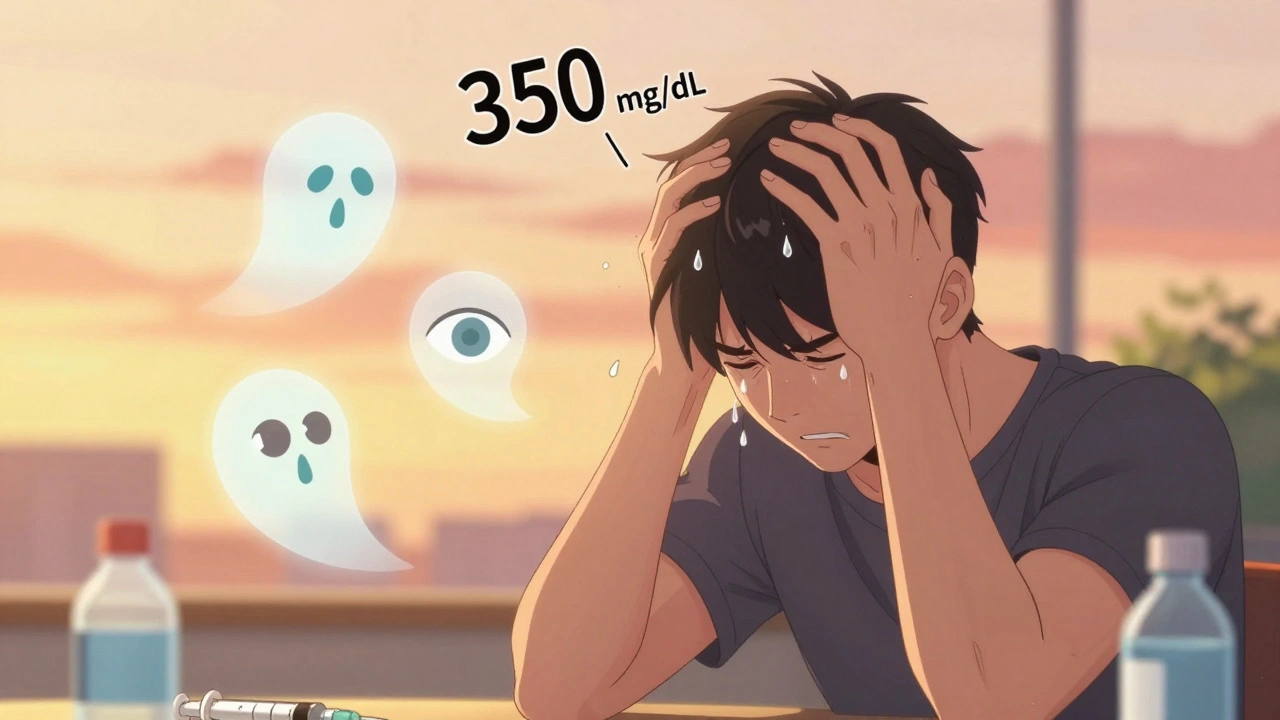
When your blood sugar climbs too high, it doesn’t just feel like fatigue or thirst-it can sneak up on you until you’re in real danger. Hyperglycemia isn’t just a number on a glucometer. It’s a warning sign your body is struggling to manage glucose, and if ignored, it can lead to diabetic ketoacidosis (DKA) or hyperosmolar hyperglycemic state (HHS)-both life-threatening emergencies. The good news? Most cases are preventable if you know the early signs and act fast.
What Exactly Is Hyperglycemia?
Hyperglycemia means your blood glucose level is higher than normal-typically above 180 mg/dL. For people with diabetes, this happens when there’s not enough insulin to move sugar from your blood into your cells. In type 1 diabetes, your body doesn’t make insulin at all. In type 2, your cells ignore insulin, and over time, your pancreas can’t keep up. Even people without diabetes can experience temporary spikes from severe illness, steroids, or extreme stress.
It’s not just about feeling bad. Blood sugar above 250 mg/dL starts triggering real metabolic chaos. Above 300 mg/dL, your body begins breaking down fat for energy, which can produce toxic ketones. And when numbers hit 600 mg/dL or higher, you’re in the danger zone for HHS-a condition where your blood becomes thick and syrupy from extreme dehydration, and your brain starts to shut down.
Early Warning Signs You Can’t Ignore
The first signs of high blood sugar are simple, but they’re often dismissed. You might think you’re just tired from work, or that you drank too much coffee. But if you’re peeing every hour, drinking gallons of water, and still feel parched, that’s your body screaming for help.
- Excessive urination (polyuria): You’re going more than 2.5 liters a day-sometimes every 30 minutes. Your kidneys are trying to flush out the extra sugar.
- Extreme thirst (polydipsia): No matter how much you drink, it doesn’t help. Your body is losing fluid through urine and pulling water from your tissues.
- Blurred vision: High sugar pulls fluid from the lenses of your eyes. It’s not permanent, but it makes reading, driving, or even watching TV frustrating.
- Unexplained fatigue: You’re not sleeping poorly-you’re exhausted because your cells aren’t getting the fuel they need. Sugar is in your blood, but it’s locked out of your muscles and brain.
- Headaches and trouble concentrating: Your brain needs steady glucose. When levels spike, cognitive function drops. You might feel foggy, forgetful, or unable to focus on simple tasks.
These symptoms often appear when blood sugar hits 200-250 mg/dL. By then, your body has already started compensating. If you’re checking your levels and seeing this, don’t wait. Act now.
When It Gets Serious: The Red Flags
If your blood sugar stays above 300 mg/dL for more than a few hours, things get dangerous. The symptoms shift from annoying to alarming.
- Weight loss without trying: Losing more than 5% of your body weight in a few months means your body is burning muscle and fat because it can’t use glucose. This is especially common in undiagnosed type 1 diabetes.
- Fruity-smelling breath: It smells like nail polish remover or overripe fruit. That’s acetone-a ketone your liver produces when it’s forced to burn fat. This is a hallmark of DKA.
- Stomach pain, nausea, vomiting: These aren’t just a stomach bug. In DKA, ketones build up and irritate your digestive system. Many people end up in the ER thinking they have food poisoning.
- Rapid, deep breathing (Kussmaul respirations): Your body tries to blow off acid by breathing faster and deeper. It’s a desperate attempt to correct your blood’s pH. This is a medical emergency.
- Confusion, drowsiness, or difficulty waking up: When blood sugar hits 500-600 mg/dL, your brain starts to malfunction. You might zone out, slur your words, or fall into a stupor. This is HHS territory.
- Loss of consciousness: If you or someone else passes out with high blood sugar, call 911 immediately. This is not something you can treat at home.
These aren’t "maybe" signs. They’re clear indicators that your body is in metabolic crisis. Delaying treatment increases your risk of coma or death.
DKA vs. HHS: Two Different Emergencies
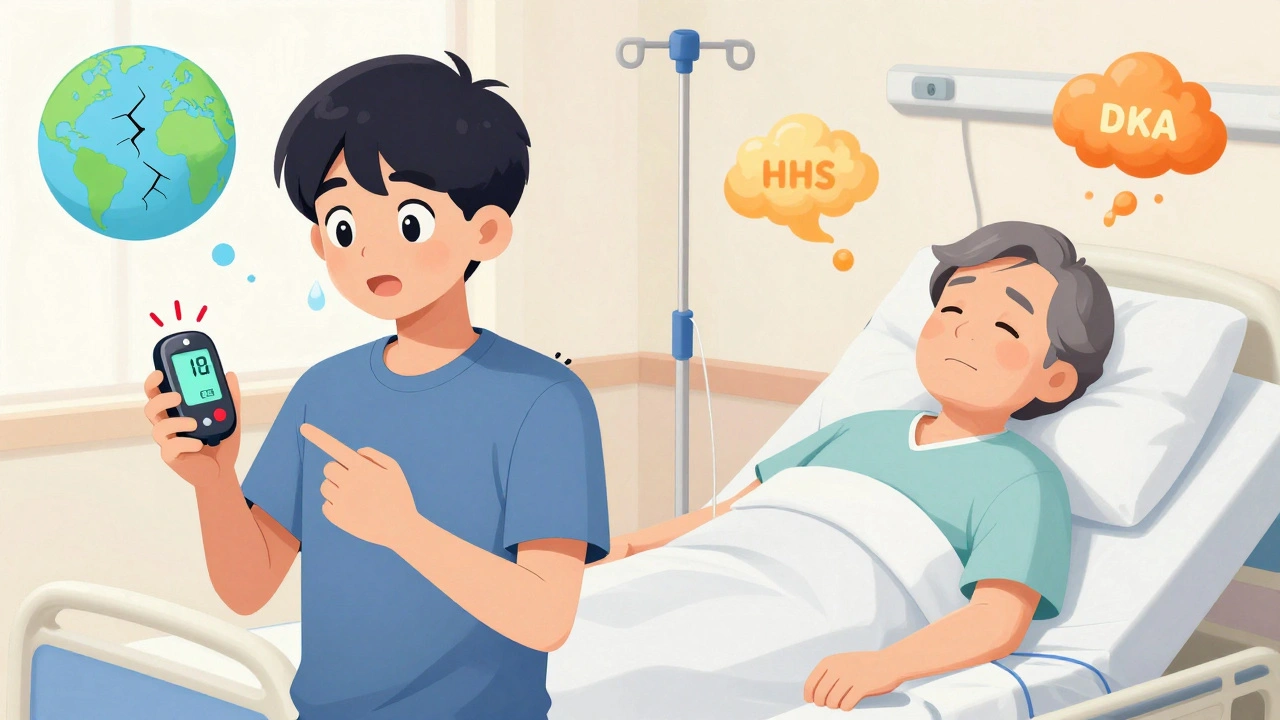
Not all high blood sugar emergencies are the same. Two major conditions can develop: diabetic ketoacidosis (DKA) and hyperosmolar hyperglycemic state (HHS). They look similar at first but have key differences.
| Feature | DKA | HHS |
|---|---|---|
| Typical patient | Usually type 1 diabetes, often younger | Usually type 2 diabetes, often older adults |
| Blood glucose level | 250-600 mg/dL | 600-1200 mg/dL |
| Ketones in blood | High (>3 mmol/L) | Low or absent |
| Dehydration | Moderate | Severe-fluid loss of 8-12 liters |
| Neurological symptoms | Mild confusion, sometimes seizures | Severe drowsiness, coma, focal weakness |
| Mortality rate | 1-5% | 15-20% |
HHS is deadlier because it develops slowly. People don’t realize how bad it is until they’re too weak to call for help. DKA hits fast-often after missing insulin or during illness. Both need hospital care. Neither can be fixed with extra insulin alone.
What to Do When Blood Sugar Spikes
If your blood sugar is over 240 mg/dL, don’t just wait. Follow these steps:
- Check for ketones. Use a urine test strip or a blood ketone meter. If ketones are moderate or high, do not exercise. Moving can make ketones worse.
- Take your correction dose. Use your prescribed insulin-to-carb ratio. For example, if your correction factor is 1 unit per 50 mg/dL, and your blood sugar is 350, you’d need 3-4 units (depending on your personal ratio).
- Drink water. Aim for 8-16 ounces every hour. Sugar-free fluids only. Avoid soda, juice, or energy drinks-they’ll make it worse.
- Recheck your blood sugar in 2-4 hours. If it’s still above 240 mg/dL or rising, take another correction dose (if safe) and call your doctor.
- If you’re vomiting, confused, or have ketones + high sugar, go to the ER. This isn’t a "wait and see" situation.
Many people make the mistake of taking too much insulin too fast. This can cause your blood sugar to crash dangerously low. Always follow your care team’s guidelines for insulin corrections. Never guess.
Common Triggers You Can Control
High blood sugar doesn’t happen out of nowhere. Most spikes have a cause.
- Illness or infection: Even a cold or flu can spike blood sugar. Cortisol and other stress hormones block insulin. Always have a sick-day plan ready.
- Missing insulin: Whether you forgot, ran out, or your pump failed-it’s a top cause of DKA. Always carry backup insulin and a spare pen.
- Overeating carbs: Especially refined carbs like white bread, pasta, or sugary snacks. If you’re not matching insulin to food, you’ll pay for it later.
- Stress: Emotional stress, anxiety, or even a big argument can raise blood sugar. Cortisol doesn’t care if the stress is real or imagined.
- The dawn phenomenon: Between 4-8 a.m., your liver releases glucose to wake you up. For many, this causes morning highs. Adjusting basal insulin or timing of meds can help.
- Medications: Steroids, some antipsychotics, and certain decongestants can raise blood sugar. Always tell your doctor you have diabetes before starting new meds.
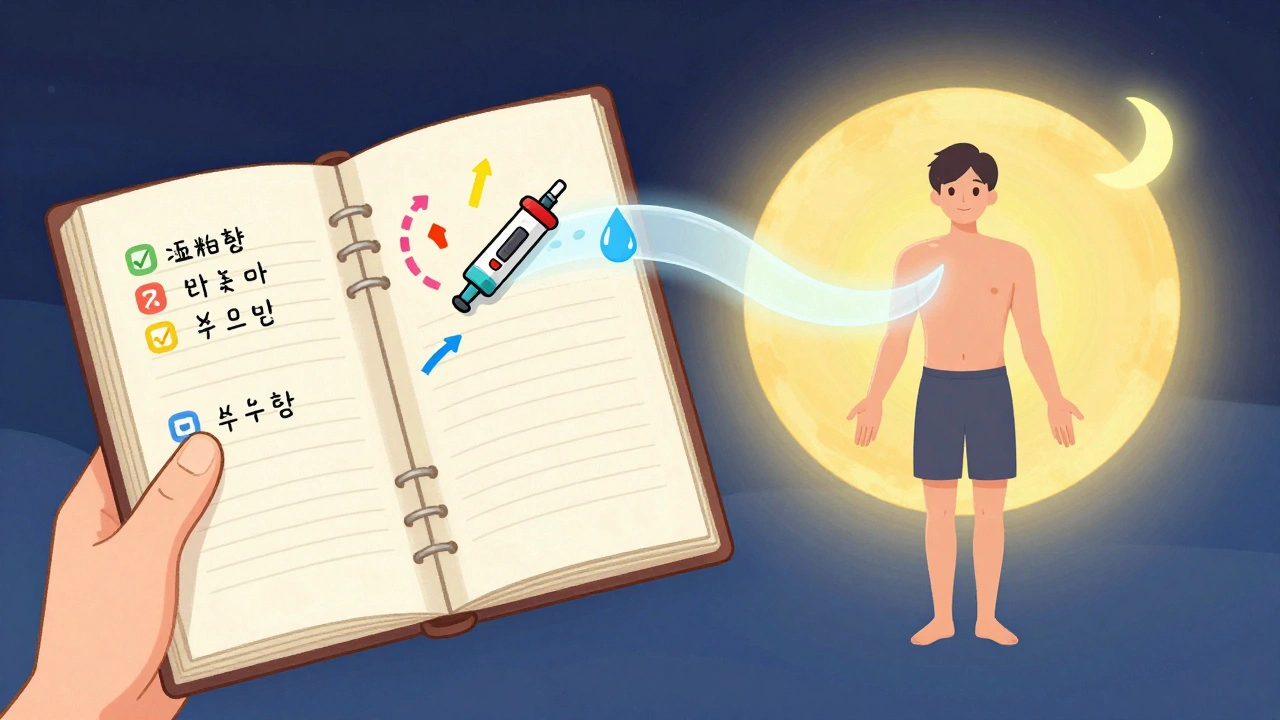
Tracking your triggers helps. Keep a log: what you ate, when you took insulin, your activity, stress level, and blood sugar. Patterns emerge fast.
How to Prevent Repeated Episodes
One high blood sugar episode is a warning. Two or more? You need a plan change.
- Use a continuous glucose monitor (CGM): CGMs like Dexcom or Freestyle Libre give real-time alerts. Studies show users reduce severe highs by over 50%. You’ll know before you feel it.
- Get diabetes education: Programs like CDC’s Diabetes Self-Management Education cut ER visits by 42%. Learn carb counting, insulin timing, and how to read your numbers.
- Review your insulin regimen: If you’re on insulin, talk to your provider about basal-bolus therapy or an insulin pump. Many people are on outdated regimens.
- Check for gastroparesis: If your blood sugar spikes unpredictably, especially after meals, your stomach may be slowing down. This delays insulin absorption. A gastric emptying test can diagnose it.
- Build a support system: Tell family or friends what to do if you pass out. Keep glucagon and ketone strips at home. You’re not alone.
People who manage hyperglycemia well don’t just rely on insulin. They rely on awareness, tools, and preparation.
What’s Changing in 2025
Technology is making a big difference. The FDA approved Dexcom G7’s "Glucose Guardian" in early 2024-a predictive algorithm that warns you 30 minutes before a spike. Hospitals now require glucose control protocols for all admitted patients. Medicare now covers CGMs for more people, and AI tools are being tested to predict hyperglycemia before it happens.
But access still isn’t equal. Black and low-income patients have 2.3 times more emergency hyperglycemia events than white patients, mostly due to insulin cost and lack of education. If you’re struggling to afford supplies, ask your provider about patient assistance programs. You deserve care.
Final Thought: This Is Manageable
Hyperglycemia isn’t a failure. It’s a signal. Every high reading is data-not shame. You’re not broken. You’re learning. The goal isn’t perfection. It’s catching it early, correcting it safely, and preventing the next one.
Know your numbers. Know your symptoms. Know your plan. And if something feels off-trust it. Your life depends on it.
What blood sugar level is considered a hyperglycemia emergency?
A blood sugar level above 240 mg/dL with ketones present is a warning to act. Levels above 300 mg/dL, especially with symptoms like nausea, confusion, or rapid breathing, are emergencies. Above 600 mg/dL, you’re at risk for hyperosmolar hyperglycemic state (HHS), which can lead to coma or death. Always seek medical help if you can’t bring it down after two correction doses or if you have ketones.
Can you have high blood sugar without having diabetes?
Yes. Severe infections, trauma, major surgery, or medications like steroids can cause temporary hyperglycemia. Conditions like Cushing’s syndrome or pancreatitis can also lead to high blood sugar. In these cases, the body’s stress response overwhelms its ability to regulate glucose. While it’s not diabetes, it still needs monitoring and treatment to avoid complications.
Why does high blood sugar make me so tired?
Your cells need glucose for energy, but without enough insulin, sugar can’t get inside them. So even though your blood is full of glucose, your muscles and brain are starving. That’s why you feel exhausted, even after sleeping. It’s not laziness-it’s a metabolic block. Once your blood sugar normalizes, energy returns.
Is it safe to exercise when my blood sugar is high?
Only if your blood sugar is above 250 mg/dL and you have no ketones. If ketones are present, exercise can push your body to make more ketones, worsening DKA. Always test for ketones before working out. If you’re feeling unwell or your blood sugar is over 300 mg/dL, rest and hydrate instead.
How long does it take to recover from a hyperglycemia episode?
Mild spikes (250-300 mg/dL) can normalize within 2-4 hours with insulin and fluids. Moderate to severe episodes (above 300 mg/dL) may take 12-24 hours to stabilize, especially if dehydration or ketones are involved. HHS can require days of IV fluids and close monitoring in the hospital. Recovery isn’t just about lowering the number-it’s about restoring your body’s balance.
Can stress really cause high blood sugar?
Absolutely. Stress triggers your body’s fight-or-flight response, releasing cortisol and adrenaline. These hormones tell your liver to dump glucose into your bloodstream-even if you don’t need it. This is why people with diabetes often see spikes during arguments, job stress, or even good news like a wedding. Managing stress isn’t optional-it’s part of diabetes care.
What should I do if I can’t reach my doctor during a high blood sugar emergency?
If your blood sugar is above 300 mg/dL with ketones, nausea, confusion, or difficulty breathing, go to the nearest emergency room immediately. Don’t wait for a call back. Hospitals are required to treat diabetic emergencies regardless of insurance. If you’re alone, call 911 or ask someone to take you. Your safety is more important than waiting for approval.
Are there any natural remedies for lowering blood sugar in an emergency?
No. There are no safe or effective natural remedies for a true hyperglycemic emergency. Drinking water helps with hydration, but it won’t lower your blood sugar alone. Cinnamon, apple cider vinegar, or herbal teas have no proven effect on acute spikes. Insulin is the only reliable treatment for blood sugar above 250 mg/dL with symptoms. Relying on alternatives can delay life-saving care.
Andrea DeWinter
December 9, 2025 AT 11:24Been there done that. One time I ignored the thirst and frequent pee thing because I thought I was just dehydrated from hiking. Ended up in the ER with ketones at 3.2. They said if I'd waited another 6 hours I might not have woken up. Don't be me. Check your sugars. Check your ketones. Drink water. It's that simple.
Also CGM changed my life. I didn't believe in them until I saw a spike coming 20 mins before I felt anything. Game changer.
precious amzy
December 10, 2025 AT 12:48One cannot help but observe the profound anthropological implications of metabolic dysregulation as a modern symptomatology of existential alienation. The body, in its biochemical rebellion, becomes a silent testament to the collapse of the Cartesian dichotomy between mind and matter. One is compelled to question: Is hyperglycemia not merely a physiological phenomenon, but an epistemological crisis rendered in glucose units?
Katherine Chan
December 11, 2025 AT 18:08Y'all need to know this stuff. I used to think high blood sugar was just "feeling sluggish" until my cousin passed out at a family BBQ. She didn't even know she had prediabetes. Now I carry ketone strips in my purse and I teach my coworkers how to check their numbers. You don't need to be a doctor to save a life. Just pay attention.
And yes, stress totally spikes your sugar. I had a 380 after my boss yelled at me for a typo. Who knew anxiety could be so sugary?
Tim Tinh
December 11, 2025 AT 21:17bro i had a 420 once after eating a whole pizza and forgetting my insulin. i just drank water and laid down for 2 hours. i didnt go to the er but i felt like death. dont be like me. if you feel weird and your sugar is up, just call someone. dont be proud. we all mess up.
ps: i typoed "insulin" as "insuline" in my log once. my nurse laughed but still helped me fix it. we got this.
Iris Carmen
December 12, 2025 AT 19:38so i checked my sugar after coffee and it was 280. i was like "eh" and went back to bed. woke up 4 hours later with a headache and a weird smell on my breath. turned out i had ketones. now i always check after coffee. who knew caffeine + diabetes = bad combo?
Taya Rtichsheva
December 14, 2025 AT 12:46Oh wow so if you don't check your sugar you might die? Groundbreaking. I guess that's why they call it "diabetes" and not "I'm Just Lazy And Forgot My Insulin"
Also the part about stress causing spikes? Shocking. Next you'll tell me crying makes your nose run.
Christian Landry
December 15, 2025 AT 16:10Hey I just wanna say I'm so glad this post exists. I've been dealing with this for 12 years and I still get scared when my numbers spike. I use my CGM now and it's a lifesaver. Also, I drink water like it's my job now 😅
PS: I asked my mom to learn how to use my glucagon pen. She cried. We both cried. But now she knows what to do. That means everything.
Mona Schmidt
December 16, 2025 AT 08:51While the article accurately delineates the clinical parameters of hyperglycemic emergencies, it fails to address the socioeconomic determinants of glycemic control. The assertion that "this is manageable" ignores the reality that insulin cost remains prohibitive for 1 in 4 Americans with diabetes. Access to CGMs, diabetes educators, and emergency care is not equitable. Management is not merely a matter of personal responsibility-it is a public health imperative.
Sarah Gray
December 17, 2025 AT 16:23Anyone who doesn't check ketones when their blood sugar exceeds 240 mg/dL is not managing diabetes-they're gambling with their life. I've seen too many people ignore the fruity breath, the nausea, the confusion. It's not "just a spike." It's a death sentence waiting to happen. If you're not taking this seriously, you're not just putting yourself at risk-you're putting your family through hell.
Andrea Petrov
December 18, 2025 AT 02:10Did you know the pharmaceutical industry profits $300 billion a year from diabetes? They don't want you to know that fasting and keto diets can reverse insulin resistance. The FDA approves expensive CGMs and insulin pumps because they're profitable-not because they're necessary. Your body can heal itself if you stop listening to doctors and start listening to nature.
Also, I heard the government is secretly adding sugar to public water supplies. That's why your numbers keep rising.
Evelyn Pastrana
December 19, 2025 AT 19:20lol so if you're tired and thirsty you might be dying? wild. i thought it was just because i stayed up watching netflix again. also i ate a whole bag of gummy bears yesterday and my sugar was 320. i just drank water and went to sleep. no big deal. i'm sure it'll be fine. 🤷♀️
Nikhil Pattni
December 21, 2025 AT 00:34Bro I've been diabetic since 2010 and I can tell you this: You need to eat only brown rice, no sugar, no bread, no fruit, no milk, no anything sweet. I eat only vegetables and chicken boiled with salt. I don't use insulin at all. I check my sugar 10 times a day. I lost 40 pounds. My A1C is 5.2. I don't need no CGM, no doctor, no medicine. Just discipline. You people are weak. You eat pizza and then cry because your sugar is high. No wonder you're all sick. I live in India, we don't have insulin here, we survive with willpower. You need to be stronger. Also I have 3 kids and they all have diabetes now because they eat sugar. So you see? It's your fault. Fix your life.
Arun Kumar Raut
December 22, 2025 AT 16:52Hey everyone, I just wanna say I'm proud of you for reading this. I've been living with type 2 for 15 years and I still have bad days. But I learned one thing: You're not alone. I talk to my buddy Raj every morning about our numbers. We cheer each other on. Even if you mess up, you can try again tomorrow. We all have bad readings. It's not about being perfect. It's about showing up. You got this. 💪