
How to Verify Generic Medicine Authenticity: Packaging, Labels & Security Features
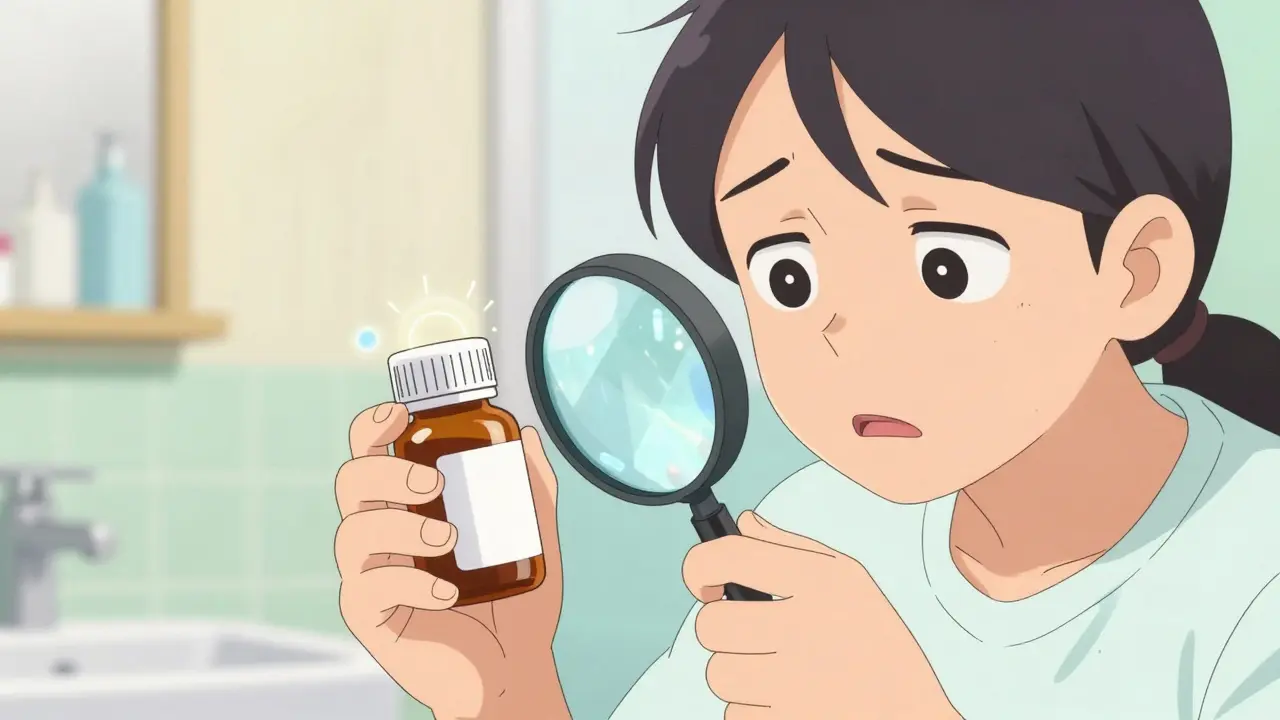
Imagine picking up your monthly prescription for a common condition, only to find out later that the pills contained chalk instead of active ingredients. This isn't a horror movie plot; it is a real risk. According to the World Health Organization, counterfeit medicines represent up to 10% of the global pharmaceutical market, with rates soaring to 30% in some developing regions. While branded drugs often get the spotlight, generic medicines are actually more vulnerable because they move through longer supply chains and have lower profit margins for manufacturers.
If you are a patient, a pharmacist, or simply someone who wants to ensure their medication is safe, knowing how to spot a fake is critical. Counterfeit generics don't just fail to treat illness-they can cause treatment failure, trigger drug resistance, or even lead to death. The good news? You do not need a lab coat to start verifying authenticity. By understanding the layers of security built into modern packaging and labeling, you can become your own first line of defense.
The Three Layers of Drug Verification
Modern pharmaceutical security relies on a multi-barrier approach. Think of it like securing a house: you have visible locks (overt features), hidden alarms (covert features), and a tracking system for every item leaving the property (track-and-trace). Understanding these three categories helps you know what to look for and when to call in the pros.
- Overt Features: These are visible without special tools. They include holograms, color-shifting inks, and specialized printing textures. For example, many authentic packages use Optically Variable Ink that shifts from green to blue when tilted. If the color stays flat, be suspicious.
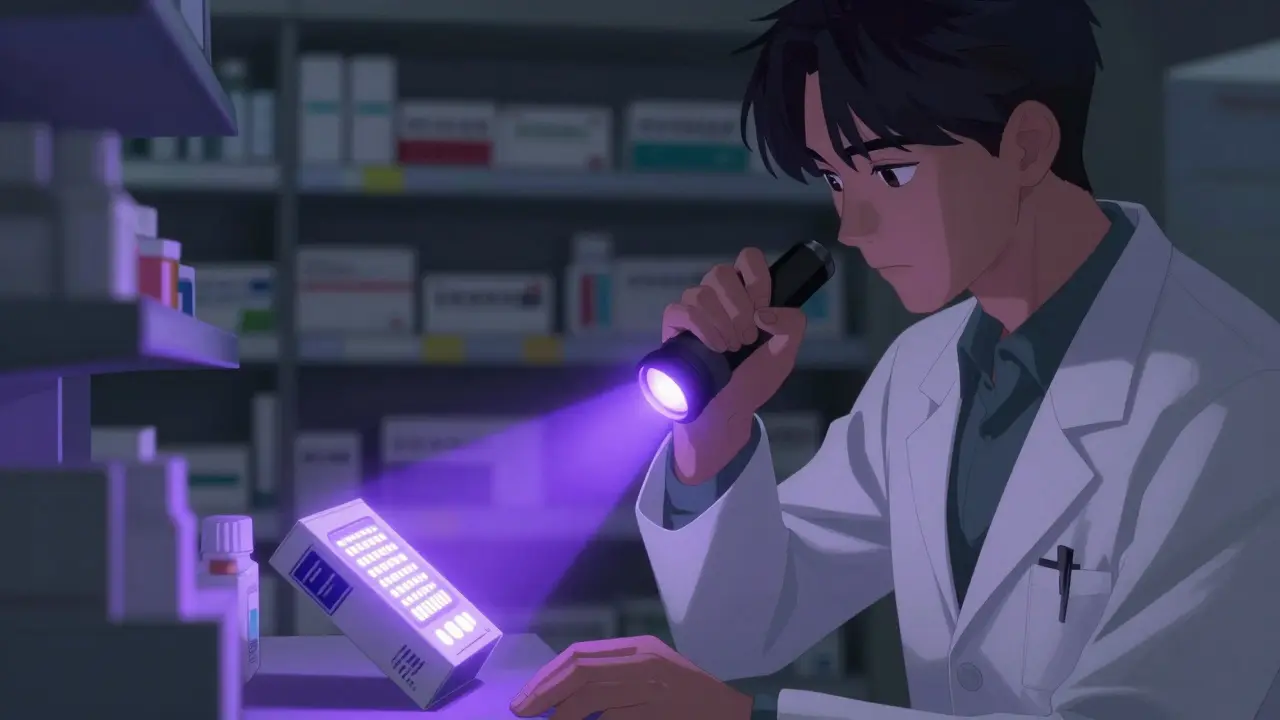
- Covert Features: These require simple tools, like a UV light. Many major brands, including Johnson & Johnson, use UV-sensitive inks on their Tylenol packaging since 2015. Under a 365nm ultraviolet light, specific logos or patterns should glow. Without the light, they are invisible.
- Track-and-Trace Systems: This is the digital backbone. Every package has a unique serial number following the GS1 standard. In the U.S., the Drug Supply Chain Security Act (DSCSA) mandates this tracing. You can scan these codes to verify if the product’s journey matches official records.
The European Union Falsified Medicines Directive (FMD) set a high bar by requiring all prescription medicines to implement safety features by February 9, 2019. This established a baseline for 32 countries, proving that robust verification works when regulations are enforced.
Visual Inspection: What Your Eyes Can Catch
You might think counterfeits look sloppy, but sophisticated fakes can replicate packaging with 80-90% accuracy, according to INTERPOL's 2021 Operation Pangea report. That means you need to look closer than usual. Here is a checklist for visual inspection:
- Hologram Quality: Genuine holograms have micro-texts typically between 50-100 micrometers in size. Look for crisp edges and depth. Fake holograms often look flat or blurry under magnification.
- Printing Texture: Run your finger over the text. Authentic packaging often uses intaglio printing, where the ink sits slightly raised. Counterfeits usually feel smooth.
- Font Consistency: Pharmacists have reported spotting fakes because the expiration date font was slightly different. Compare the date font to other printed text on the box. It should match perfectly.
- Seal Integrity: Check for tamper-evident seals. If the seal looks glued on unevenly or lacks the manufacturer’s logo, return the product immediately.
Remember, overt features are the first line of defense, but they are also the easiest to copy. If something feels off visually, do not assume it is fine-move to covert verification.
Covert Verification: Tools for Home and Pharmacy
If visual inspection raises doubts, covert features provide higher security. The most accessible tool is a handheld UV light, which costs between $50 and $200. When you shine a 365nm UV light on authentic packaging, you should see specific markers glow. For instance, Lumilink® UV markers are detectable with readers costing $200-$500, widely used by professionals.
For deeper analysis, spectroscopic devices are the gold standard. Handheld Near-Infrared (NIR) spectroscopy devices, such as the Thermo Fisher TruScan RM, weigh about 1.4 kg and analyze a sample in 10-30 seconds. These devices detect physicochemical differences invisible to the naked eye. A study in the American Pharmaceutical Review found that NIR spectroscopy achieves 92-97% accuracy in detecting coating defects and moisture variations. If the correlation coefficient drops below 0.85, it reliably indicates a counterfeit.
Raman spectroscopy, using devices like the B&W Tek NanoRam, offers another option. It identifies specific chemical constituents with 88-94% accuracy. However, it struggles with dark-colored tablets due to fluorescence interference. Most healthcare facilities invest $15,000-$50,000 in these tools, making them less accessible for home use but invaluable for pharmacies.
| Method | Cost Range | Accuracy Rate | Best For |
|---|---|---|---|
| Visual Inspection | $0 | ~60-70% | Quick consumer checks |
| UV Light Verification | $50 - $200 | ~85% | Pharmacists, home users |
| NIR Spectroscopy | $15,000 - $50,000 | 92-97% | Field verification, hospitals |
| Raman Spectroscopy | $20,000 - $50,000 | 88-94% | Chemical constituent ID |
The Role of Track-and-Trace Technology
Track-and-trace systems are the most secure method but require significant infrastructure. The U.S. Drug Supply Chain Security Act (DSCSA) mandated full product tracing by November 27, 2023. This system assigns a unique serial number to each package, allowing stakeholders to verify its history.
In Europe, the European Medicines Verification System (EMVS) processes over 2.5 billion verification requests annually with 99.998% uptime. This is significantly more reliable than individual country systems. For example, India’s Drug Authentication and Verification Application (DAVA) handles 200 million verifications yearly but faces challenges with network connectivity, working only 65% of the time in some rural areas.
However, track-and-trace has limitations. A 2023 Reddit thread by pharmacists revealed that barcode scanning fails 40-50% of the time with generics due to inconsistent serialization. Generic medicines pass through 5-7 distribution points compared to 3-4 for branded products, increasing opportunities for error or tampering. Always cross-reference digital scans with physical inspections.
Why Generics Are More Vulnerable
Generic medicines account for 90% of prescriptions in the U.S. but only 22% of pharmaceutical spending. Because margins are thin, manufacturers invest less in security features. The International Federation of Pharmaceutical Manufacturers & Associations (IFPMA) reports that verification costs average 1.2-1.8% of revenue for generic makers, compared to 0.7-1.1% for branded companies.
This economic disincentive creates a gap. A survey by the National Community Pharmacists Association found that 68% of independent pharmacists struggle to verify generics, citing inconsistent application of security features (84%) and lack of reference samples (76%). As a consumer, you must be more vigilant with generics than with branded drugs.
Practical Steps for Consumers and Professionals
You do not need to be a scientist to protect yourself. Here is a practical workflow for verifying any medication:
- Buy from Reputable Sources: Only purchase from licensed pharmacies. Online marketplaces with unknown sellers carry the highest risk.
- Inspect the Packaging: Check for holograms, color-shift inks, and tamper-evident seals. Feel the texture of the print.
- Use a UV Light: If available, scan for hidden UV markers. Keep a small flashlight at home for this purpose.
- Scan the Code: Use official apps provided by the manufacturer or regulatory bodies. Do not rely on third-party scanners unless verified.
- Report Suspicious Items: If you suspect a counterfeit, contact your local health authority. In the U.S., report to the FDA MedWatch program.
For pharmacies, implementing a full verification system takes 40-80 staff hours initially. Training for basic visual inspection takes just 1-2 hours, while spectroscopic equipment requires 8-16 hours to achieve proficiency. Investing in this training saves lives and builds trust.
Future Trends in Drug Authentication
Technology is evolving rapidly. The FDA’s 2023 pilot program tested blockchain-based verification for generics, achieving 99.2% accuracy across four distribution tiers. By January 1, 2025, the EU will require all generic medicines to implement 2D data matrix codes with cryptographic authentication.
Artificial intelligence is also entering the scene. Gartner forecasts that 70% of pharmaceutical verification will use AI-enhanced multi-method approaches by 2028. These systems combine visual, spectral, and digital data to detect anomalies humans might miss. Meanwhile, handheld spectrometers are getting faster and cheaper, with new models reducing analysis time to 5-15 seconds.
Despite these advances, global cooperation remains essential. National systems alone cannot stop transnational counterfeiting rings. Harmonized international standards are needed to close loopholes and ensure that every pill, whether generic or branded, meets the same rigorous safety checks.
Can I verify generic medicine at home?
Yes, you can perform basic verification at home. Start with visual inspection of holograms, print quality, and seals. Invest in a $50-$200 UV light to check for covert markers. However, for definitive proof, especially with complex generics, consult a pharmacist or use professional spectroscopic tools.
Why are generic drugs harder to verify than branded ones?
Generics have lower profit margins, leading manufacturers to spend less on security features. They also travel through more distribution points (5-7 vs. 3-4 for branded), increasing tampering risks. Additionally, serialization consistency is often poorer among generic producers.
What is the most accurate way to detect counterfeit drugs?
The most accurate method combines multiple approaches. Spectroscopic analysis (NIR or Raman) provides 92-97% accuracy for chemical composition. When combined with track-and-trace digital verification and visual inspection, detection rates reach 98.7%, far surpassing single-method approaches.
How much does professional drug verification equipment cost?
Handheld UV lights cost $50-$200. Professional spectroscopic devices like NIR or Raman scanners range from $15,000 to $50,000 per unit. Annual maintenance adds $2,500-$5,000. Full track-and-trace implementation for manufacturers can cost $500,000-$2 million per product line.
Are holograms on medicine packaging reliable?
Holograms are useful but not foolproof. Sophisticated counterfeiters can replicate them with 80-90% accuracy. Always inspect for micro-text clarity and depth. Combine hologram checks with UV verification and digital scanning for better reliability.
What should I do if I suspect my medication is fake?
Stop taking the medication immediately. Contact your pharmacist or doctor for an alternative. Report the incident to your national health authority (e.g., FDA MedWatch in the U.S.). Preserve the packaging and remaining pills for investigation.
How effective are mobile apps for drug verification?
Mobile apps are convenient but inconsistent. Trustpilot reviews show they work well for branded drugs but fail 40-50% of the time with generics due to poor serialization. Network issues also limit their use in remote areas. Use them as a supplementary tool, not the sole verification method.
Will blockchain solve the counterfeit drug problem?
Blockchain shows promise. The FDA’s 2023 pilot achieved 99.2% accuracy in tracking generics. However, widespread adoption requires global standardization and infrastructure investment. It complements, rather than replaces, physical security features and spectroscopic testing.