
Herbal Supplements and Drug Interactions: What You Need to Know for Safety
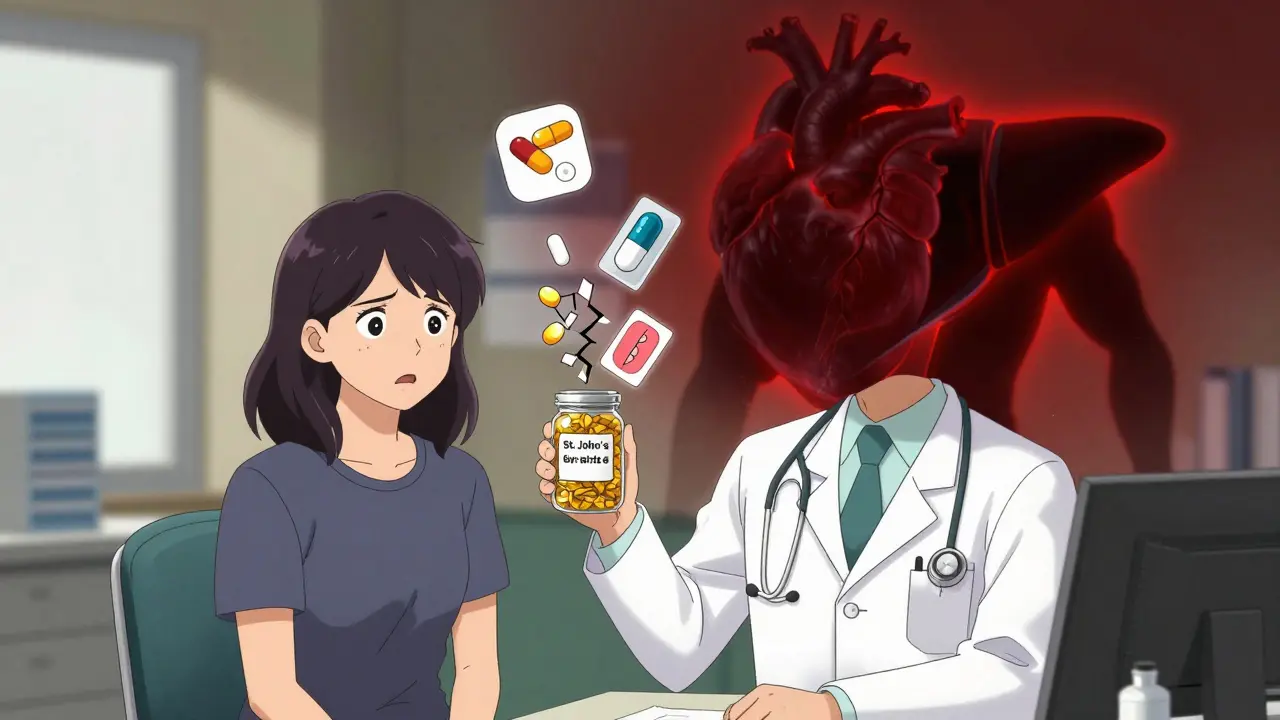
Every year, millions of people take herbal supplements thinking they’re harmless because they’re "natural." But here’s the truth: herbal supplements can be just as powerful-and just as dangerous-as prescription drugs when mixed with them. You might be taking ginkgo for memory, garlic for heart health, or St. John’s wort for low mood. But if you’re also on blood thinners, antidepressants, or heart medication, you could be risking serious harm without even knowing it.
Why Herbal Supplements Aren’t Always Safe
The idea that "natural" means "safe" is one of the biggest myths in health today. Herbal products aren’t regulated like prescription drugs. They don’t go through clinical trials to prove how they interact with other medicines. The FDA doesn’t require manufacturers to test for interactions before selling them. That means a supplement labeled "pure ginseng" could be doing things inside your body you never expected.
Take St. John’s wort, for example. It’s one of the most popular herbal remedies for mild depression. But it’s also one of the most dangerous when mixed with other meds. Studies show it can cut the effectiveness of birth control pills by up to 50%, leading to unplanned pregnancies. It can drop levels of cyclosporine-a drug transplant patients rely on to keep their organs alive-by as much as 57%. In one documented case, a kidney transplant patient lost their new organ because they took St. John’s wort and didn’t tell their doctor.
Why does this happen? Because herbs contain active chemicals that change how your body processes drugs. Some speed up the breakdown of medications, making them useless. Others slow it down, causing toxic buildup. These effects aren’t subtle. They can lead to organ rejection, dangerous bleeding, heart rhythm problems, or even death.
The Top 5 Risky Herbal Supplements and What They Do
Not all herbs are created equal when it comes to interactions. Some are low-risk. Others are ticking time bombs. Here are the five with the strongest evidence of harm:
- St. John’s wort - This is the worst offender. It activates enzymes in your liver (CYP3A4 and P-gp) that flush out drugs too fast. It affects at least 15 classes of medications, including HIV drugs, antidepressants, blood thinners, and heart meds like digoxin. One study found it reduced the concentration of the HIV drug indinavir by 80%-enough to let the virus come back.
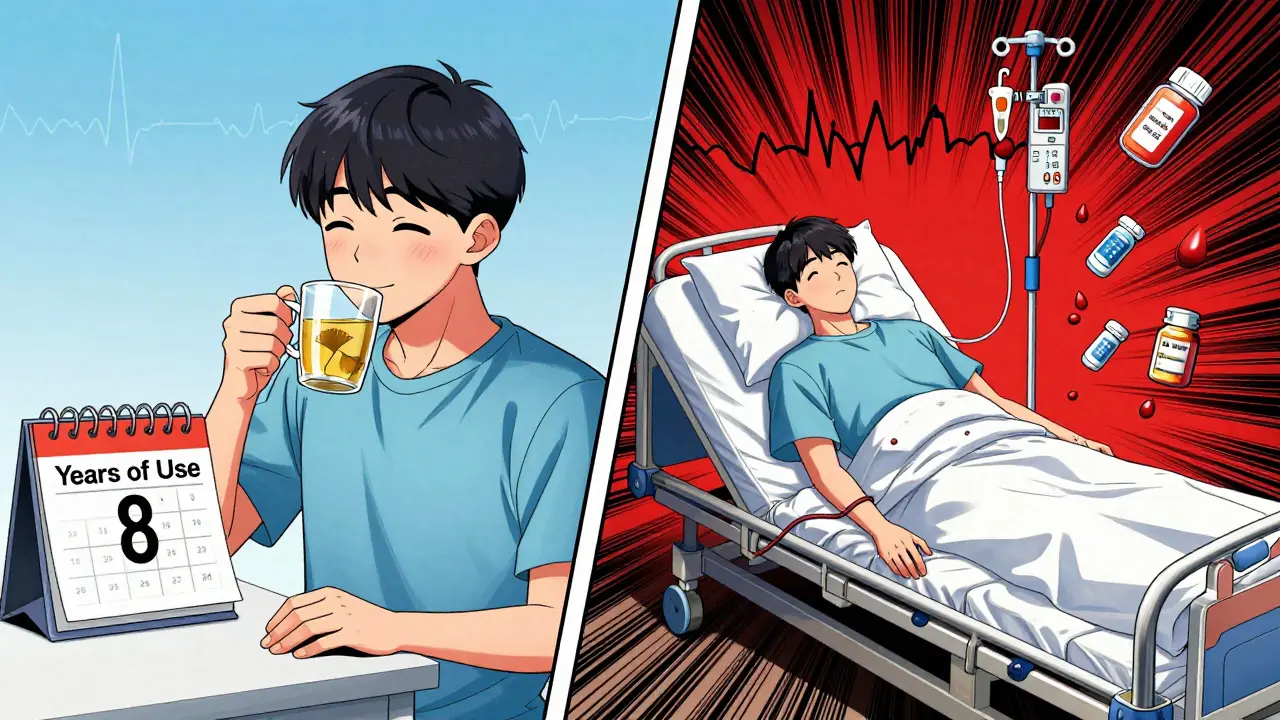
- Ginkgo biloba - Often taken for memory or circulation, ginkgo interferes with blood clotting. When combined with warfarin or aspirin, it can double the risk of bleeding. A 2009 review of five studies with over 1,200 patients found a 30% increase in bleeding events. One doctor in Australia reported three emergency room visits in a single year from patients who didn’t mention their ginkgo use.
- Garlic - Popular for heart health, garlic also thins the blood and boosts liver enzymes. It can reduce the effectiveness of saquinavir (an HIV drug) by 51% and increase bleeding risk when taken with warfarin. A 2023 analysis of patient reviews found garlic was mentioned in 28% of negative reports about warfarin.
- Danshen (Salvia miltiorrhiza) - Used in traditional Chinese medicine for heart conditions, danshen contains compounds that prevent platelets from sticking together. When taken with blood thinners, it can increase bleeding risk by 35%. It also raises the chance of irregular heartbeat when mixed with digoxin.
- Goldenseal - Often sold as a cold remedy, goldenseal blocks liver enzymes that break down drugs. This causes medications like dextromethorphan (in cough syrup) and metoprolol (a beta-blocker) to build up to toxic levels. A 2020 review found 23 confirmed drug interactions with goldenseal, including life-threatening ones.
What About the "Safe" Herbs?
You’ve probably heard that milk thistle, American ginseng, or saw palmetto are safe. And yes, they’re generally lower risk. But "low risk" doesn’t mean "no risk."
American ginseng, for example, may reduce the effectiveness of warfarin by mimicking vitamin K. In one case, a patient’s INR dropped from 4.9 to 1.9 after taking 1,000 mg daily-putting them at high risk for a stroke. Valerian root, often used for sleep, can make sedatives like benzodiazepines too strong. And cranberry juice? It’s fine in small amounts, but large doses can interfere with warfarin.
The problem isn’t just the herbs themselves. It’s that most people don’t realize their supplement is a drug. They think, "It’s just a tea," or "I’ve been taking this for years." But the chemistry doesn’t care how long you’ve used it. If it changes how your body handles another medicine, it’s a risk.
Why Doctors Don’t Always Know
Here’s a startling fact: In a 2016 study of 299 hospitalized patients in Israel, 25% were taking herbal supplements. But doctors missed it in 72% of those cases.
Why? Because most doctors aren’t trained to ask. They ask about "medications," but not "teas, tinctures, or herbal powders." Patients don’t volunteer the info because they assume it’s harmless. Or they’re embarrassed. Or they’ve been told by a naturopath that it’s "safe with everything."
Pharmacists at the Mayo Clinic say they spend an average of 12 minutes per patient explaining herb-drug risks. For St. John’s wort, it’s 18 minutes. That’s because the interactions are complex, and the consequences are severe.
And it’s not just in the U.S. A 2020 review of 189 documented interactions found that nearly half had clear clinical evidence of harm. Yet only 3% of primary care providers routinely screen for these interactions.
What You Should Do
If you take prescription drugs and use herbal supplements, here’s what to do right now:
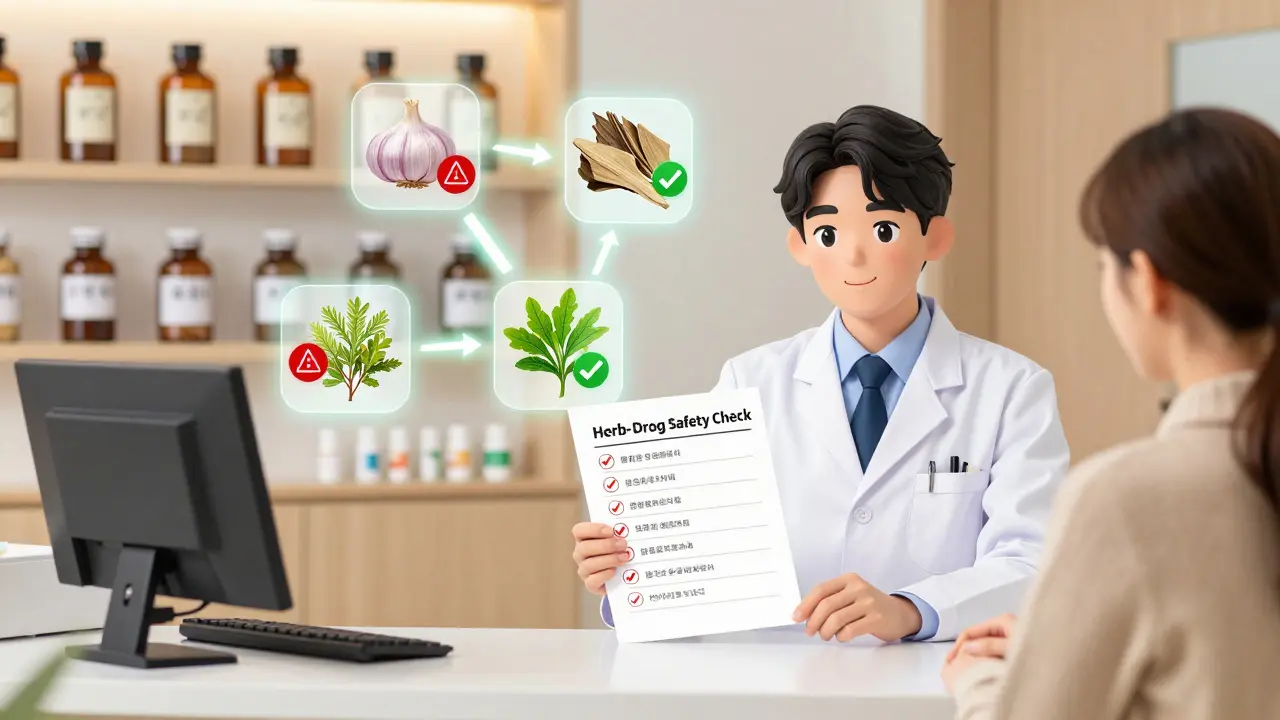
- Make a full list - Write down every supplement you take, including name, dose, and how often. Don’t forget teas, tinctures, or powders.
- Bring it to every appointment - Hand it to your doctor or pharmacist. Say: "I take these. Are they safe with my meds?"
- Ask specifically about St. John’s wort, ginkgo, garlic, danshen, and goldenseal - These are the big five. If you take any of them, assume there’s a risk until proven otherwise.
- Don’t start a new supplement without checking - Even if it’s "natural" or sold in a health food store.
- Watch for signs of trouble - Unexplained bruising, dizziness, irregular heartbeat, confusion, or sudden changes in how your medication works (like birth control failing or blood pressure dropping too low).
There’s no shame in taking supplements. Many people benefit from them. But the key is knowing how they interact. You wouldn’t mix two prescription drugs without asking your doctor. Don’t treat herbal products any differently.
What’s Being Done About It?
There’s growing awareness. The NIH spent $12.7 million in 2023 on herb-drug interaction research. The FDA is drafting new rules requiring interaction testing for new botanical drugs. The European Medicines Agency now demands full interaction studies for herbal medicines. And AI tools like the Herb-Drug Interaction Prediction Engine, launched in March 2024, can now predict new risks with 87% accuracy by analyzing 3,000+ known interactions.
But technology can’t replace conversation. Until patients feel safe telling their doctors about their herbal use, and until doctors start asking the right questions, people will keep getting hurt.
Final Thought
You don’t need to stop taking herbal supplements. But you do need to treat them like the active medicines they are. A supplement that changes your liver enzymes, your blood clotting, or your heart rhythm isn’t a harmless tea. It’s a drug. And drugs interact.
The safest choice isn’t to avoid herbs. It’s to know exactly what you’re taking-and who to talk to about it.
Can herbal supplements be as dangerous as prescription drugs?
Yes. Some herbal supplements have the same potency-and same risks-as prescription drugs. St. John’s wort, for example, can reduce the effectiveness of birth control pills, transplant medications, and HIV drugs by up to 80%. It doesn’t matter if something is "natural." If it changes how your body processes another drug, it can be just as dangerous.
Which herbal supplement has the most documented drug interactions?
St. John’s wort has the most documented and clinically significant interactions. It affects at least 15 major drug classes, including antidepressants, blood thinners, heart medications, birth control pills, and HIV treatments. Studies have shown it can reduce drug levels by 20% to 80%, leading to treatment failure, organ rejection, or unintended pregnancy.
Why don’t doctors always know about my herbal supplement use?
Most doctors don’t ask. They assume patients will mention it if it’s important. But patients often don’t realize herbal supplements are drugs. A 2016 study found that 72% of hospitalized patients taking herbs weren’t identified by medical staff because they weren’t asked. Even when asked, many patients don’t disclose use due to fear of judgment or thinking it’s "harmless."
Specialized training is needed to catch these interactions. One study found that visual aids showing common herbal products increased patient disclosure by 47% compared to just asking verbally.
Is it safe to take ginkgo biloba with blood thinners?
No. Ginkgo biloba increases bleeding risk by interfering with platelet function. When taken with warfarin, aspirin, or other blood thinners, it can raise the risk of bleeding by 30% or more. There are documented cases of internal bleeding, including brain hemorrhages, linked to this combination. Even if you’ve taken ginkgo for years, adding a blood thinner can be dangerous.
Are there any herbal supplements that are generally safe with medications?
Some herbs like milk thistle, saw palmetto, and black cohosh have low interaction potential. But "low risk" doesn’t mean "no risk." Even these can interfere with certain drugs in specific cases. For example, American ginseng has been shown to reduce warfarin’s effectiveness. The safest approach is always to check with your doctor or pharmacist before starting any new supplement, no matter how mild it seems.
What should I do if I’m taking supplements and notice new side effects?
Stop the supplement immediately and contact your doctor or pharmacist. Don’t wait. New side effects like unexplained bruising, dizziness, irregular heartbeat, or changes in how your medication works (e.g., birth control failing, blood pressure dropping too low) could be signs of an interaction. Bring your supplement list with you. Even if you think it’s unrelated, it might be the cause.
David McKie
February 27, 2026 AT 07:07Let me just say this: I’ve been taking St. John’s wort for three years. No doctor ever asked. No pharmacist either. Then one day I got dizzy, my heart raced, and my bloodwork looked like a horror movie. Turns out I was on a beta-blocker and didn’t realize the herb was turning my meds into useless paper. I almost died. And now? I’m one of those weirdos who carries a laminated card in my wallet that says ‘I take herbs. Ask me before you prescribe.’
Why? Because people treat supplements like candy. ‘Oh, it’s just garlic!’ Yeah, and your car’s just a ‘vehicle’-until it hits a wall at 80 mph. This isn’t about fear. It’s about responsibility. If you’re gonna take something that changes your liver enzymes, you owe it to yourself to know what you’re doing.
And don’t even get me started on naturopaths who say ‘it’s all natural so it’s safe.’ Natural doesn’t mean harmless. Poison ivy is natural. Cyanide is natural. You don’t eat either. So why do you think your ‘herbal tea’ is exempt from consequences?
I’m not anti-herb. I’m pro-awareness. Knowledge isn’t optional. It’s survival.
Southern Indiana Paleontology Institute
February 27, 2026 AT 10:20man i dont care what some study says. im from indiana and we take garlic like candy. my grandpa took 10 cloves a day for 50 years and still rode his tractor at 87. you wanna scare people? fine. but dont act like the fda is the bible. they banned ephedra but still let aspartame in soda. whats next? banning water because too much can kill you?
also ginkgo? pfft. my aunt took it for 20 years and her memory is better than mine. you think some lab rat in a white coat knows more than a grandma who’s been taking it since the 70s? lol.
stop scaremongering. people need to chill out. if you got a problem with your meds, talk to your doc. dont blame the herbs. blame the system.
Anil bhardwaj
February 27, 2026 AT 10:52cool post. i’ve been taking ashwagandha for anxiety and never thought about interactions. kinda scary how little we know. i’ll definitely ask my doc next time. thanks for the heads up. also, i just learned danshen is a thing. didn’t even know it had a name.
lela izzani
February 28, 2026 AT 04:18As someone who works in a hospital pharmacy, I can tell you-this isn’t theoretical. Last week, a 68-year-old woman came in with a GI bleed. She’d been taking ginkgo daily for ‘circulation’ and was on warfarin. She didn’t mention the ginkgo because her cousin said ‘it’s just a leaf.’ We had to transfuse her. She’s lucky she made it.
Here’s the truth: Your doctor doesn’t know because you don’t tell them. And you don’t tell them because you think it’s ‘not medicine.’ But if it changes how your body works? It’s medicine. Period.
Bring your supplement list. Write it down. Say it out loud. Even if it feels awkward. Your life is worth more than your pride.
Dinesh Dawn
March 1, 2026 AT 08:17appreciate this. i’ve been taking turmeric for joint pain and always assumed it was harmless. guess i’ll look into interactions now. also, the part about doctors not asking? yeah, i’ve been there. they just nod and move on. we need better systems.
Vanessa Drummond
March 2, 2026 AT 09:14OMG this is so true!! I took St. John’s wort for my ‘mild depression’ and didn’t tell my psych because I thought it was ‘natural’ and ‘safe.’ Then I got hospitalized for serotonin syndrome. I was on SSRIs. I didn’t even know that was a thing. I’m so angry now. Why isn’t this on every supplement bottle? Like a warning label? ‘WARNING: MAY CAUSE ORGAN FAILURE IF TAKEN WITH ANTIDEPRESSANTS’?!!
I’m done being quiet. I’m telling everyone. This is a public health crisis. Someone needs to sue these supplement companies.
Nick Hamby
March 3, 2026 AT 08:22There is a deeper philosophical question here: If a substance alters the biochemistry of the human body with measurable, documented, and sometimes lethal consequences, does it not, by definition, qualify as a pharmacological agent? The term ‘herbal supplement’ is a semantic loophole-a linguistic construct designed to evade regulatory scrutiny.
The fact that we permit substances with known, potent, and dangerous interactions to be sold without labeling, clinical testing, or professional oversight is not a failure of regulation. It is a failure of epistemology. We have allowed cultural bias-the romanticization of ‘nature’-to override scientific rigor.
Consider this: If you were to ingest a synthetic compound that reduced the plasma concentration of indinavir by 80%, you would be arrested. But if that same compound is extracted from a plant, you are celebrated. Why? Because we have assigned moral value to origin, not consequence.
We must shift the paradigm. Not from ‘natural vs. synthetic,’ but from ‘harmless vs. hazardous.’ The herb is not the issue. The ignorance is.
kirti juneja
March 4, 2026 AT 19:39yo this hit different 😭 i used to chug danshen tea like it was kombucha bc my yoga teacher said it’s ‘heart magic.’ now i’m paranoid every time i take a pill. but seriously-thank you. i’m printing out that list of the top 5 and taping it to my fridge. also, goldenseal? i thought it was just a ‘cold cure.’ now i know it’s basically a chemical grenade in my liver. 🙏
ps: if you’re reading this and you take supplements? go check your bottles. if the label says ‘proprietary blend’ and you can’t spell the ingredients? walk away. no shame. just safety.
Haley Gumm
March 4, 2026 AT 20:54St. John’s wort is a nightmare. I had a friend who took it with her birth control. Got pregnant. Then blamed the pill. Never mentioned the herb. That’s not just ignorance-it’s negligence. And now her kid has a medical history that’s a mess. People need to be held accountable.
Gabrielle Conroy
March 6, 2026 AT 00:55YES YES YES!!! 🙌 I’m a nurse and this is my daily reality. I had a patient yesterday who was on digoxin and took goldenseal for a cold. She ended up with toxic levels and had to be rushed to the ER. She cried and said, ‘I thought it was just a supplement!’ 😭
PLEASE-write down EVERYTHING you take. Even the ‘tiny’ stuff. Even the ‘herbal tea.’ Even the ‘one time’ thing. Bring it to every appointment. Even if your doctor looks bored. Even if they say, ‘We don’t talk about that.’ Say it anyway. Your life matters more than their schedule.
And if you’re a provider? ASK. Don’t wait. Ask. Ask. ASK. 😊💕