
Heart Valve Diseases Explained: Stenosis, Regurgitation, and What Surgery Can Do
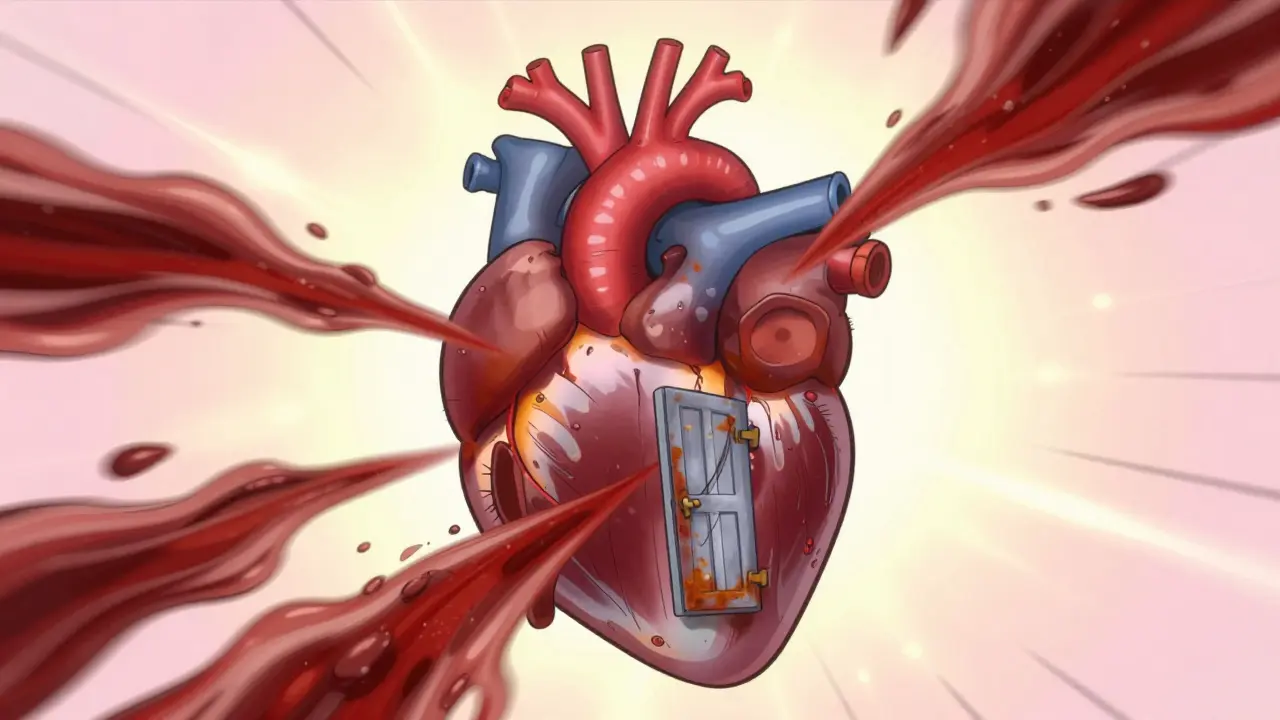
When your heart beats, four valves open and close like tiny doors to keep blood flowing in the right direction. If one of those doors gets stuck, leaks, or doesn’t shut tight, your heart has to work harder-and over time, that can wear it out. Heart valve disease isn’t rare. Around 2.5% of people in the U.S. have it, and for those over 65, it’s even more common. The two main problems? Stenosis and regurgitation. One blocks blood flow. The other lets it leak backward. Both can lead to heart failure if ignored.
What Is Valve Stenosis?
Stenosis means the valve opening has narrowed. Think of it like a door that’s been painted shut-it won’t swing open fully. The most common type is aortic stenosis, where the valve between the left ventricle and the aorta stiffens. This usually happens because calcium builds up on the leaflets over time. By age 75, about 2% of adults have severe aortic stenosis. In younger people, it’s often linked to a bicuspid aortic valve, a birth defect where the valve has two leaflets instead of three. That’s present in 1-2% of the population and causes about half of all early-onset cases.
Mitral stenosis is less common in developed countries but still a major issue globally. Around 80% of cases come from rheumatic fever, which is rare in places like Australia and the U.S. but still widespread in parts of Africa, Asia, and Latin America. When the mitral valve narrows, blood backs up into the lungs, causing shortness of breath, especially when lying down. Severe cases are defined by a valve area smaller than 1.5 cm². Normal is around 4-6 cm².
How do you know if it’s serious? Doctors measure three things: the valve area, how much pressure builds up behind the valve, and how fast the blood jets through. If the jet speed is over 4.0 m/s and the pressure difference is more than 40 mmHg, it’s considered severe. Left untreated, severe aortic stenosis cuts life expectancy in half-only about 50% of patients survive five years without treatment.
What Is Valve Regurgitation?
Regurgitation is the opposite problem: the valve doesn’t close properly, so blood leaks backward. It’s like a door that doesn’t latch. The most common form is mitral regurgitation. In this case, blood flows back into the left atrium instead of moving forward into the body. The heart tries to compensate by pumping harder, but eventually, the muscle stretches and weakens.
There are two main types: primary (or organic), where the valve itself is damaged-maybe from infection, a heart attack, or a congenital defect-and secondary (or functional), where the valve is fine but the heart chamber has enlarged and pulled the valve open. The COAPT trial showed that for functional mitral regurgitation, a minimally invasive clip device called MitraClip reduced death rates by 32% compared to medication alone.
Aortic regurgitation is less common but just as dangerous. Blood flows back into the left ventricle after each heartbeat. Patients often feel their heart pounding (palpitations), get winded easily, or feel dizzy. Unlike stenosis, symptoms can sneak up slowly. That’s why many people don’t realize they have it until their heart is already enlarged.
One key difference: stenosis makes the heart work harder to push blood out. Regurgitation makes it work harder to pump extra blood that’s leaking back. Both stress the heart-but in different ways.
Symptoms You Shouldn’t Ignore
Early valve disease often has no symptoms. That’s why it’s called a silent killer. But when things worsen, signs appear:
- Shortness of breath during light activity-or even while lying flat
- Swelling in the ankles, feet, or belly
- Feeling tired all the time, even after rest
- Heart palpitations or irregular heartbeat
- Dizziness or fainting spells
- Chest pain, especially during exercise
For aortic stenosis, there’s a classic trio: chest pain, fainting, and heart failure. But not everyone gets all three. Many just feel exhausted. One patient from the Cleveland Clinic registry said, “I thought I was just getting old. I stopped walking the dog because I got winded. Turns out, my valve was barely opening.”
For mitral regurgitation, fatigue is the #1 symptom. People say, “I used to play with my kids. Now I nap after lunch.” It’s easy to dismiss. But if you’re younger and suddenly can’t keep up, get checked.

Surgical Options: When and How to Fix It
Medication can help manage symptoms, but it can’t fix a damaged valve. Surgery is the only cure. The good news? Modern treatments are far less invasive than they used to be.
Surgical valve replacement is the gold standard for severe cases. The surgeon removes the damaged valve and replaces it with a mechanical one or a biological one made from animal tissue. Mechanical valves last forever but require lifelong blood thinners. Biological valves don’t need anticoagulants but wear out after 10-15 years. For people over 70, bioprosthetic valves are usually preferred.
Transcatheter Aortic Valve Replacement (TAVR) changed everything. Instead of opening the chest, doctors insert a new valve through a catheter in the leg or chest. It’s done under local anesthesia. Recovery is faster-most people go home in 2-3 days. In 2023, 65% of aortic valve replacements in the U.S. for patients over 75 were done with TAVR. It’s now approved for low-risk patients as young as 60. The PARTNER 4 trial showed TAVR works just as well as open surgery in this group.
For mitral regurgitation, repair is better than replacement when possible. The MitraClip is a tiny device that grabs the leaking leaflets and holds them together. It’s done through a vein in the leg. Patients often feel better within weeks. For more complex cases, surgeons may open the chest to repair or replace the valve. The 10-year survival rate for repaired mitral valves is 90%. Without surgery, it’s closer to 75%.
For tricuspid valve issues-a growing concern-new devices like the Evoque system were approved in 2023. And for mitral stenosis, a balloon can be inflated to widen the valve without surgery. This procedure takes about 90 minutes and most patients leave the hospital in two days.
Who Gets the Best Results?
Timing matters more than almost anything else. Waiting until you’re dizzy or can’t walk to the bathroom is dangerous. The American College of Cardiology says: if you have severe aortic stenosis, even without symptoms, you need close monitoring. Once your pressure gradient hits 50 mmHg or you start feeling symptoms, it’s time to act. Delaying surgery cuts your 2-year survival chance to 50%.
But not everyone needs surgery right away. If you have mild regurgitation and your heart is still strong, doctors will watch you. Jumping into surgery too early can do more harm than good. As Dr. Robert Bonow from the AHA says, “We don’t fix a leaky valve just because it’s leaking. We fix it when the heart starts to pay the price.”
Team-based care is critical. The best outcomes come from valve teams: cardiologists, cardiac surgeons, imaging specialists, and anesthesiologists working together. The American College of Cardiology requires centers to handle at least 150 valve cases a year to be certified. That’s because these procedures demand precision. A TAVR procedure has a learning curve of 20-40 cases before an interventionalist becomes truly proficient.

What Happens After Surgery?
Recovery isn’t instant. After open-heart surgery, sternum healing takes 6-8 weeks. Many patients say the hardest part isn’t the pain-it’s the frustration of being unable to lift a grocery bag or hug a grandchild. One patient on Inspire.com wrote: “It took eight weeks before I could pick up my 2-year-old granddaughter. I cried every time I tried.”
If you got a mechanical valve, you’ll need blood thinners for life. That means regular INR blood tests-twice a week at first, then monthly. Target levels are 2.0-3.0 for aortic valves and 2.5-3.5 for mitral valves. Missing doses increases stroke risk. Biological valves don’t need this, but they wear out. Around 21% of them show signs of deterioration by 15 years.
But the payoff is huge. In Cleveland Clinic’s 2023 report, 92% of TAVR patients said they had more energy within 30 days. One Reddit user shared: “I went from struggling to walk to the mailbox to hiking 3 miles in two months.” That’s not just a win-it’s a life reset.
The Future of Valve Treatment
The field is moving fast. In 2030, experts predict 80% of valve procedures will be done through catheters, not open surgery. New devices like the Cardioband and Harpoon systems are being tested to repair valves without replacing them. Tissue engineering is improving bioprosthetic valves-next-gen ones might last 25+ years.
But access remains unequal. High-income countries perform 18 valve procedures per 100,000 people each year. Low-income nations? Just 0.2 per 100,000. Many people in developing countries still die from treatable valve disease because they can’t get care.
One thing’s clear: if you’re over 65, have a heart murmur, or feel unusually tired, get an echocardiogram. It’s quick, painless, and can save your life. Valve disease isn’t a death sentence anymore. With the right diagnosis and timing, you can live well for decades.
Nancy Kou
December 20, 2025 AT 06:10My dad had TAVR last year at 78. He was back to gardening in two weeks. No more gasping just to put on his boots. People think heart surgery means months of recovery, but modern tech is wild. He didn’t even need a walker. Just a new lease on life.
Hussien SLeiman
December 21, 2025 AT 00:42Let me be the first to say this article is dangerously oversimplified. You talk about stenosis like it’s a simple door jam, but you ignore the fact that 40% of patients with severe aortic stenosis are never diagnosed until it’s too late because primary care docs don’t listen to murmurs anymore. And don’t get me started on TAVR-yes, it’s less invasive, but the long-term durability data for patients under 70 is still shaky. We’re replacing valves like lightbulbs now, and that’s not medicine, that’s a factory line. Also, why no mention of the fact that many bioprosthetic valves calcify faster in diabetics? Oh right, because this is a feel-good post, not a clinical review.
Marsha Jentzsch
December 22, 2025 AT 00:43My neighbor had mitral regurgitation and they told her to ‘wait and see’ for 3 years. THREE YEARS. She ended up in the ER with fluid in her lungs. Now she’s on blood thinners forever. Why do doctors wait until the heart is half-dead before they act? I swear, if you’re over 60 and your chest feels heavy after climbing stairs, don’t wait for a ‘classic trio’-just get an echo. I’m not even mad, I’m just disappointed. And also, why is no one talking about how expensive these devices are? MitraClip costs $30K. Insurance fights you. You need to be a millionaire to survive this disease in America.
Anna Sedervay
December 23, 2025 AT 12:39It is imperative to note that the statistical prevalence figures cited herein, while ostensibly robust, fail to account for the profound confounding variable of socioeconomic stratification in diagnostic access. Furthermore, the uncritical endorsement of transcatheter interventions as a panacea neglects the epistemological limitations of randomized controlled trials in geriatric populations with multimorbidity. The article’s reliance on industry-sponsored trials-PARTNER 4, COAPT-raises legitimate concerns regarding institutional bias. One must question whether the paradigm shift toward catheter-based valve replacement is driven by clinical necessity or by the commodification of cardiac care.
Mike Rengifo
December 24, 2025 AT 12:33My uncle got a mechanical valve in '09. Still going strong. He takes his blood thinners like clockwork, checks his INR every Monday. He says the weirdest part? He can feel his heart beating differently now-like it’s got a new rhythm. Not bad, just different. He’s 82, hikes every weekend. Don’t let the scary stats scare you. Do the work, get checked, fix it early.
bhushan telavane
December 25, 2025 AT 11:08In India, we don’t have TAVR or MitraClip in most hospitals. My cousin had rheumatic mitral stenosis. She got a balloon valvuloplasty in a government hospital. Cost? Less than $500. She’s back teaching school. No fancy machines, just skilled hands. The real problem isn’t the valve-it’s the system that makes care a luxury. We need global equity, not just better tech.
Kelly Mulder
December 27, 2025 AT 08:23Are you serious? You’re telling me we’re replacing valves like they’re tires? And you’re not even mentioning the fact that TAVR has been linked to higher rates of pacemaker implantation? And what about the patients who get stroke? Or the ones who end up with paravalvular leaks? You’re acting like this is all sunshine and rainbows, but the data shows it’s a gamble. And why is everyone ignoring the fact that biological valves fail faster in younger patients? You’re setting people up for repeat surgeries. This isn’t progress-it’s a cycle of profit.
Takeysha Turnquest
December 28, 2025 AT 04:29Life is a valve. Sometimes it opens. Sometimes it closes. Sometimes it leaks. We fight it. We patch it. We replace it. But the heart? The heart remembers. It remembers every beat it had to force. Every second it screamed against the silence. Surgery doesn’t fix the heart. It just gives it another chance to speak. And if you listen? You’ll hear it say thank you.