
Eating Out With Diabetes: Smart Carb Choices and Portion Control

Going out to eat shouldn’t mean giving up control over your blood sugar. With diabetes, dining at a restaurant can feel like walking through a minefield of hidden carbs, oversized portions, and sauces that spike glucose without warning. But it doesn’t have to be that way. Millions of people with diabetes eat out regularly-and manage their numbers just fine. The secret isn’t avoiding restaurants. It’s knowing what to look for, how to ask for what you need, and how to make smart swaps without feeling deprived.
Use the Plate Method-No Math Required
The simplest, most effective tool for eating out with diabetes is the Diabetes Plate Method. It doesn’t require counting grams or using an app. Just imagine a nine-inch plate divided into three sections: half filled with non-starchy vegetables, one-quarter with lean protein, and one-quarter with carbs.At a steakhouse, order the grilled salmon and ask for double broccoli instead of mashed potatoes. At an Italian restaurant, choose a grilled chicken dish and swap the pasta for a side salad with vinaigrette on the side. At a Mexican place, go for fajitas with extra peppers and onions, skip the tortillas, and ask for guacamole instead of sour cream.
Non-starchy vegetables-like spinach, zucchini, mushrooms, asparagus, and bell peppers-are your best friends. They fill you up, add flavor, and barely move your blood sugar. Protein sources like grilled chicken, fish, tofu, or lean beef keep you satisfied. The carb portion? Stick to 15-30 grams per meal. That’s about half a cup of rice, one small potato, or one small piece of whole-grain bread.
Portion Sizes Are Lying to You
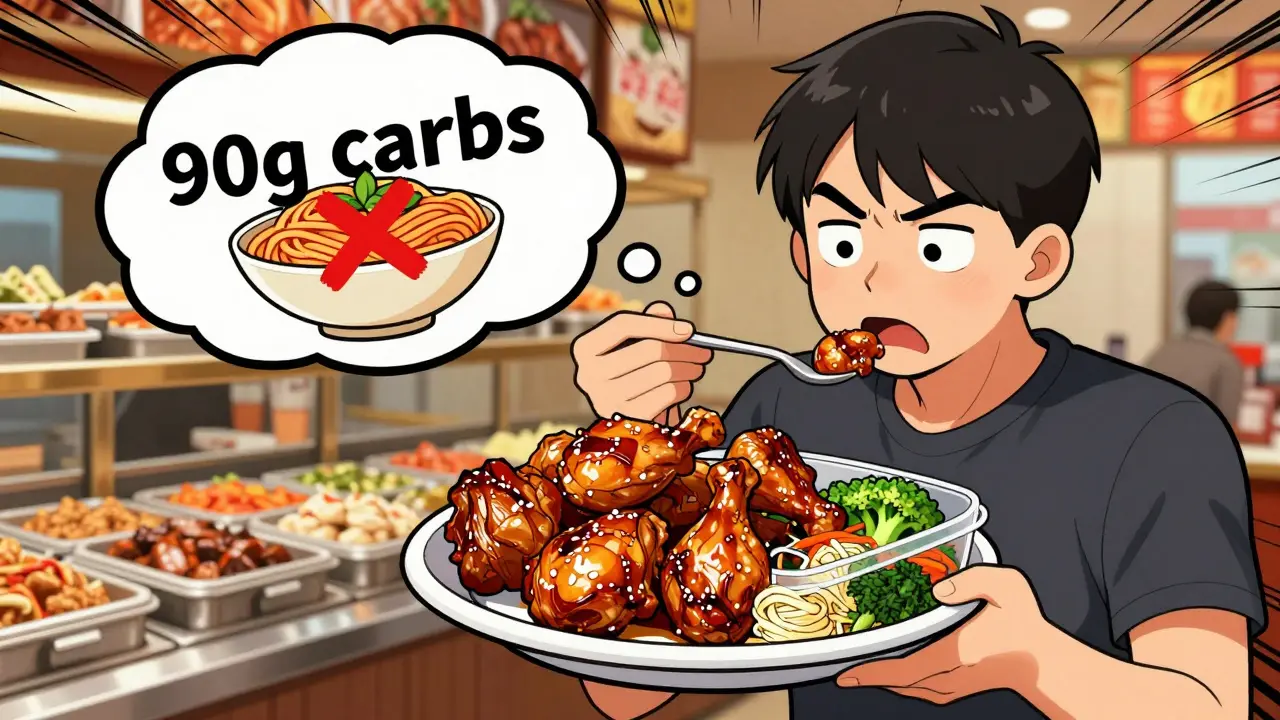
Restaurant portions aren’t designed for health-they’re designed to make you feel like you got your money’s worth. A typical plate of spaghetti at a chain restaurant can contain 3 cups of pasta-that’s 90 grams of carbs, nearly triple what you should have in one meal.Here’s how to fix it:
- Ask for a half portion of starchy sides. Most places will do it, even if it’s not on the menu.
- Share your entree with someone. Splitting a meal cuts carbs and calories in half-and makes dinner more social.
- Pack up half your meal before you even take your first bite. This works especially well at buffets or all-you-can-eat spots.
- Order appetizers as your main. A grilled shrimp skewer or chicken satay with veggies often has fewer carbs than a full entrée.
Studies show people who use portion control techniques like these lower their post-meal blood sugar spikes by 30-50%. It’s not about being cheap-it’s about being smart.
Watch Out for the Hidden Carbs
The biggest trap isn’t the bread basket or the fries. It’s the stuff you can’t see.Sauces, glazes, gravies, and marinades are loaded with sugar and starch. Teriyaki sauce? One tablespoon has 8 grams of carbs. Creamy mushroom sauce? Up to 10 grams. Even "healthy" options like honey-mustard dressing or tomato-based pasta sauces can sneak in 15 grams or more per serving.
Here’s how to avoid them:
- Always ask for sauces and dressings on the side. Dip your fork into it, not your whole plate.
- Avoid anything labeled "crispy," "breaded," "creamed," or "au gratin." These mean breading, butter, or cheese-and extra carbs.
- Steer clear of "stir-fried" Asian dishes unless you know the sauce is low-sugar. Many use cornstarch and sugar to thicken and sweeten.
- Choose grilled, steamed, or roasted over fried or sautéed.
One woman in Perth told her diabetes educator she was confused why her blood sugar spiked after eating "a healthy salad." Turns out, the salad came with croutons, candied nuts, and a honey-lime dressing. That’s 45 grams of carbs in one dish. She now always asks: "What’s in the dressing?"
Plan Ahead-Don’t Wing It
Walking into a restaurant hungry and scrolling through a menu is a recipe for a glucose rollercoaster. The best thing you can do? Check the menu online before you leave home.Most major chains now list nutrition info on their websites. Look for carb counts, and pick your meal in advance. Even better, use the American Diabetes Association’s "Restaurant Ready" app. It gives verified carb counts for over 15,000 menu items across 500+ chains-with 92% accuracy.
Research shows people who plan ahead reduce impulsive carb choices by 42%. You’re not being obsessive-you’re being prepared. If you’re unsure, call the restaurant and ask: "Can you tell me how many carbs are in the grilled chicken with steamed veggies?" Most kitchens will give you a rough estimate.
What to Order (and What to Skip)
Here’s a quick guide for common restaurant types:- Fast food: Skip the burger bun. Order a grilled chicken sandwich without the bun, or a side salad with grilled chicken. Avoid nuggets, fries, and sugary drinks. A plain grilled chicken wrap with no sauce has about 20 grams of carbs. A Big Mac? 46 grams.
- Italian: Choose tomato-based sauces over cream. Skip the breadsticks. Order a small portion of whole-wheat pasta (1/2 cup) or go for zucchini noodles. Grilled shrimp or chicken with veggies is your safest bet.
- Mexican: Skip the chips and salsa. Order fajitas with extra veggies, skip the tortillas, and add guacamole. Bean dishes are high in fiber but also high in carbs-limit to 1/2 cup.
- Asian: Avoid fried rice, lo mein, and sweet-and-sour sauces. Choose steamed fish or chicken with broccoli. Ask for brown rice instead of white (still limit to 1/2 cup). Soy sauce is low-carb, but hoisin and oyster sauce? Not so much.
- Pizza: Thin crust with veggie toppings is better than deep dish. One slice of thin-crust veggie pizza has about 25-30 grams of carbs. Deep-dish? 60-80 grams.
- Buffets: Avoid these if you can. Unlimited access to carbs = guaranteed spikes. If you go, fill your plate with protein and veggies first, then take a small portion of carbs.

Bring Your Tools
You wouldn’t drive without a spare tire. Don’t eat out without your diabetes tools.- Bring a portable glucose meter. Test your blood sugar before and 2 hours after eating.
- Carry fast-acting glucose tablets (15 grams of carbs) in case your meal is delayed. About 23% of people with diabetes report a low blood sugar episode while dining out.
- Have a small snack on hand if you’re on insulin or sulfonylureas. Hunger can make you overeat.
Some people even bring a small food scale or measuring cup to estimate portions. It sounds extreme-but for those who struggle with carb counting, it makes a huge difference.
It Gets Easier
Learning to eat out with diabetes takes practice. Most people need 3 to 5 outings with a diabetes educator to feel confident. But after that, it becomes second nature.One man in Perth lowered his A1c from 8.1% to 6.9% in six months just by using the plate method and asking for sauces on the side. He didn’t stop eating out. He just changed how he ordered.
Don’t let fear keep you home. Social meals are part of life. You don’t need to eat like a diabetic-you need to eat like someone who knows how to make smart choices.
Can I still eat dessert when I have diabetes and go out to eat?
Yes, but plan for it. If you want dessert, skip the bread or starchy side at your meal. Choose something small-like a single scoop of sugar-free ice cream or a small portion of fruit with whipped cream. Avoid cakes, pies, and cookies with frosting-they’re packed with hidden sugars. Test your blood sugar afterward to see how your body reacts.
What if my friends or family don’t understand my carb limits?
It’s common to feel awkward asking for modifications. But most people are supportive once they understand. Say something simple: "I’m managing my carbs to keep my blood sugar steady, so I’ll need to skip the bread and ask for extra veggies." If they tease you, remind them this isn’t a diet-it’s health management. You’re not saying no to food; you’re choosing what works for your body.
Are low-carb or keto menus a good option for people with diabetes?
They can be helpful, but they’re not required. Many people with diabetes do well with moderate carb intake (45-60 grams per meal) as long as it’s balanced with protein and fiber. Low-carb menus often mean more butter, cheese, and fried foods-which aren’t necessarily healthier. Focus on whole foods, not just low numbers. A grilled salmon salad with olive oil is better than a fried chicken keto wrap.
Do restaurants have to list carb counts on their menus?
In Australia and the U.S., restaurants with 20+ locations must list calorie counts, but not carbs. Many chains voluntarily provide carb info, but it’s not always accurate. Don’t rely on what’s printed. Use apps like ADA’s Restaurant Ready, or ask your server for details. When in doubt, assume the worst and plan accordingly.
How do I know if I’ve eaten too many carbs at a restaurant?
Your blood sugar meter tells you. Test 2 hours after your meal. If it’s over 180 mg/dL, you likely ate more carbs than your body handled well. Don’t panic-just note what you ate and adjust next time. Over time, you’ll learn which dishes spike you and which ones don’t. That’s the real goal: personal knowledge, not perfection.
What to Do If You Overdo It
Even the best plans sometimes fail. You might accidentally eat a big slice of pizza or a sugary drink. Here’s what to do:- Don’t skip your next meal. That can cause a rebound spike.
- Go for a walk after eating. Light activity helps lower blood sugar naturally.
- Drink water. It helps flush out excess sugar and keeps you from mistaking thirst for hunger.
- Check your blood sugar before bed. If it’s high, you may need to adjust your next insulin dose-but only if your doctor told you how.
One misstep doesn’t ruin your progress. What matters is what you do next.
Stephen Rock
January 21, 2026 AT 17:37Also, 'non-starchy veggies' is just a fancy way of saying 'boring greens'.
Amber Lane
January 23, 2026 AT 06:55Andrew Rinaldi
January 24, 2026 AT 04:44And honestly? Asking for sauces on the side isn’t a burden. It’s an act of self-respect.
Gerard Jordan
January 24, 2026 AT 05:28Just last week I ordered fajitas with no tortillas, extra peppers, and guac. My buddy thought I was being weird. I told him, 'I’m not on a diet-I’m on a mission.' He laughed, then ordered the same thing. Win-win 🙌
Samuel Mendoza
January 25, 2026 AT 21:28Glenda Marínez Granados
January 27, 2026 AT 13:28Meanwhile, my blood sugar spiked after a 'healthy' salad with 45g carbs. Thanks, restaurant. You're a gem.
Coral Bosley
January 28, 2026 AT 01:57Now I bring my own low-carb hot sauce. I don’t ask permission. I don’t explain. I just eat. And I’m not sorry.
They say 'you’re not a diabetic, you’re a person with diabetes.' Bullshit. I’m the person who outsmarts the menu. Every. Single. Time.
MAHENDRA MEGHWAL
January 28, 2026 AT 05:26Dee Monroe
January 28, 2026 AT 10:34But then the waiter smiled and said, 'Good choice.' And that’s when it clicked: this isn’t about being different. It’s about being intentional.
Now I bring my own measuring spoon to buffets. I don’t care what people think. I’ve spent years feeling guilty for eating. Now I feel proud. I’m not depriving myself-I’m choosing freedom. And that freedom? It tastes like grilled vegetables, not regret.
One day, my nephew asked me why I don’t eat the bread. I told him, 'Because I love my body too much to let it hurt.' He didn’t say anything. He just took a piece of bread, dipped it in olive oil, and put it on my plate. 'For you,' he said. I cried. Not because I couldn’t eat it. But because someone finally understood.
You don’t have to be perfect. You just have to keep showing up. And if you’re reading this? You already are.
Ben McKibbin
January 30, 2026 AT 07:05And please, stop calling people 'smart' for doing the bare minimum. This isn’t a TED Talk. It’s basic survival.
Melanie Pearson
January 31, 2026 AT 00:29