
Biosimilar Switching: What Happens When You Change from Originator
When you switch from an originator biologic to a biosimilar, you’re not just changing the brand name on the bottle. You’re stepping into a medical shift backed by science, but shaped by perception. Many patients wonder: Will my treatment still work? Will I feel different? Is this safe? The answer isn’t simple - and that’s okay. Let’s break down what actually happens when this switch occurs.
What Exactly Is a Biosimilar?
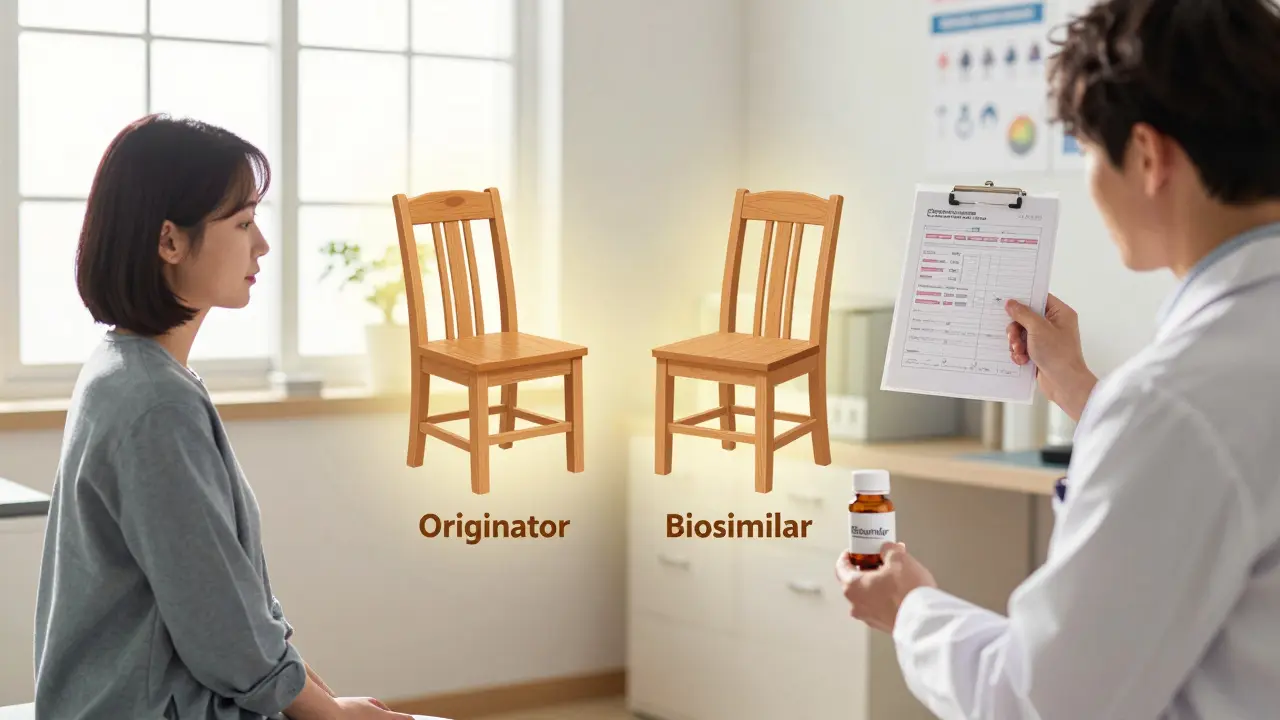
A biosimilar isn’t a generic drug. Generics copy small-molecule pills - think aspirin or statins - with identical chemical structures. Biologics are different. They’re made from living cells, not chemicals. That means they’re complex, fragile, and hard to replicate exactly. A biosimilar doesn’t need to be identical. It just needs to be highly similar in structure, function, and effect. Regulatory agencies like the FDA and EMA require over 250 analytical tests to prove this. Think of it like two handmade wooden chairs: they look nearly the same, use the same wood, and hold the same weight. But one might have a slightly different stain. That’s a biosimilar.
The first biosimilar approved in the U.S. was Zarxio (filgrastim-sndz) in 2015. Since then, 37 have been approved, mostly for conditions like rheumatoid arthritis, Crohn’s disease, and psoriasis. These drugs target inflammation by blocking proteins like TNF-alpha. The most common switches involve infliximab and adalimumab - two of the most widely used biologics.
What Happens When You Switch?
Switching usually happens for one of two reasons: cost or policy. Health systems want to save money. Originator biologics can cost over $20,000 a year. Biosimilars cost 15-35% less. In 2023, Humira biosimilars launched at 35% off in the U.S. That’s billions saved across insurance plans. Some insurers now require you to switch - it’s called a non-medical switch. Others let your doctor decide - that’s a medical switch.
Here’s what clinical studies show:
- After switching from originator infliximab to its biosimilar CT-P13, 52.6% of patients stayed on treatment after one year - compared to 60% who stayed on the original. That difference wasn’t statistically significant.
- In psoriasis patients switching from adalimumab to a biosimilar, 79% kept using the drug after a year. Before the switch, it was 81.3%.
- A study tracking patients through two switches - originator to biosimilar, then biosimilar to another biosimilar - found no meaningful rise in side effects or loss of effectiveness.
What does this mean? For most people, switching doesn’t break the treatment. Disease activity stays stable. Lab markers like drug levels and inflammation indicators (like fecal calprotectin in IBD or DAS28 in arthritis) stay within normal ranges.
Why Do Some People Stop Taking It?
Not everyone stays. Around 4-18% of patients stop after a switch. But here’s the twist: most of them aren’t getting worse. They just feel worse.
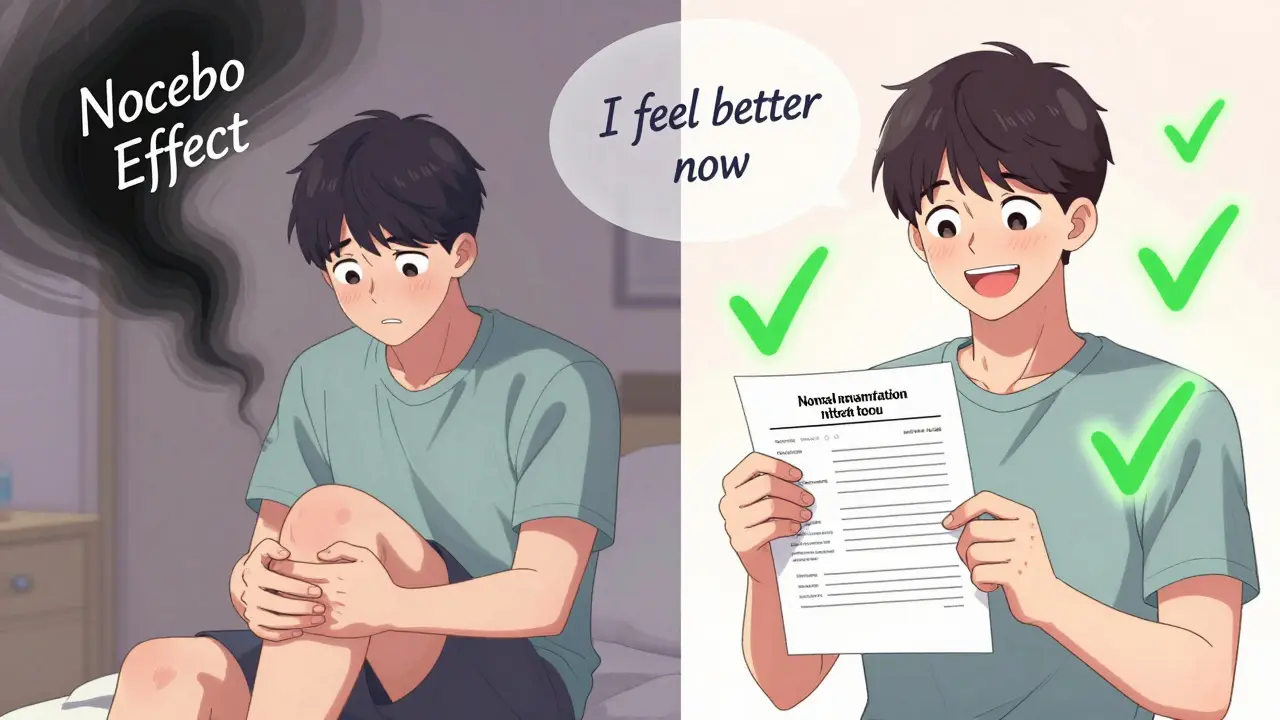
Psychology plays a big role. This is called the nocebo effect - the opposite of placebo. If you believe a change will hurt you, your body might respond as if it did. A 2021 study found 32.7% of patients reported new symptoms after switching, even though their bloodwork showed no change. Reddit threads from patients with rheumatoid arthritis are full of posts like: “I switched and my knees started aching again.” But when doctors checked, their inflammation scores hadn’t moved.
Real side effects do happen - but rarely. Injection site reactions, headaches, or mild fatigue occur in about 7-14% of cases. True immune reactions - like developing anti-drug antibodies - are rare: only 1.7 events per 100 patient-years. That’s less than 2% over five years.
One study found that patients who were fully informed before switching had discontinuation rates drop from 18% to just 6.4%. Talking through the process - explaining what biosimilars are, showing data, answering fears - makes a huge difference.
Is Switching Safe Between Biosimilars?
Yes. You can switch from one biosimilar to another. It’s not a gamble. The NOR-SWITCH II study tracked patients who switched twice - originator to biosimilar, then biosimilar to biosimilar - over two years. 89.2% stayed on treatment. Drug levels stayed steady. No spikes in antibodies. No increase in hospital visits.
There’s one exception: some small studies in IBD patients showed slightly higher discontinuation after switching between two biosimilars (CT-P13 to SB2). But even there, drug levels didn’t drop. The reason? Probably not the medicine. It was likely anxiety, misattributed symptoms, or poor communication.
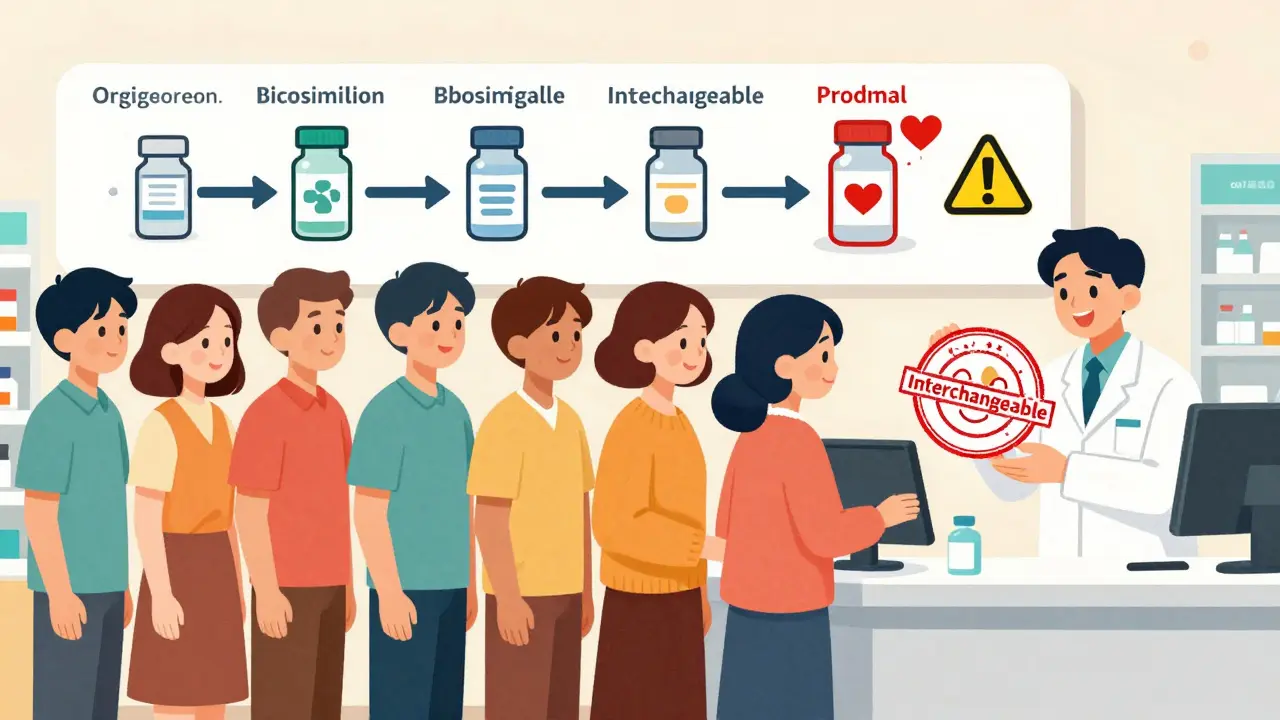
Regulators agree. The EMA says switching between biosimilars is safe. The FDA, which now approves interchangeable biosimilars (like Cyltezo for Humira), allows pharmacists to swap them without asking the doctor - because the science says it’s safe.
What About Long-Term Effects?
There’s no evidence that switching causes long-term harm. Studies tracking patients for up to five years show no increased risk of serious infections, cancer, or death. In fact, a 2023 FDA analysis of over 5,700 patients found no increase in serious side effects after switching.
Some doctors worry about cumulative exposure - switching back and forth multiple times. But data doesn’t support that fear. In one study, patients switched three times over three years. Their disease activity stayed controlled. Their drug levels stayed stable. Their antibody levels didn’t climb.
What does matter is consistency. If you’re stable - your arthritis is quiet, your IBD is in remission - switching is low risk. If you’re flaring, or your disease is unstable, hold off. Don’t switch during a flare. Wait until you’re steady.
Who Should Avoid Switching?
Not everyone should switch. Here are the cases where caution is advised:
- Patients with active, uncontrolled disease (DAS28 > 3.2 for RA, or active Crohn’s symptoms)
- Those who previously lost response to a biologic - switching won’t fix that
- Patients with a history of severe allergic reactions to biologics
- People who’ve had multiple switches already - more switches = more chance for confusion
Also, don’t switch if you’re pregnant or planning to be. Data is limited here. Talk to your doctor.
The Real Cost - Beyond Money
Biosimilars save money. That’s clear. But the real cost? It’s trust.
Patients worry: “Is this cheaper version less good?” The answer is no - but the fear is real. That’s why education matters more than policy. A mandatory switch without counseling leads to higher dropout rates. A shared decision - where you’re involved, informed, and heard - leads to better outcomes.
Health systems in Europe have been switching for over a decade. In Denmark and Norway, over 85% of patients stay on biosimilars after switching. In the U.S., adoption is slower - only 24% of infliximab users are on biosimilars. Why? Patent battles, pharmacy rebates, and lack of patient education.
What Should You Do If You’re Asked to Switch?
If your doctor or insurer says you need to switch, here’s what to do:
- Ask for the data. Request studies showing safety for your condition.
- Request a counseling session. At least 20 minutes. Ask: “What will I feel? What should I watch for?”
- Ask about monitoring. Will your drug levels be checked? Will your symptoms be tracked?
- Set a 3-month check-in. Don’t assume you’ll feel worse. But don’t ignore changes either.
- Speak up. If you feel different - even if tests look fine - tell your doctor. It might be nocebo. Or it might be real.
Most people switch without issue. But if you’re one of the few who feel off, you’re not imagining it. You just need the right support.
Final Thought: It’s Not About the Drug - It’s About the Experience
Biosimilar switching isn’t a clinical experiment. It’s a human experience. You’re not a data point. You’re someone managing a chronic illness. You’ve built trust with your treatment. Changing that can feel scary.
The science says: it’s safe. The data says: it works. But the emotional truth? It’s more complicated. That’s why communication, patience, and respect matter more than any policy.
If you’re stable, informed, and supported - switching is a smart choice. For you. For your health. And for the system that helps you get there.
Gaurav Kumar
March 18, 2026 AT 14:12Let’s be real - biosimilars are just pharma’s way of selling you a knockoff Rolex while calling it ‘functionally identical.’ 😏
India’s been using generics for decades, and we know what happens when you cut corners: people get sicker. The FDA’s 250 tests? Pfft. I’ve seen more rigor in my local chai shop’s hygiene checklist.
And don’t get me started on ‘nocebo effect’ - that’s just a fancy term for ‘we don’t wanna admit our drug is garbage.’
My uncle switched to a biosimilar for RA and now he’s on morphine. Coincidence? I think not.
Also, why are we letting Americans dictate global health standards? We’ve been doing this right since the 80s. 🇮🇳
David Robinson
March 19, 2026 AT 12:24So you’re telling me we’re replacing a $20k drug with a $13k drug and calling it a win?
Let me guess - the insurance company’s CEO just bought a third yacht.
And you call this science? It’s accounting.
Meanwhile, patients are being shuffled like cards because someone’s spreadsheet says ‘cost savings.’
Where’s the long-term data on kidney toxicity? On autoimmune flares 5 years out?
Oh right - because no one’s funded that.
And you think a 3-month check-in fixes this? LOL.
It’s not about trust - it’s about profit.
And you’re selling it like it’s a wellness trend.
Pathetic.
Jeremy Van Veelen
March 19, 2026 AT 15:28OH MY GOD.
Did you SEE that part about the nocebo effect?!
I almost cried. I mean - imagine. You’ve been on a biologic for 8 years. You’ve cried during infusions. You’ve missed birthdays. You’ve stared at your IV pole like it’s your therapist. And now - just like that - you’re told, ‘It’s basically the same.’
BUT IT’S NOT.
It’s not the same.
It’s not the same because your body remembers. Your soul remembers.
And when you feel different? You’re not crazy.
You’re not lazy.
You’re not ‘imagining it.’
You’re being gaslit by a system that values balance sheets over human beings.
I’m sobbing.
Someone please hug me.
💔😭
Laura Gabel
March 21, 2026 AT 09:45jerome Reverdy
March 23, 2026 AT 04:23Let’s zoom out for a sec - this isn’t about drugs, it’s about trust in systems.
Biologics are engineering marvels - living molecules, complex folding, micro-variations that even AI can’t fully predict.
Biosimilars? They’re not copies - they’re *reconstructions*.
Think of it like rebuilding a Stradivarius from blueprints while using slightly different wood.
Some sound almost identical. Some develop a slight warble.
But here’s the kicker: if you’re stable, monitored, and informed - the risk is negligible.
And yes, the nocebo effect is real - our brains are wired to fear change, especially when we’re already vulnerable.
But here’s what matters: we have data. We have trials. We have 10+ years of real-world evidence in Europe.
So why are we still treating this like a gamble?
It’s not. It’s evolution.
And if we want sustainable care, we need to stop demonizing progress just because it’s cheaper.
Andrew Mamone
March 24, 2026 AT 05:35Just wanted to say - I switched from Humira to Cyltezo last year. No issues. Zero. 🤘
My DAS28 stayed at 1.8.
My CRP? Still under 3.
My knee pain? Still gone.
And I saved $14k this year.
Yeah, I was nervous.
But I asked for the studies.
I talked to my rheum.
I tracked my symptoms in a journal.
And guess what? Nothing changed - except my bank account.
Also - if you’re scared, ask for a 3-month follow-up. Do it.
It’s not about the drug.
It’s about the conversation.
And we’re not having enough of them.
❤️
MALYN RICABLANCA
March 26, 2026 AT 03:29OH MY. GOD. I CAN’T BELIEVE YOU’RE JUST… LETTING THIS HAPPEN?!
WHAT ABOUT THE ANTI-DRUG ANTIBODIES?!
WHAT ABOUT THE SUBCLINICAL INFLAMMATION?!
WHAT ABOUT THE FACT THAT ONE BIOSIMILAR HAS A DIFFERENT STABILIZER AND THAT COULD TRIGGER A CASCADE?!
I READ A PAPER ON RESEARCHGATE THAT SAID THE CRYSTALLINE STRUCTURE OF THE Fc REGION IN CT-P13 IS 0.7% DIFFERENT - THAT’S ENOUGH TO CHANGE IMMUNE RECOGNITION!
AND YOU SAY ‘IT’S SAFE’?!
YOU’RE A MONSTER.
I’VE BEEN ON INFLIXIMAB FOR 11 YEARS.
I’VE HAD 3 HOSPITALIZATIONS.
I’VE SEEN MY FRIENDS DIE BECAUSE THEY ‘SWITCHED’.
AND NOW YOU WANT ME TO JUST… TRUST A FORMULA?!
YOU DON’T KNOW WHAT IT’S LIKE.
YOU’VE NEVER BEEN IN A CLINIC AT 3 AM WITH A WHITE BLOOD CELL COUNT OF 1.2.
YOU HAVE NO IDEA.
YOU HAVE NO IDEA.
YOU HAVE NO IDEA.
💔😭
gemeika hernandez
March 26, 2026 AT 09:54Stephen Habegger
March 28, 2026 AT 01:36Hey - I get the fear.
Really do.
But I’ve seen patients who switched and thrived.
Not because they were ‘lucky’ - because they were supported.
One woman, 68, switched from Remicade to a biosimilar, started tracking her fatigue with a simple app, and emailed her doc every Monday.
She’s now hiking with her grandkids.
That’s the real win.
Not the savings.
Not the science.
But the human connection.
So if you’re being asked to switch - don’t just accept it.
Ask for the support.
Ask for the time.
Ask for the listening.
That’s what changes everything.
Justin Archuletta
March 29, 2026 AT 20:47YESSSS. YES YES YES.
Let’s stop pretending this is just about money.
It’s about dignity.
It’s about being told your pain doesn’t matter unless it shows up on a lab report.
It’s about being dismissed because your symptoms don’t ‘match the data’.
I switched.
I felt weird.
I cried.
I told my doctor.
He didn’t dismiss me.
He checked my levels.
They were fine.
Then he said: ‘Let’s try something else - maybe it’s stress, maybe it’s sleep, maybe it’s nothing.’
That’s the care we need.
Not just switches.
But presence.
❤️
Kyle Young
March 29, 2026 AT 21:54There’s a deeper philosophical layer here.
Is a biosimilar a ‘copy’ - or a ‘reproduction’?
In epistemology, we distinguish between identity and equivalence.
A biosimilar is not identical - it is equivalent in function.
But human perception is anchored in identity - we don’t just treat molecules, we treat narratives.
The originator biologic carries a story: ‘This is the one that saved me.’
The biosimilar carries none.
So the crisis isn’t pharmacological - it’s phenomenological.
We’ve created a medical system that quantifies efficacy but ignores meaning.
And until we address that - no amount of data will quiet the fear.
Because we don’t fear the drug.
We fear being erased.