
Are Expired Antibiotics Safe? The Real Risks of Taking Old Medication
Imagine you have a severe toothache or a stubborn urinary tract infection. You dig through your medicine cabinet and find a bottle of antibiotics that expired six months ago. It’s still sealed. The pills look fine. Do you take them?
This is a common dilemma. Many people believe that an expiration date means the drug suddenly turns toxic on that specific day. Others think it just means the medicine might be slightly weaker. The truth is more complicated, and for antibiotics specifically, the stakes are higher than with most other medications.
Taking an expired antibiotic isn't just about whether it will cure your infection. It's about whether it will fail to kill the bacteria completely, potentially creating a superbug that is resistant to treatment. Let's break down what actually happens to these drugs after the date on the box passes.
What Expiration Dates Actually Mean
First, we need to clear up a major misconception. An expiration date is not a safety deadline where the pill becomes poison. Instead, it is a guarantee from the manufacturer.
When you see a date on a prescription bottle, it represents the last day the pharmaceutical company guarantees that the medication retains at least 90% to 100% of its labeled potency, provided it has been stored under ideal conditions. These conditions usually mean keeping the drug in a cool, dry place away from direct sunlight.
This standard was largely established by regulations from the U.S. Food and Drug Administration (FDA) starting in 1979. Manufacturers perform stability testing to determine this date. However, they often set conservative dates to account for less-than-perfect storage by consumers, such as leaving medicine in a humid bathroom cabinet.
So, when the date passes, the drug doesn't instantly lose all power. It simply enters a period where the manufacturer no longer vouches for its strength. For many over-the-counter painkillers or vitamins, this degradation is slow and relatively harmless. But for antibiotics, that drop in potency can be clinically significant.
The Shelf Life Extension Program: What We Learned
If manufacturers set conservative dates, how long do drugs actually last? To answer this, the U.S. Department of Defense and the FDA launched the Shelf Life Extension Program (SLEP) between 1986 and 2006.
The goal was to test military stockpiles of drugs to see if they could be used without wasting billions of dollars. They tested over 122 different drug products representing 3,000 lots. The results were surprising. Approximately 90% of the medications, including many solid-form antibiotics, maintained 90% or more of their original potency for up to 15 years past their expiration dates when stored properly.
A 2020 review published in the Journal of Pharmacy & BioAllied Sciences confirmed these findings. This data suggests that many solid tablets and capsules remain effective well beyond the printed date. However, there is a massive catch: this applies primarily to solid dosage forms stored in optimal conditions. Liquid formulations tell a very different story.
Solid vs. Liquid: A Critical Difference
Not all antibiotics are created equal when it comes to stability. The form of the medication matters immensely.
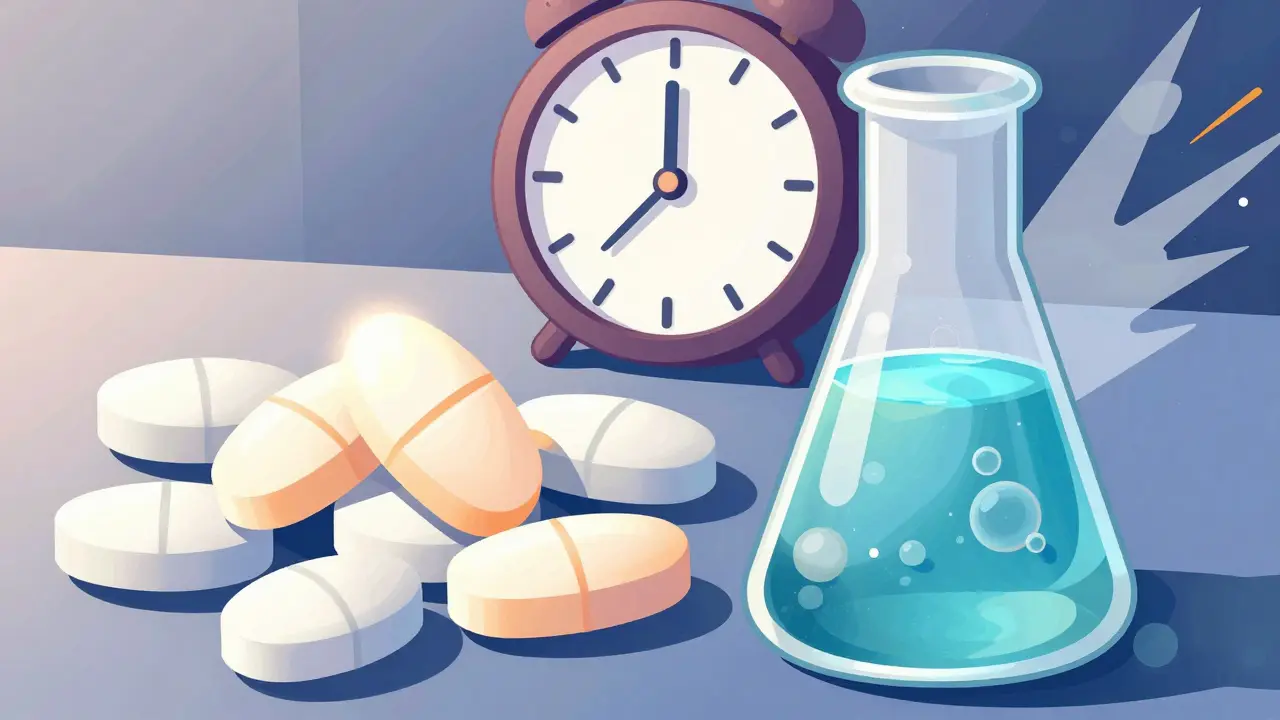
Solid Forms: Tablets and capsules, like amoxicillin or doxycycline hyclate, are generally stable. Studies using high-performance liquid chromatography (HPLC) have shown that solid antibiotics can retain 85-92% of their potency even 12 months after expiration if kept at room temperature (around 25°C) with moderate humidity.
Liquid Forms: This is where things get dangerous. Reconstituted suspensions, which are powders mixed with water to make a liquid for children or adults who can't swallow pills, degrade rapidly. Amoxicillin/clavulanate suspension, for example, can lose nearly half its potency within just seven days after the expiration date if stored at room temperature. Even under refrigeration, some injectable antibiotics like ceftriaxone show significant degradation within two weeks.
Beta-lactam antibiotics, a class that includes penicillins and cephalosporins, are particularly vulnerable to hydrolysis-a chemical reaction with water that breaks down the drug molecule. Once reconstituted, the clock starts ticking much faster for these liquids.
| Formulation Type | Example Drugs | Potency Retention (1 Year Post-Expiry) | Risk Level |
|---|---|---|---|
| Solid Tablets/Capsules | Amoxicillin, Doxycycline | 85-92% | Moderate (if stored properly) |
| Reconstituted Suspension | Amoxicillin/Clavulanate | <50% (within weeks) | High |
| Injectable Solutions | Ceftriaxone | Significant Degradation | Very High |
The Hidden Danger: Antibiotic Resistance
This is the most important part of the discussion. Why do experts warn against using expired antibiotics even if they still have some potency left?
The answer lies in antimicrobial resistance. Antibiotics work by killing bacteria or stopping them from reproducing. To be effective, the concentration of the drug in your body must stay above a certain threshold known as the Minimum Inhibitory Concentration (MIC).
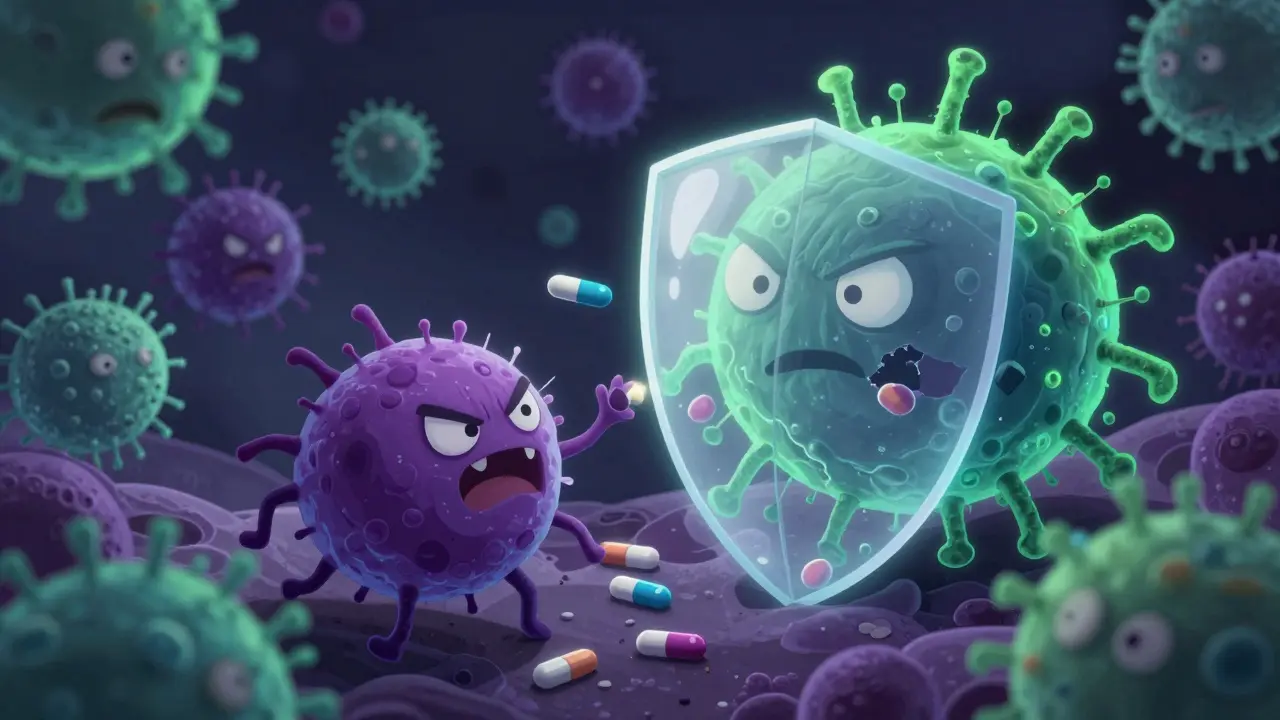
If you take an expired antibiotic that has lost 20% or 30% of its strength, you might not reach that therapeutic threshold. The drug won't kill all the bacteria. Instead, it kills the weak ones and leaves the stronger ones alive. These survivors then multiply, passing on their resistance traits. This creates a population of bacteria that is harder to kill next time.
A 2023 analysis documented that expired pediatric antibiotic formulations demonstrated extremely high resistance rates against common pathogens like Escherichia coli compared to unexpired counterparts. The Infectious Diseases Society of America (IDSA) warns that sub-therapeutic concentrations create "perfect conditions for selection of resistant mutants." This is a public health threat that extends far beyond your individual infection.
Regulatory Stances and Expert Opinions
Because of the resistance risk, regulatory bodies take a hard line. The FDA maintains that "expired medications should not be used because their potency and safety can no longer be assured." Their position is clear: do not use them.
However, the real world is messier. During drug shortages, healthcare providers face difficult choices. Dr. Lee Cantrell, Director of the California Poison Control System, has noted that in critical shortage scenarios, properly stored solid antibiotics might retain efficacy for 12-24 months post-expiration based on SLEP data. But he emphasizes this requires a careful risk-benefit assessment by a professional.
The European Medicines Agency (EMA) takes a middle ground, acknowledging that solid dosage forms may retain acceptable potency for 6-12 months beyond expiration, but they explicitly exclude liquid formulations and antibiotics used for life-threatening infections from this consideration.
In contrast, the World Health Organization (WHO) identifies the inappropriate use of expired antibiotics as a significant contributor to global resistance development. In low- and middle-income countries, where supply chains can be unreliable, the misuse of near-expired or expired antibiotics contributes to higher treatment failure rates.
Storage Matters More Than You Think
If you are storing antibiotics for emergencies (which is generally discouraged unless advised by a doctor), how you store them changes everything.
Most people keep medicine in the bathroom. This is the worst place for drugs. Bathrooms are hot and humid. Stability testing shows that antibiotics stored in bathroom cabinets (average 28.7°C, 72.3% humidity) lose potency significantly faster than those stored in a bedroom closet or kitchen cupboard (15-25°C, 35-45% humidity).
To maximize stability:
- Keep antibiotics in their original containers with desiccants (the little silica gel packets).
- Store them in a cool, dry place away from windows and sinks.
- Never freeze antibiotics unless specifically instructed.
- Check for physical signs of degradation: discoloration, crumbling, moisture damage, or strange odors.
However, remember that visual inspection is unreliable. A 2021 study found that 89.3% of degraded antibiotics showed no detectable changes in appearance, taste, or smell despite having lost substantial potency. If it looks fine, it might still be weak.
What Should You Do?
The bottom line is simple: do not self-medicate with expired antibiotics. The risk of treatment failure and contributing to antibiotic resistance outweighs the convenience of using an old pill.
If you have an infection, see a healthcare provider. They can prescribe fresh medication tailored to your specific condition. If you are facing a drug shortage, talk to your pharmacist. They may have access to alternative brands or extended-stockpile protocols that are safe and monitored.
For home disposal, do not flush antibiotics down the toilet, as this contaminates water supplies. Instead, use a drug take-back program or mix the pills with unpalatable substances like coffee grounds or cat litter in a sealed bag before throwing them in the trash, following local guidelines.
Do expired antibiotics become toxic?
Generally, no. Most expired antibiotics do not turn into poisonous substances. The primary concern is that they lose potency, meaning they may not effectively treat the infection. However, tetracycline-class antibiotics are a rare exception; older studies suggested degraded tetracyclines could cause kidney damage, though modern formulations are more stable. Still, the lack of efficacy is the bigger risk.
Can I take an expired antibiotic for a mild infection?
It is not recommended. Even for mild infections, using a weakened antibiotic can lead to incomplete treatment. This allows bacteria to survive and develop resistance. Additionally, you cannot accurately judge the remaining potency of the drug by looking at it. Always consult a healthcare provider for proper treatment.
How long are liquid antibiotics good for after mixing?
Once you add water to a powdered antibiotic suspension, it typically remains stable for only 7 to 14 days, depending on the specific drug and storage instructions. Always follow the label instructions precisely. After this window, the drug degrades rapidly and should be discarded, even if the printed expiration date on the bottle is further out.
Why do expiration dates vary so much between drugs?
Expiration dates are determined by stability testing conducted by manufacturers. Different chemical structures react differently to heat, light, and humidity. Some drugs are inherently unstable and degrade quickly, while others are very robust. Manufacturers also factor in typical consumer storage conditions, which are often less than ideal, leading to conservative dates.
Is it legal to sell expired antibiotics?
No, it is illegal to sell expired prescription medications in most countries, including the United States and Australia. Pharmacies are required to remove expired drugs from shelves and dispose of them properly. Dispensing expired antibiotics poses serious health risks and violates regulatory standards.