
Statin Alternatives: Ezetimibe and Bempedoic Acid Explained

Statin Alternative Comparison Tool
Select Your Priorities
Statins
First-Line Therapy- Est. LDL Drop 50-55%
- Cost $4 - $50/mo
- Muscle Risk Common
Gold standard for efficacy but carries highest risk of muscle pain.
Ezetimibe
Intestinal Blocker- Est. LDL Drop 15-22%
- Cost $4 - $10/mo
- Muscle Risk Rare
Excellent safety profile and low cost, but moderate potency alone.
Bempedoic Acid
Liver Inhibitor- Est. LDL Drop 17-23%
- Cost $200+ /mo
- Muscle Risk Very Low
Newer option with proven heart benefits and minimal muscle issues, but expensive.
Recommendation Summary
For millions of people, the word "statin" brings up a mix of relief and dread. On one hand, these drugs are the gold standard for lowering LDL cholesterol and preventing heart attacks. On the other, they come with a notorious reputation for side effects, particularly muscle pain and fatigue. If you’ve been told you need to lower your cholesterol but can’t tolerate statins, you might feel stuck. You aren't alone. Between 7% and 29% of patients experience statin intolerance, leaving them vulnerable to cardiovascular risks without a clear path forward.
Luckily, medical science has moved beyond just telling patients to "try a different statin." Two powerful alternatives have emerged: Ezetimibe, a long-standing option that blocks cholesterol absorption, and Bempedoic Acid, a newer agent that stops cholesterol production in the liver. These medications offer real cardiovascular protection for those who cannot take statins, but understanding how they work, their costs, and their limitations is crucial for making an informed decision with your doctor.
Why Statins Fail Some Patients
To understand why we need alternatives, we first have to look at why statins cause problems. Statins work by blocking an enzyme called HMG-CoA reductase, which is essential for making cholesterol in the liver. While effective, this process also depletes coenzyme Q10 (CoQ10), a molecule vital for muscle energy. This depletion is largely responsible for the muscle pain, weakness, and cramps reported by many users.
Not all statin issues are the same. Some people experience true myopathy (muscle damage), while others suffer from subjective discomfort without measurable muscle injury. Regardless of the type, if switching between different statins or doses doesn't solve the problem, doctors turn to non-statin therapies. The goal isn't just to lower numbers on a lab report; it's to reduce the risk of major adverse cardiovascular events (MACE), such as heart attacks and strokes.
How Ezetimibe Works
Ezetimibe (often known by its brand name Zetia) has been around since 2002, making it the veteran of non-statin therapies. Unlike statins, which target the liver, ezetimibe works in the small intestine. It inhibits a protein called Niemann-Pick C1-like 1 (NPC1L1), which is responsible for absorbing dietary and biliary cholesterol from your gut into your bloodstream.
By blocking this absorption, ezetimibe reduces the amount of cholesterol entering your body by about 50-60%. Your liver then compensates by pulling more LDL cholesterol from your blood to make bile acids, effectively lowering your circulating LDL levels. As a monotherapy, ezetimibe typically lowers LDL cholesterol by 15-22%. When combined with a statin, it can provide an additional 18-25% reduction. It’s well-tolerated, with a safety profile similar to placebo in most clinical trials, and because it’s now available as a generic, it is highly affordable-often costing less than $4 per month with insurance.
The Rise of Bempedoic Acid
If ezetimibe is the veteran, Bempedoic Acid (brand names Nexletol and Nexlizet when combined with ezetimibe) is the new recruit. Approved by the FDA in February 2020, bempedoic acid takes a different approach. It acts as an inhibitor of ATP citrate lyase (ACL), an enzyme that sits upstream from the HMG-CoA reductase targeted by statins. In simple terms, it shuts down cholesterol synthesis earlier in the process.
What makes bempedoic acid unique is its mechanism of activation. It is a prodrug, meaning it’s inactive until it reaches the liver. It requires an enzyme called very-long-chain acyl-CoA synthetase-1 (ACSVL1) to become active. Crucially, this enzyme is found in the liver but is absent in skeletal muscle. This biological trick allows bempedoic acid to lower cholesterol without causing the muscle-related side effects associated with statins. In the landmark CLEAR Outcomes trial, published in the New England Journal of Medicine in 2023, bempedoic acid reduced LDL cholesterol by 21% compared to placebo and lowered the risk of major cardiovascular events by 13% over a median follow-up of 40.6 months.
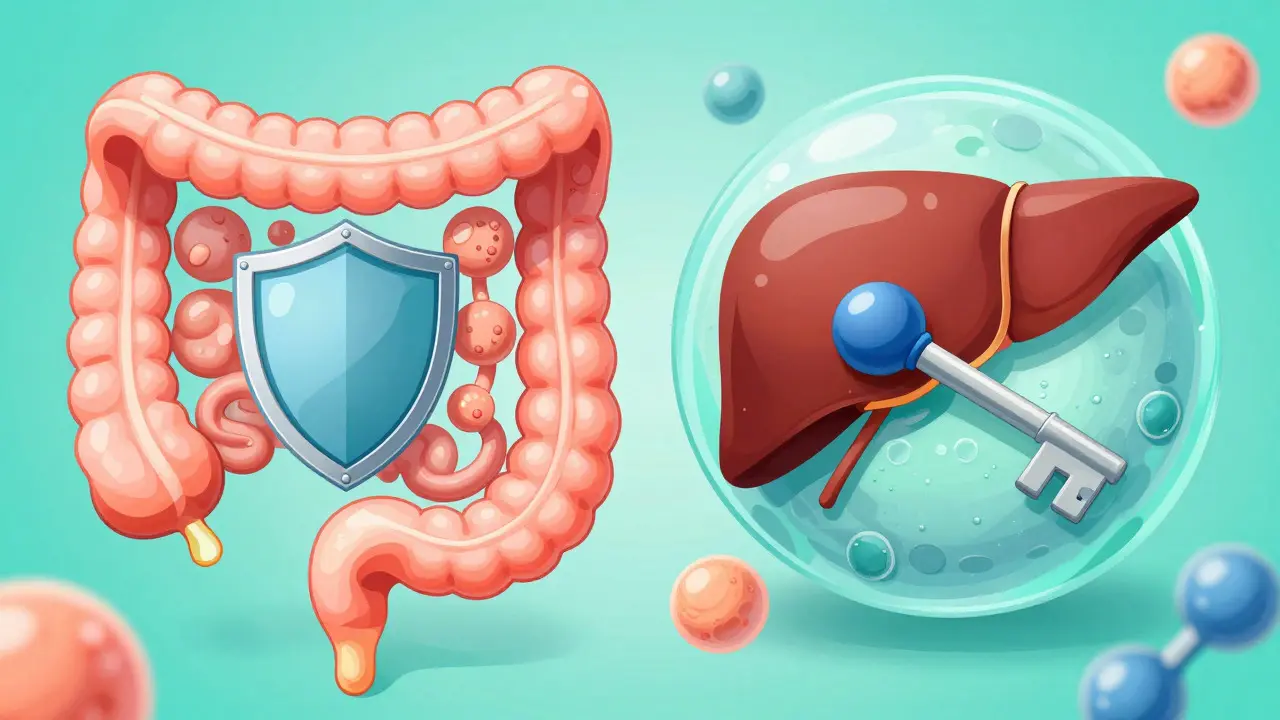
Comparing Efficacy and Side Effects
| Feature | Statins (High-Intensity) | Ezetimibe | Bempedoic Acid |
|---|---|---|---|
| LDL Reduction (Monotherapy) | 50-55% | 15-22% | 17-23% |
| Mechanism | HMG-CoA Reductase Inhibitor | NPC1L1 Inhibitor (Intestine) | ACL Inhibitor (Liver) |
| Muscle Side Effects | Common (Myalgia) | Rare | Rare (Prodrug activation) |
| Administration | Oral Tablet | Oral Tablet | Oral Tablet |
| Cardiovascular Outcome Data | Extensive (Gold Standard) | Moderate (IMPROVE-IT) | Positive (CLEAR Outcomes) |
| Estimated Monthly Cost (US) | $4 - $50 (Generic) | $4 - $10 (Generic) | $200 - $400 (Brand) |
While both ezetimibe and bempedoic acid are effective, they are not as potent as high-intensity statins like atorvastatin or rosuvastatin. A recent study comparing adding bempedoic acid to existing therapy versus doubling the statin dose found that bempedoic acid achieved greater LDL reductions (-22.9% vs -7.5%) in patients already on maximal tolerated therapy. However, compared to PCSK9 inhibitors (injectable drugs that lower LDL by 50-60%), oral alternatives like ezetimibe and bempedoic acid offer less potency but much greater convenience.
Side effect profiles differ significantly. Ezetimibe is generally well-tolerated, with some users reporting mild gastrointestinal upset. Bempedoic acid has shown a favorable muscle safety profile, with myalgia rates of 5.1% compared to 6.8% for placebo in trials. However, real-world data from patient forums suggests some users experience joint pain, which was reported by 12.3% of users on PatientsLikeMe, higher than the 2.1% seen in clinical trials. Additionally, bempedoic acid carries a warning for tendon rupture, though the incidence is low (0.5%).
Cost and Accessibility Barriers
One of the biggest hurdles for patients considering these alternatives is cost. Generic ezetimibe is widely available and inexpensive, often covered fully by Medicare Part D or private insurance plans. Bempedoic acid, however, remains a brand-name medication. As of mid-2024, the cash price for Nexletol can exceed $230 per month, even with discount coupons. This price tag can be prohibitive for many patients, especially those managing multiple chronic conditions.
Insurance coverage varies. Many plans require prior authorization, demonstrating that you have tried and failed on at least two different statins before approving bempedoic acid. This structured rechallenge protocol is recommended by the American College of Cardiology to ensure that true statin intolerance is confirmed before moving to more expensive therapies. For those who qualify, copays can drop significantly, but out-of-pocket costs remain a concern for uninsured or underinsured individuals.

Who Should Consider These Alternatives?
These medications are not meant to replace statins for everyone. Statins remain the first-line therapy due to their superior efficacy, low cost, and decades of outcome data showing they reduce cardiovascular risk by 20-35% for every 1 mmol/L reduction in LDL. However, specific groups benefit greatly from ezetimibe and bempedoic acid:
- Confirmed Statin-Intolerant Patients: Individuals who have experienced persistent muscle pain, weakness, or cognitive fog on multiple statin types and doses.
- Polypharmacy Patients: Those taking medications that interact negatively with statins, such as certain antibiotics or antifungals.
- Patients with High Cardiovascular Risk: Individuals with established atherosclerotic cardiovascular disease (ASCVD) who need aggressive LDL lowering but cannot tolerate statins.
- Those Unable to Reach Targets: Patients on maximally tolerated statins who still haven't met their LDL goals, where adding ezetimibe or bempedoic acid can provide the extra boost needed.
Dr. Steven Nissen of the Cleveland Clinic noted that cardiovascular risk reduction with bempedoic acid is proportional to the magnitude of LDL-C lowering, similar to statins. This means that even if the percentage drop isn't as huge as a high-dose statin, the heart protection benefit is real and significant.
Practical Steps for Implementation
If you're discussing these options with your doctor, here’s what to expect. First, your provider will likely confirm your statin intolerance through a rechallenge protocol. This involves trying different statins at lower doses to see if you can tolerate any. If not, they may start with ezetimibe due to its low cost and strong safety record. If your LDL remains high, bempedoic acid may be added, either alone or in combination with ezetimibe (Nexlizet).
Monitoring is key. You’ll need baseline lipid panels and follow-up tests 4-12 weeks after starting therapy to assess response. Target LDL reductions are typically ≥15% for bempedoic acid and ≥10% for ezetimibe to confirm efficacy. Be aware of drug interactions: bempedoic acid increases exposure to simvastatin and pravastatin, so dose adjustments may be necessary if you’re combining therapies.
Future Outlook and New Developments
The landscape of cholesterol management is evolving rapidly. The global non-statin lipid-lowering market is projected to reach $9.8 billion by 2030, driven by the growing recognition of statin intolerance and the success of agents like bempedoic acid. Ongoing trials, such as CLEAR CardioTrack, are evaluating bempedoic acid’s effect on coronary plaque regression, which could provide even stronger evidence for its long-term benefits. Meanwhile, newer injectable therapies like inclisiran are gaining traction, offering twice-yearly dosing for profound LDL reduction.
For now, ezetimibe and bempedoic acid represent critical tools in the cardiologist’s arsenal. They fill a vital gap for patients who would otherwise go untreated, offering proven cardiovascular benefits without the muscle pain that keeps many away from statins. While cost and potency remain challenges, the availability of these options means no one has to face high cholesterol alone.
Is bempedoic acid better than ezetimibe?
It depends on your specific needs. Ezetimibe is cheaper and has a longer track record of safety. Bempedoic acid may offer slightly greater LDL reduction in some cases and has robust cardiovascular outcome data for statin-intolerant patients. Often, they are used together for maximum effect.
Can I take ezetimibe and bempedoic acid together?
Yes, there is a fixed-dose combination pill called Nexlizet that contains both 180 mg of bempedoic acid and 10 mg of ezetimibe. This combination can lower LDL cholesterol by 35-40%, making it a powerful option for patients who need significant reduction.
Does bempedoic acid cause muscle pain?
Bempedoic acid is designed to avoid muscle pain because it is only activated in the liver, not in muscles. Clinical trials show muscle pain rates similar to placebo. However, some real-world users report joint pain, so monitoring is important.
How much does bempedoic acid cost without insurance?
Without insurance, bempedoic acid (Nexletol) can cost over $230 per month. However, manufacturer savings cards and insurance coverage can significantly reduce this cost. Always check with your pharmacy and insurer for the most current pricing.
Are there natural alternatives to statins?
Dietary changes, exercise, and supplements like red yeast rice (which contains a natural statin) can help lower cholesterol. However, for high-risk patients, prescription medications like ezetimibe and bempedoic acid provide more consistent and clinically proven cardiovascular protection.