
Beta-Blockers, ACE Inhibitors, and ARBs: Risks, Side Effects, and What to Take
High blood pressure is often called the "silent killer" because it rarely shows symptoms until significant damage has been done. Managing it usually means taking medication for life. But not all blood pressure pills are created equal. You might be prescribed a Beta-Blocker, an ACE Inhibitor, or an ARB. Each works differently in your body, carries unique risks, and suits specific health profiles. Choosing the wrong one-or sticking with one that makes you miserable-can lead to poor adherence and worse outcomes.
This guide breaks down these three major classes of antihypertensives. We’ll look at how they work, the specific side effects you need to watch for, and why doctors choose one over the other based on your medical history.
How These Medications Actually Work
To understand the risks, you first need to understand the mechanism. These drugs don’t just "lower pressure." They target specific systems in your body that regulate blood flow and heart strain.
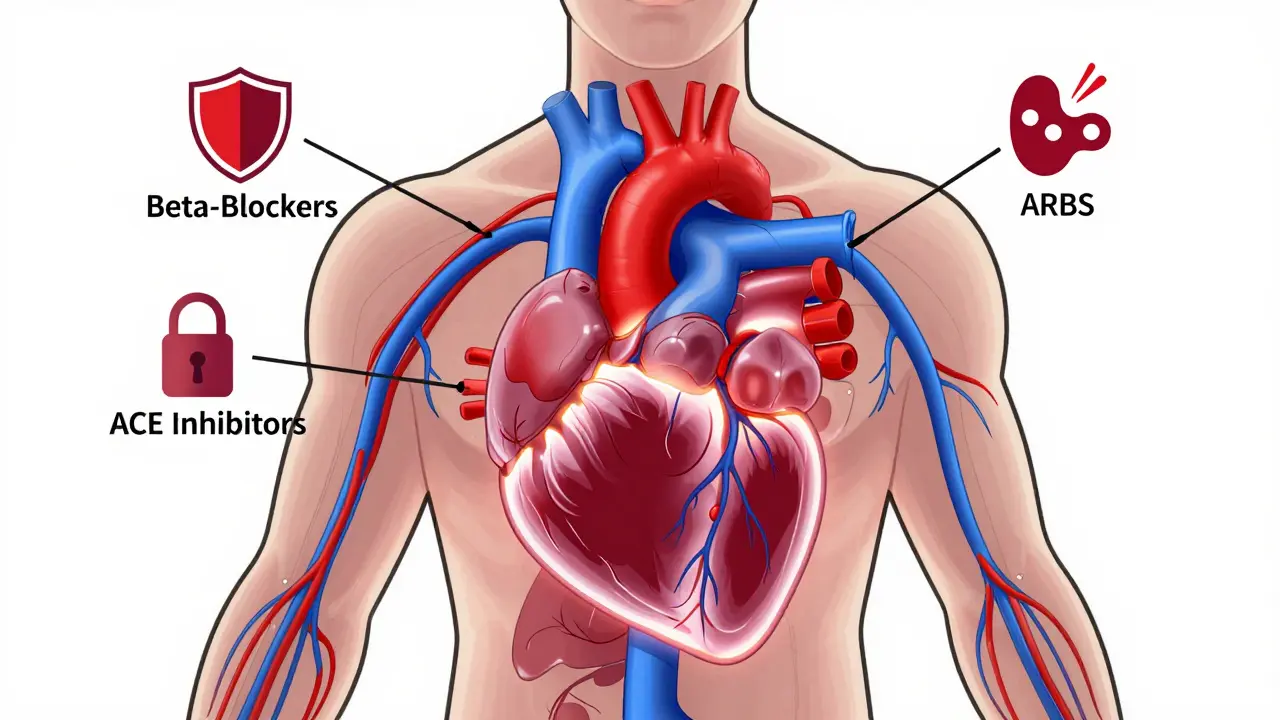
ACE Inhibitors (Angiotensin-Converting Enzyme Inhibitors), such as lisinopril and enalapril, block the enzyme that creates angiotensin II. Angiotensin II is a potent substance that narrows your blood vessels and triggers the release of aldosterone, which causes your body to hold onto salt and water. By blocking this, ACE inhibitors relax blood vessels and reduce fluid volume. This class has been around since the early 1980s and remains a cornerstone of treatment, especially for patients with diabetes or kidney disease.
ARBs (Angiotensin Receptor Blockers), like losartan and valsartan, take a different approach. Instead of stopping the production of angiotensin II, they block the receptors where angiotensin II would normally attach. Think of ACE inhibitors as cutting off the supply of a key, while ARBs jam the lock so the key can’t turn. The result is similar-relaxed blood vessels-but without affecting certain other chemicals in the body, specifically bradykinin.
Beta-Blockers, such as metoprolol and carvedilol, operate on the nervous system. They block the effects of adrenaline on your heart’s beta-adrenergic receptors. This slows your heart rate and reduces the force of each beat, lowering cardiac output. While older guidelines placed them lower on the list for general hypertension, they remain critical for patients who have had a heart attack or suffer from heart failure.
The Big Risk: ACE Inhibitors vs. ARBs
If you are choosing between an ACE inhibitor and an ARB, the deciding factor is often tolerability rather than efficacy. Both classes lower blood pressure effectively and protect the kidneys. However, their side effect profiles differ significantly due to that bradykinin issue mentioned earlier.
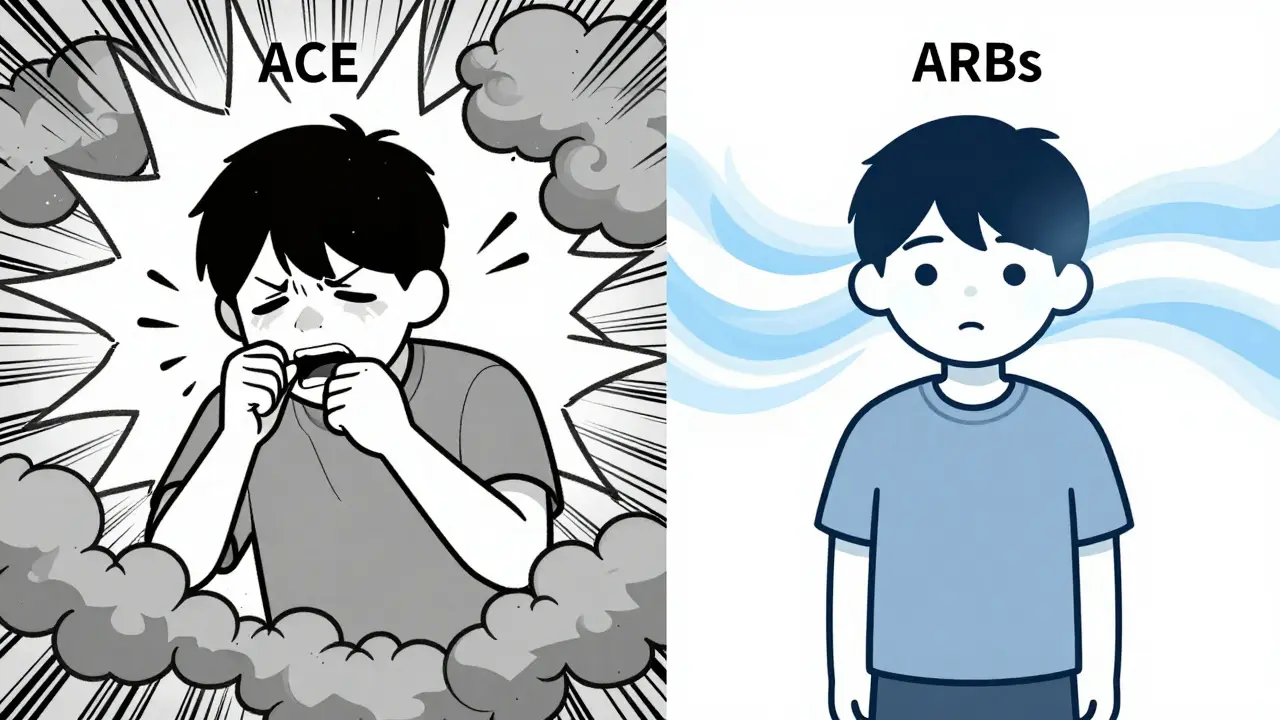
ACE inhibitors prevent the breakdown of bradykinin, a peptide that causes vasodilation but also irritates the lungs. This leads to the infamous "ACE cough." It affects roughly 10% to 20% of patients. It’s a dry, hacking cough that doesn’t go away with cough syrup. For many, it’s debilitating enough to stop the medication entirely. Data from CVS Health analyzing two million patients showed that cough was the primary reason for discontinuing ACE inhibitors in 78% of cases.
There is also a rare but serious risk of angioedema with ACE inhibitors-a swelling of the deep layers of the skin, often around the eyes and lips, which can obstruct breathing. The risk is low (0.1% to 0.7%), but it is higher than with other classes.
ARBs do not affect bradykinin metabolism. Consequently, the incidence of cough drops to about 6.4%, comparable to placebo levels. A 2021 study published in AHA Journals involving over 318,000 patients confirmed that ARBs carry a significantly lower risk of both cough and angioedema compared to ACE inhibitors. If you’ve tried an ACE inhibitor and couldn’t stand the cough, switching to an ARB is the standard next step.
Beta-Blockers: Why They Aren’t First-Line Anymore
You might wonder why beta-blockers aren’t the go-to prescription for simple high blood pressure anymore. Decades ago, they were. Today, guidelines from the American Heart Association (AHA) and American College of Cardiology (ACC) relegate them to second-line status for uncomplicated hypertension.
The main issue is stroke prevention. Earlier trials suggested beta-blockers like atenolol were less effective at preventing strokes compared to other agents like calcium channel blockers or diuretics. The INVEST trial found a 16% higher stroke incidence in patients taking atenolol versus verapamil. Additionally, beta-blockers can worsen metabolic parameters. They may increase triglycerides by 10-15% and reduce HDL (good cholesterol) by 5-10%. For patients with pre-diabetes or metabolic syndrome, this is a significant downside.
However, beta-blockers are non-negotiable for certain conditions. If you have had a myocardial infarction (heart attack), beta-blockers reduce cardiovascular mortality by up to 23%. In heart failure with reduced ejection fraction (HFrEF), specific beta-blockers like carvedilol and bisoprolol are proven to extend life. Carvedilol, for instance, reduced all-cause mortality by 35% in the COPERNICUS trial. In these contexts, the benefits far outweigh the metabolic risks.
Side Effects That Make Patients Quit
Medication adherence is a massive problem in hypertension management. If you don’t take your pill, it doesn’t matter how good the drug is. Real-world data highlights why people stop taking these meds.
- Fatigue: Beta-blockers slow the heart, which can make you feel tired or sluggish. About 28% of patients report fatigue severe enough to impact daily life. Some switch to nebivolol, a newer beta-blocker that causes fewer fatigue symptoms (14% vs 28%).
- Bronchospasm: Non-selective beta-blockers can constrict airways, making breathing difficult for asthma or COPD patients. Selective beta-1 blockers (like metoprolol) are safer but still require caution.
- Erectile Dysfunction: All three classes can potentially contribute to sexual dysfunction, though studies suggest beta-blockers and thiazide diuretics have a higher association than ACE inhibitors or ARBs.
- Kidney Function Changes: ACE inhibitors and ARBs can cause a slight rise in creatinine (a marker of kidney function) when first started. This is usually benign and expected, but it requires monitoring. Dual therapy (taking an ACE inhibitor AND an ARB together) is dangerous and increases the risk of renal dysfunction by 38%.
Which One Is Right for You?
Choosing the right antihypertensive isn’t about picking the "best" drug; it’s about picking the best drug for your body. Here is a quick decision framework based on current clinical evidence.
| Feature | ACE Inhibitors | ARBs | Beta-Blockers |
|---|---|---|---|
| Best For | Diabetes, Kidney Disease, Post-Heart Attack | ACE Intolerant, Hypertension, Heart Failure | Post-Heart Attack, Heart Failure, Angina |
| Main Side Effect | Dry Cough (10-20%) | Minimal (well-tolerated) | Fatigue, Cold Hands/Feet |
| Stroke Protection | Excellent | Excellent | Moderate (varies by agent) |
| Metabolic Impact | Neutral/Beneficial | Neutral | Negative (may raise lipids) |
| Pregnancy Safety | Unsafe | Unsafe | Use with Caution |
If you have diabetes with protein in your urine (albuminuria), an ACE inhibitor is the gold standard. It protects the kidneys better than almost any other class. If you develop that annoying cough, switch to an ARB immediately-they offer nearly identical kidney protection without the lung irritation.
If you have a history of heart failure or a recent heart attack, a beta-blocker is likely essential. Don’t skip it because you read online that they’re "bad for hypertension." In your specific case, they save lives. Just monitor your energy levels and discuss alternatives like nebivolol if fatigue becomes unmanageable.
For healthy adults with no other complications, ACE inhibitors and ARBs are generally preferred over beta-blockers due to better stroke prevention and neutral metabolic effects. Many cardiologists now prefer starting with an ARB for new patients simply because the tolerability profile is smoother, leading to better long-term adherence.

Common Mistakes to Avoid
Managing hypertension involves more than just swallowing a pill. Here are three common pitfalls that undermine treatment success.
- Combining ACE Inhibitors and ARBs: Never take these two together unless explicitly directed by a specialist in a very narrow context. The ONTARGET trial proved this combination increases the risk of kidney failure and hyperkalemia (high potassium) without providing extra blood pressure benefit.
- Stopping Abruptly: Especially with beta-blockers, stopping suddenly can cause a rebound effect, spiking your heart rate and blood pressure dangerously. Always taper under medical supervision.
- Ignoring Potassium Levels: Both ACE inhibitors and ARBs can raise potassium levels. If you are also taking potassium supplements or eating extremely high-potassium diets, you need regular blood tests to ensure your levels don’t get too high, which can affect heart rhythm.
Looking Ahead: New Developments
The landscape of hypertension treatment is evolving. In 2023, the FDA approved fixed-dose quadruple combinations for resistant hypertension, combining drugs like amlodipine, valsartan, hydrochlorothiazide, and chlorthalidone into one pill. This addresses the adherence problem directly.
Furthermore, for heart failure patients, the combination of sacubitril and valsartan (an ARB combined with a neprilysin inhibitor) has largely replaced ACE inhibitors as the top choice. The PARADIGM-HF trial showed this combo reduced cardiovascular death by 20% compared to enalapril. While it carries a slightly higher risk of angioedema, the survival benefit is compelling.
As research continues, including ongoing trials like PRECISION which looks at cognitive outcomes in elderly patients, we may see further shifts in how these classes are prioritized. For now, the rule remains: match the drug to the patient’s specific comorbidities and tolerance.
Can I switch from an ACE inhibitor to an ARB if I have a cough?
Yes, this is a very common and recommended switch. Since ARBs do not affect bradykinin, they typically eliminate the dry cough associated with ACE inhibitors while maintaining similar blood pressure control and kidney protection. Consult your doctor to manage the transition safely.
Are beta-blockers safe for people with asthma?
Non-selective beta-blockers can trigger bronchospasm and are generally avoided in asthma patients. However, cardioselective beta-blockers (like metoprolol or bisoprolol) target primarily the heart and are often considered safe, though they should be used with caution and monitored closely by a physician.
Why aren't beta-blockers first-line for high blood pressure anymore?
Recent guidelines deprioritized beta-blockers for uncomplicated hypertension because they are less effective at preventing strokes compared to ACE inhibitors, ARBs, or diuretics. They can also negatively impact blood sugar and lipid levels. They remain first-line for patients with heart failure or post-heart attack conditions.
Is it dangerous to take an ACE inhibitor and an ARB together?
Yes, dual renin-angiotensin system blockade is generally discouraged. Studies like the ONTARGET trial showed that combining these drugs increases the risk of kidney dysfunction, low blood pressure, and high potassium without offering additional cardiovascular benefits.
Do ACE inhibitors and ARBs work the same way?
They achieve similar results but through different mechanisms. ACE inhibitors block the creation of angiotensin II, while ARBs block the receptor where angiotensin II attaches. ARBs tend to have fewer side effects, particularly regarding cough, making them a popular alternative for those who cannot tolerate ACE inhibitors.